Solar Power Optimisers: What to Check on a Quote
Understand what solar power optimisers do, how they differ from microinverters and what to ask before accepting them on a quote.
 Randy Osifo-Doe
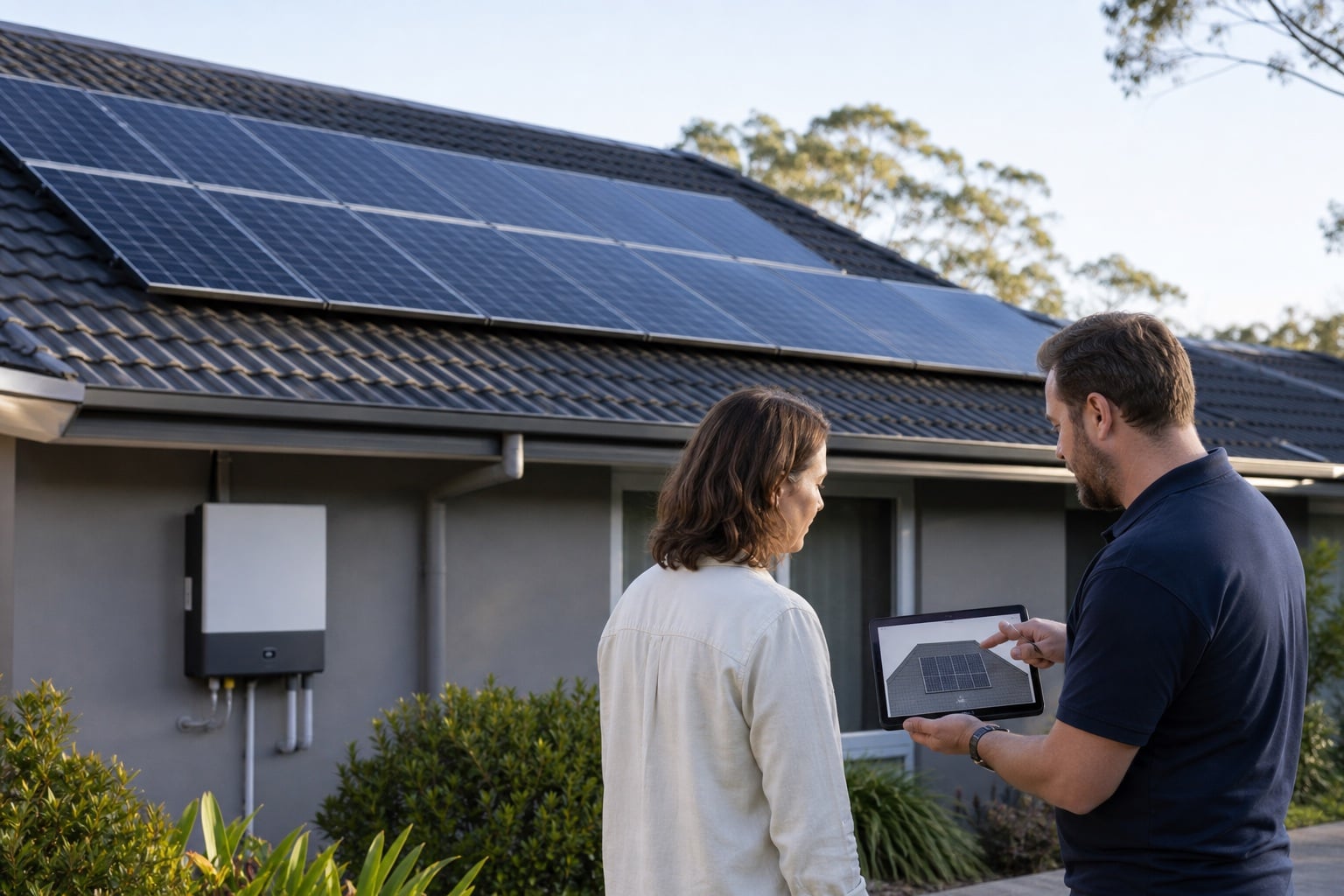
Solar power optimisers can appear on a quote when a roof has shade, several orientations or a request for panel-level monitoring. They are not a second type of solar panel, and they do not replace the main string inverter.
The useful question is not whether optimisers are automatically better. It is what problem they are meant to solve on your roof, how that benefit was allowed for in the design and what extra equipment you will need to maintain.
What a power optimiser actually does
An optimiser is a small power-electronics device installed with an individual solar panel, usually underneath it. The Australian Government's inverter guide says optimisers can be added to a system that uses a string inverter and allow panels to work more independently.
That makes an optimiser different from a microinverter. An optimiser manages DC electricity at the panel, then sends it through the system to a central string inverter. A microinverter converts electricity from DC to AC at each panel. Both approaches can support panel-level operation and monitoring, but the system architecture is different.
If your quotes use unfamiliar terms, start with our broader microinverters and string inverters guide before comparing the optimiser option.
When optimisers may be worth discussing
The Government guidance identifies roofs with several sections, different slopes or orientations, and partial shade as situations where optimisers may offer a benefit. They can also enable more detailed monitoring than a basic string-inverter setup.
That does not mean every east-west roof or shaded panel needs an optimiser. String inverters can manage more than one string, and good panel placement remains important. Ask the installer to connect the recommendation to the proposed panel layout rather than relying on a general claim about “better performance”.
Use the solar shading checklist to check where and when shade occurs. The Government's solar design guidance also explains why roof direction, slope, shade and available area should shape the whole design.
Compare the system, not just the device
| Quote detail | What to confirm |
|---|---|
| Coverage | Whether every panel has an optimiser or only selected panels |
| Main inverter | The exact string inverter that the optimisers will feed |
| Design reason | The roof, shade or monitoring need the optimisers address |
| Monitoring | Whether panel-level data is included and who owns the account |
| Handover | Where model details, layout and operating instructions will be recorded |
An optimiser does not make a poor roof layout good, remove shade or guarantee a particular generation result. It also adds electronics under the panels, while the system still depends on its central inverter. That is why the quote should describe the complete system rather than listing “optimisers included” as a standalone feature.
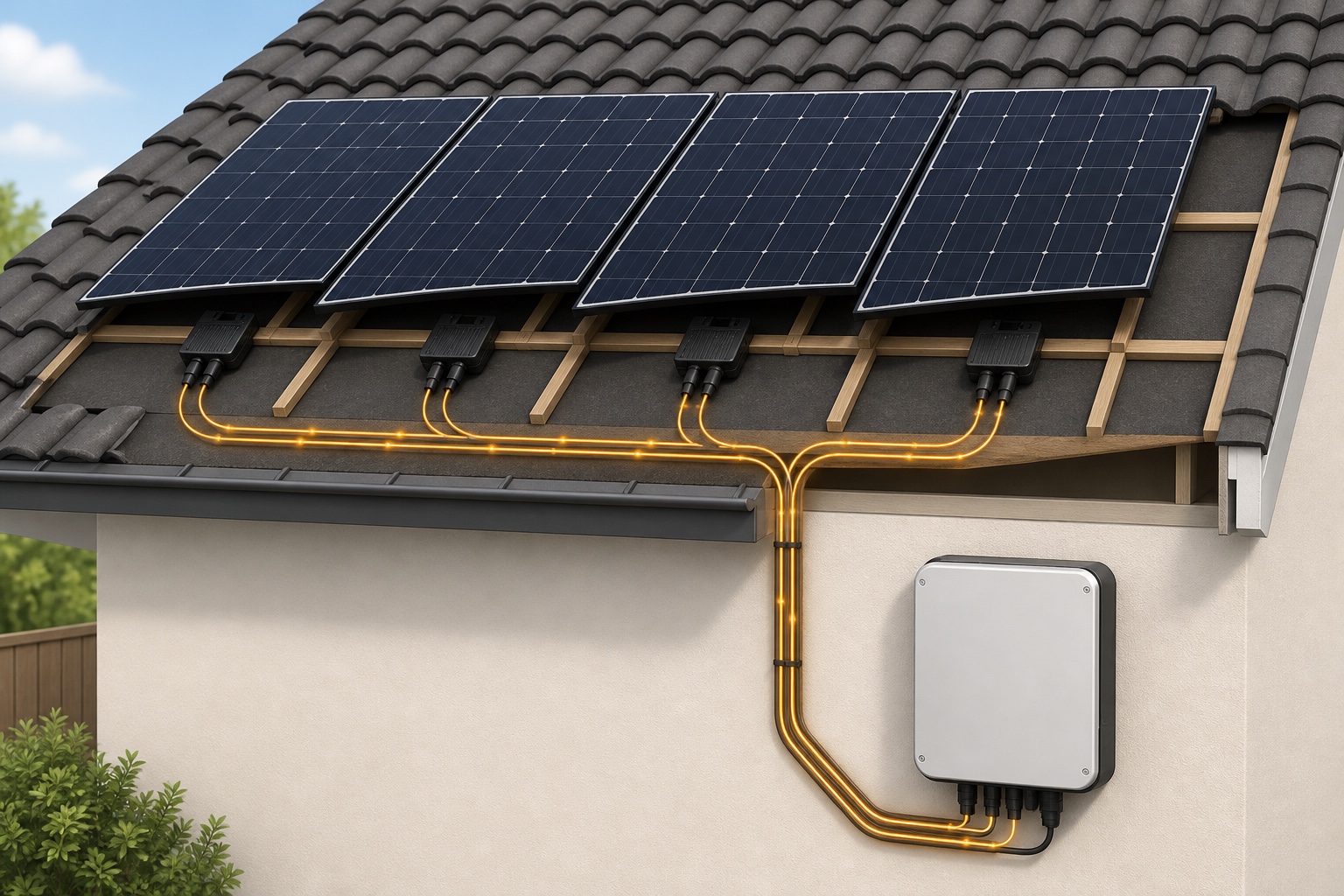
This simplified illustration shows the relationship between panel-level optimisers and a central string inverter. Actual mounting, cabling and component layouts vary.
Questions to ask before accepting the quote
Take the same questions to each retailer so you can compare like with like:
- What specific roof or monitoring issue are the optimisers addressing?
- How many optimisers are included, and which panels will have them?
- What optimiser and central inverter models are proposed?
- How were shade and different roof directions treated in the generation estimate?
- Will I receive panel-level monitoring access, and is there any separate equipment or account needed?
- What written product and workmanship warranties cover the optimisers, inverter and installation?
- If an optimiser needs attention later, who is the first contact and what records should I keep?
Keep the answers with the panel layout and equipment schedule. Our solar warranty checklist will help you separate product cover from installation workmanship without assuming every component has the same terms.
Check the delivered system at handover
Before installation, make sure any design change is explained and agreed in writing. After installation, the Australian Government's installation-day guidance recommends checking that the supplied components match the quote and getting access to the monitoring app where one is included.
Keep the final system specifications, panel layout, model information, warranties and monitoring login with your other handover documents. The solar installation day checklist gives you a practical sequence for those checks.
Solar power optimisers can be a sensible design tool, but they should have a clear job. If a quote cannot show which panels need them, what the monitoring includes or how the recommendation follows from your roof, pause and ask for a more specific explanation before signing.
Sources checked
Last reviewed August 2026
This guide is reviewed against current Australian solar policy and market guidance where available. Confirm retailer prices, rebates, and product eligibility before making a purchase decision.
Randy Osifo-Doe is the Brisbane-based founder and lead writer of Aussie Solar Guide. His background is in finance, banking and household budgeting, and he writes from lived experience as a solar homeowner. He is not presented as an engineer, electrician, solar installer or renewable-energy professional.