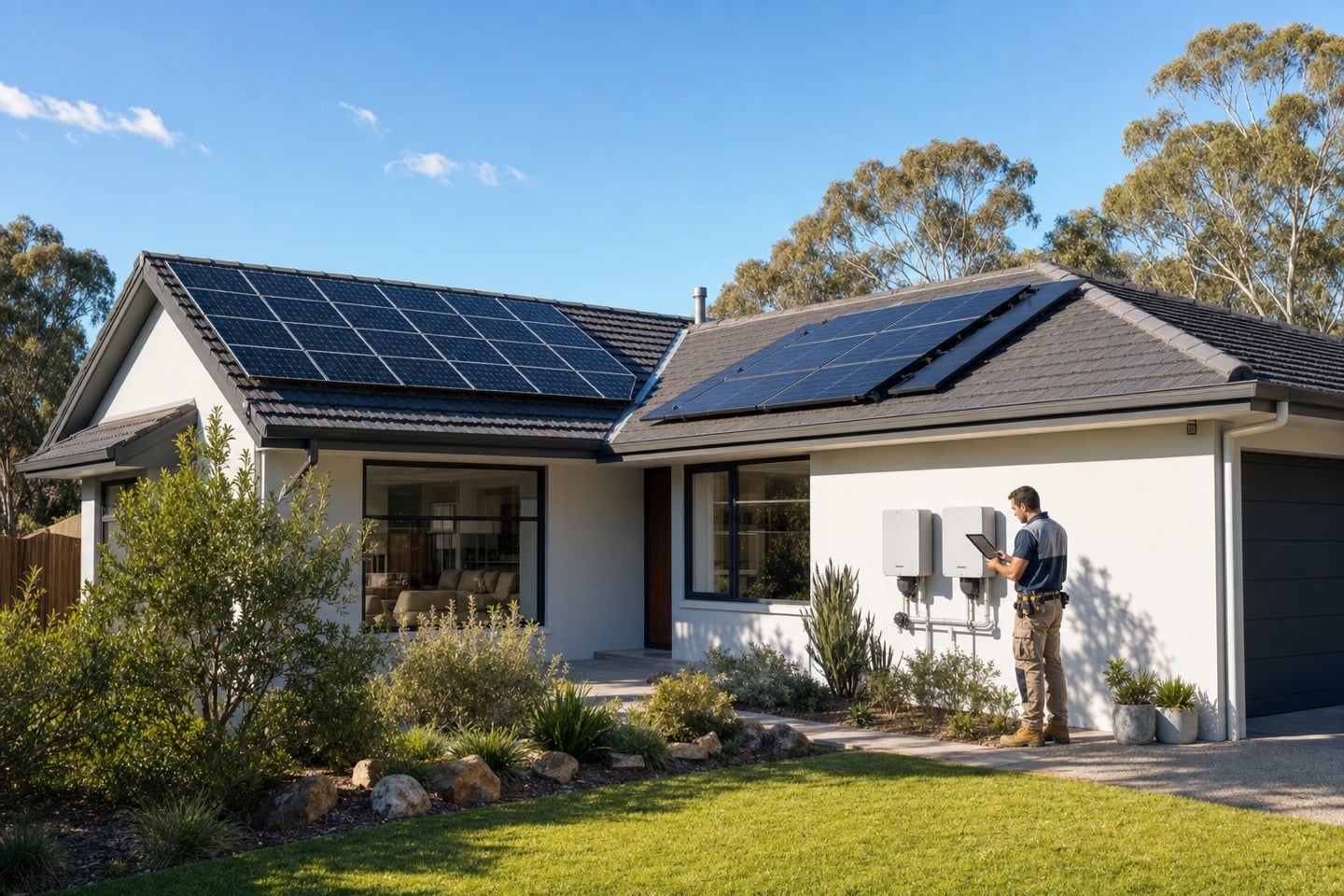
Microinverters vs String Inverters: How to Compare the Quote
Compare microinverters and string inverters in plain English, including shade, monitoring, warranties, cost, and quote questions.
 Randy Osifo-Doe
Microinverters vs string inverters is one of those solar quote choices that can sound technical fast. For most homeowners, the useful question is simpler: does the inverter setup match your roof, shade, budget, monitoring needs, and future plans?
A string inverter is the common central inverter option. Your panels are wired into one or more strings, and the inverter converts the solar power for use in the home. Microinverters sit behind individual panels, so each panel operates more independently.
Neither option is automatically better. A good string inverter on a simple roof can be excellent value. Microinverters can be worth paying for when the roof is complex, partly shaded, or split across several directions.
Quick comparison
| Check | String inverter | Microinverters |
|---|---|---|
| Simple unshaded roof | Often best value | May be more than you need |
| Shade on some panels | Can reduce string output unless designed well | Each panel can work more independently |
| Monitoring | Usually system-level, sometimes string-level | Usually panel-level |
| Upfront cost | Usually lower | Usually higher |
| Roof complexity | Fine when design is simple | Often useful on mixed orientations |
| Maintenance | Main inverter is easier to access | Electronics are spread across the roof |
The table is only a guide. The actual design matters more than the label on the quote.
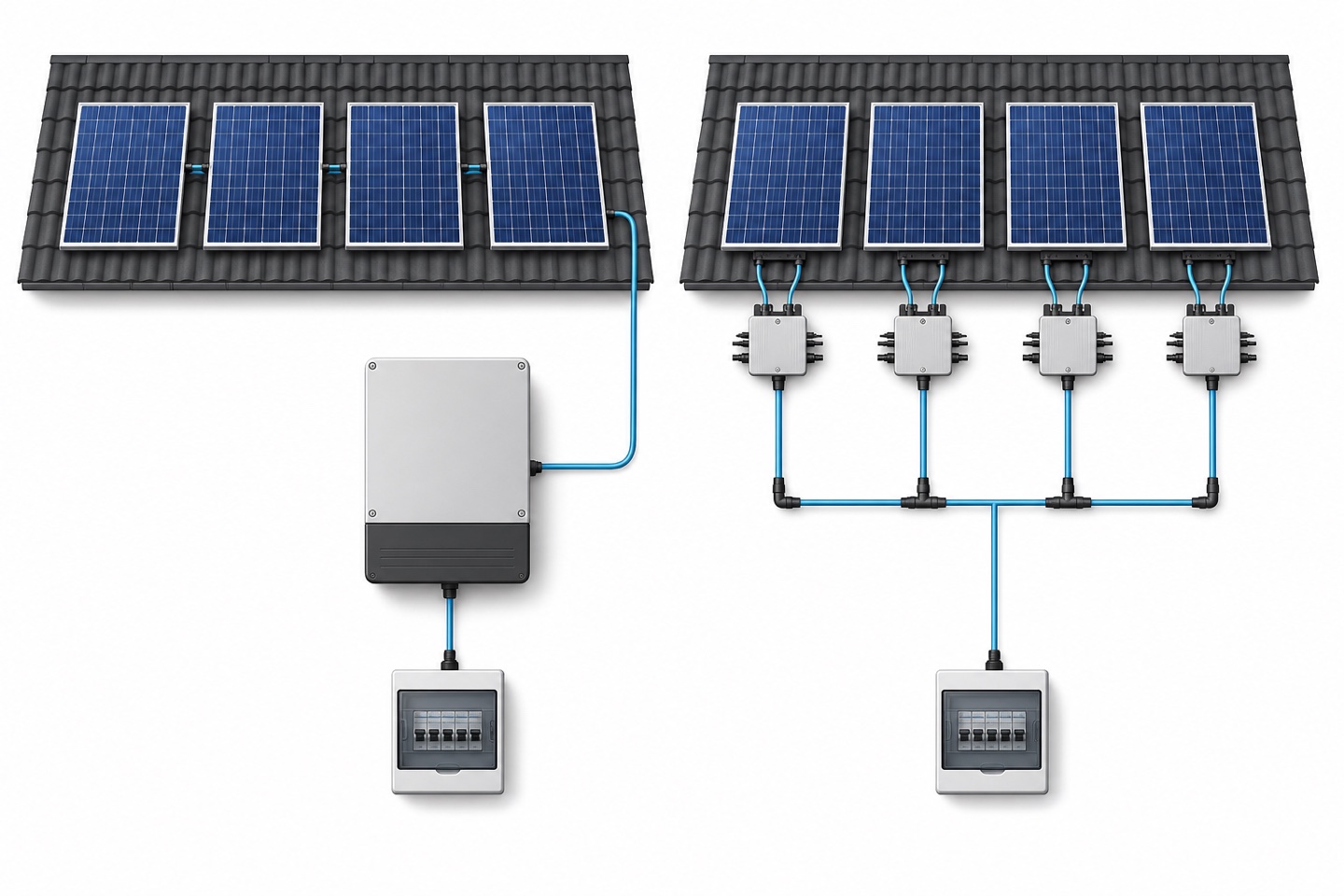
A string system sends the panel string to one central inverter. A microinverter system converts power at each panel before joining the home AC circuit. Actual layouts vary by product and roof design.
When a string inverter can be the sensible choice
A string inverter can be a strong option when your roof has one or two clean solar areas with little shade. It is usually cheaper upfront, easier to understand, and widely used in Australian residential solar.
If your quote uses a string inverter, ask whether shade, roof orientation, and export limits have been properly modelled. A simple roof with a quality inverter and good panel layout may not need a more expensive microinverter system.
When microinverters can be worth checking
Microinverters can make more sense when panels need to face different directions, when one part of the roof gets shade, or when you want panel-level monitoring. They can also be helpful where a future fault on one panel should be easier to identify from monitoring data.
The trade-off is cost. If a microinverter quote is much higher, ask the installer to explain the specific roof problem it solves. “Better technology” is not enough on its own. The benefit should be visible in the design, monitoring, safety features, warranty, or expected performance.
What to ask before accepting the quote
Use this checklist before choosing between quotes:
- Is the inverter or microinverter model on the Clean Energy Council approved product list?
- What warranty applies to the inverter equipment, and who handles the claim?
- How has shade been allowed for in the generation estimate?
- Does the design use optimisers, microinverters, or a simple string layout?
- What monitoring is included, and is there an ongoing subscription?
- Are panel layouts, string layouts, and inverter sizing shown clearly?
- If one panel underperforms, how will the homeowner know?
- Does the quote include export-control hardware if required by the network?
If the installer cannot explain the inverter choice in plain English, that is worth slowing down for.
Use the installer quality checklist to verify accreditation, written inclusions, warranties, and after-sales support before accepting either design.
Watch the sales language
Be careful with claims like “microinverters always make more power” or “string inverters are old technology.” Both are too broad.
The better question is whether the extra cost creates real value for your roof. A heavily shaded, multi-facing roof may benefit from panel-level electronics. A clean north-facing roof may get a better outcome from spending the same budget on quality panels, installation workmanship, or a stronger warranty.
Compare the whole quote
Do not compare inverter type by itself. Compare:
- Total installed price after STCs
- Panel and inverter brands/models
- Workmanship warranty
- Product warranties
- Monitoring and app access
- Switchboard or meter work
- Roof access and cable routing
- Export limits and network approval
Two quotes can look similar at the headline price but be very different once these details are itemised.
Bottom line
For a simple, mostly unshaded roof, a string inverter quote can be the practical value choice. For a complex or partly shaded roof, microinverters may be worth the extra money if the installer can show why.
Before you sign, compare the design assumptions, not just the sales pitch. You can also use the Price Explorer to sanity-check the quote and the Get Quotes flow to request itemised comparisons.
Sources checked
Last reviewed July 2026
This guide is reviewed against current Australian solar policy and market guidance where available. Confirm retailer prices, rebates, and product eligibility before making a purchase decision.
Randy Osifo-Doe is the Brisbane-based founder and lead writer of Aussie Solar Guide. His background is in finance, banking and household budgeting, and he writes from lived experience as a solar homeowner. He is not presented as an engineer, electrician, solar installer or renewable-energy professional.