Solar Installation Process: Complete Step-by-Step Guide for Australian Homes
What happens during solar installation? Complete timeline from quote to activation, including council approvals, grid connection, and what to expect on installation day.
Solar Installation Process: Complete Step-by-Step Guide for Australian Homes
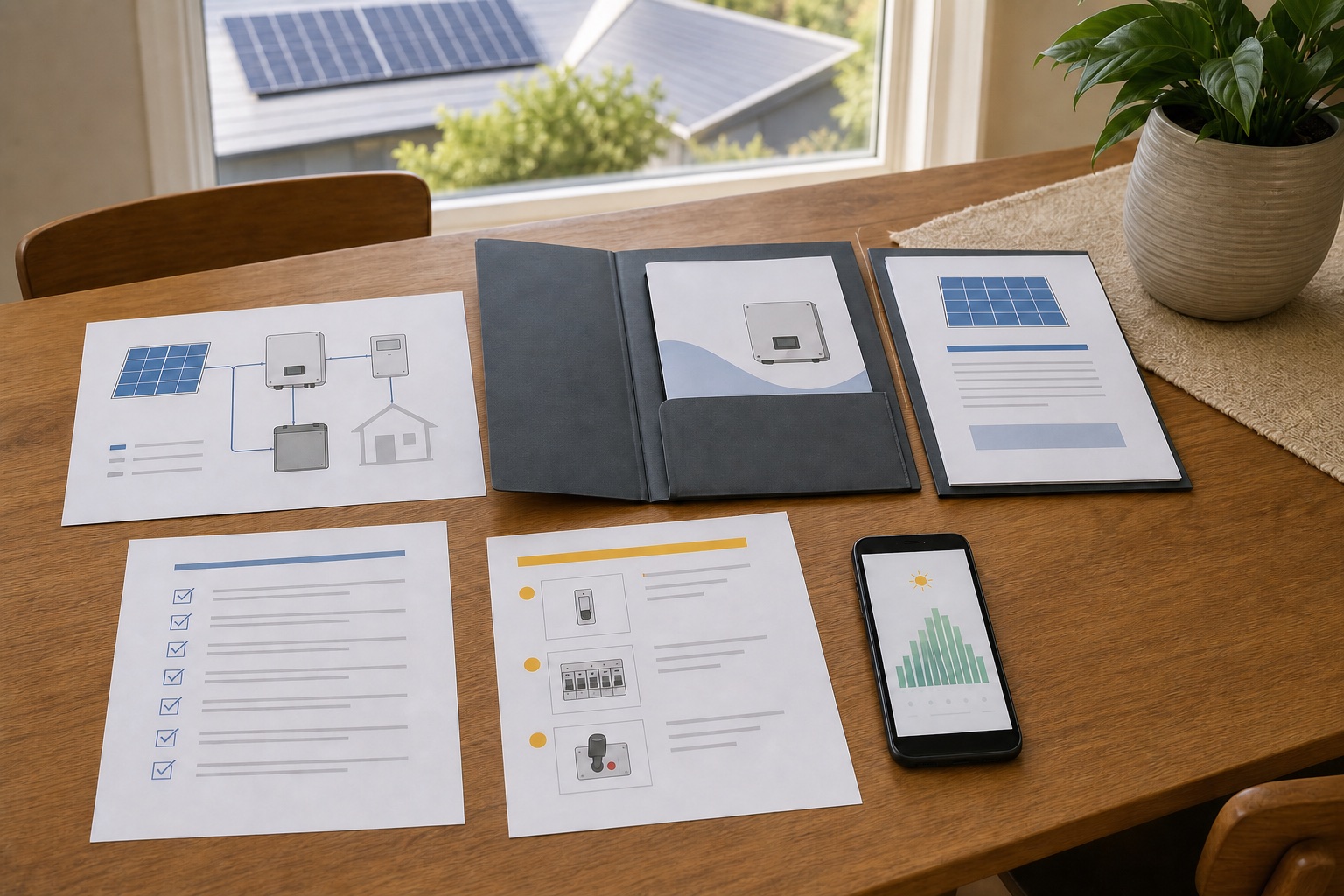
Wondering what actually happens when you install solar? This comprehensive guide walks you through the entire process - from first quote to system activation. Typical timeline: 4-8 weeks from signing contract to generating power.
Quick Timeline Overview
| Stage | Duration | What Happens |
|---|---|---|
| Quotes & Decision | 1-2 weeks | Research, get quotes, compare |
| Contract Signing | 1 day | Sign agreement, pay deposit |
| Council Approval | 1-3 weeks | Installer submits paperwork |
| Installation Day | 1 day | Physical installation |
| Grid Connection | 1-3 weeks | Network approval, meter swap |
| System Activation | 1 day | Final testing, turned on |
Total Time: 4-8 weeks typically (varies by state and network)
Stage 1: Research & Quotes (1-2 Weeks)
Initial Research
What to Learn:
- System sizes and your needs
- Panel brands and quality tiers
- Inverter options
- Battery considerations
- Government rebates available
- Approximate costs
Resources:
- Solar calculator tools
- Comparison websites
- Google reviews
- Choice.com.au
- SolarQuotes, Solar Choice
Getting Quotes
How Many: Get 3-4 quotes minimum
What Quotes Should Include:
- Itemized system components (panels, inverter, mounting)
- Panel brand, model, and specifications
- Inverter brand and capacity
- Estimated annual generation
- Warranty details (product and performance)
- Installation timeline
- Post-installation support
- Total cost breakdown (before and after rebates)
Red Flags:
- Pressure tactics or "today only" deals
- Suspiciously low prices (30%+ below others)
- Vague system specifications
- No CEC accreditation
- Limited warranty information
- No site inspection offered
Site Inspection
What Installers Check:
- Roof condition and type
- Available roof space
- Shading analysis
- Roof orientation and pitch
- Switchboard capacity
- Meter location
- Cable routing options
What You Should Ask:
- Optimal panel layout
- Shading mitigation options
- Switchboard upgrade needs
- Expected generation for your site
- Installation method for your roof type
- Backup power options
Duration: 30-60 minutes typically
Stage 2: Choosing Installer & Signing (1 Day)
Evaluating Quotes
Compare Beyond Price:
| Factor | Weight | What to Check |
|---|---|---|
| Price | 30% | Total cost after rebates |
| Components | 25% | Panel & inverter quality |
| Warranty | 20% | Length and coverage |
| Reviews | 15% | Google, ProductReview |
| Service | 10% | Communication, professionalism |
Best Value ≠ Cheapest
Contract Signing
Documents You'll Receive:
- Installation contract
- System specifications
- Warranty documentation
- Payment schedule
- Terms and conditions
Payment Structure (Typical):
- Deposit: 10-30% at signing
- Progress payment: 50-70% day before installation
- Final payment: 10-20% after grid connection
What to Verify Before Signing:
- Total price matches quote
- All components listed
- Installation timeline specified
- Warranty terms clear
- Payment schedule acceptable
- Cancellation terms understood
CEC Accreditation Check
Verify Installer:
- CEC accredited company (not just individual)
- Electrician license number
- Insurance coverage
- Specific technician CEC ID
Check at: solaraccreditation.com.au
Stage 3: Approvals & Paperwork (1-4 Weeks)
Council Approval
Required in Most Areas:
- Development application or building permit
- Plans and specifications
- Structural certification (if needed)
- Heritage overlay considerations (some areas)
Your Involvement: Usually none - installer handles
Timeline:
- Standard: 1-2 weeks
- Complex sites: 3-4 weeks
- Heritage areas: Can be longer
Network Connection Application
Distribution Network Approval:
- Ausgrid (Sydney, Hunter, Central Coast)
- Essential Energy (NSW regional)
- Endeavour Energy (Western Sydney)
- Energex (SE Queensland)
- Ergon (QLD regional)
- Powercor, CitiPower, AusNet, United Energy (Victoria)
- SA Power Networks (SA)
- Western Power (WA)
- TasNetworks (Tasmania)
What They Check:
- System size vs property capacity
- Export limitation requirements
- Grid capacity in area
- Technical specifications
Timeline: 1-2 weeks typically
Potential Issues:
- Export limitations required (5kW typical for single-phase)
- Area capacity constraints (rare)
- Special connection requirements
Stage 4: Installation Day (1 Day)
Pre-Installation
Day Before:
- Installer confirms timing (usually 7-8am start)
- Final payment often due
- Weather check (rain delays possible)
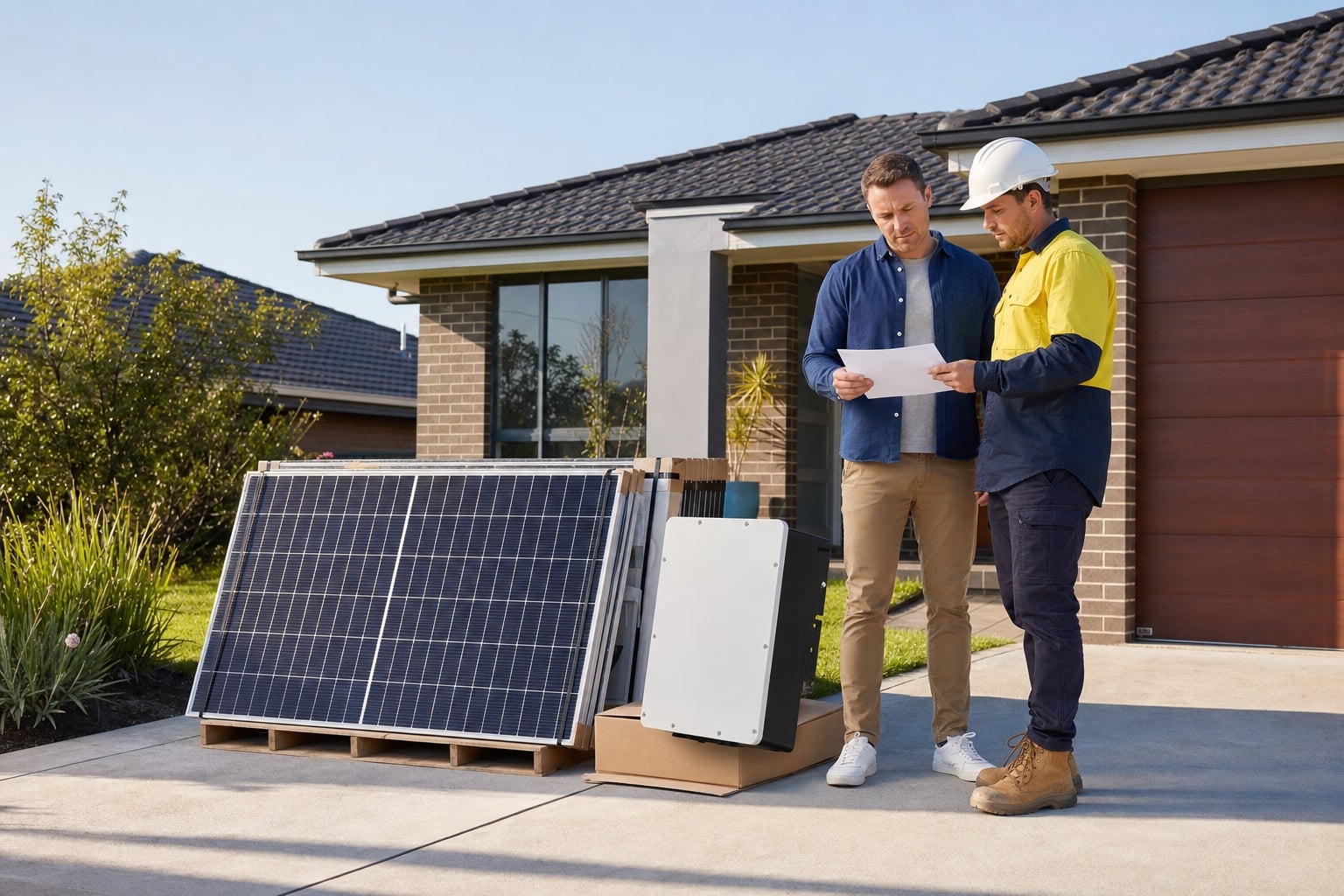
- Equipment delivered to site
You Should:
- Clear roof access areas
- Secure pets
- Ensure someone 18+ home all day
- Have questions ready
Installation Timeline
7:30-8:00am: Arrival & Setup
- Crew introduces themselves (2-4 people typical)
- Unload equipment and materials
- Scaffolding setup if needed (2-storey homes)
- Safety barriers established
8:00-11:00am: Roof Work
- Panel mounting system installed
- Rails attached to roof structure
- Panels lifted to roof and secured
- DC cabling between panels
- Installation method varies by roof type
11:00am-12:00pm: Lunch Break
- Crew breaks for lunch
- Good time to ask questions
- Progress usually 60-70% complete
12:00-2:00pm: Electrical Work
- DC cabling from roof to inverter
- Inverter mounting (usually near meter)
- AC connection to switchboard
- Isolation switches installed
- Cable management and labeling
2:00-4:00pm: Battery (if applicable)
- Battery mounting
- Electrical connections
- Gateway installation
- Backup circuit configuration
4:00-5:00pm: Testing & Commissioning
- System testing and checks
- Meter reading recorded
- Safety verification
- Cleanup and site restoration
- Customer handover
Total Duration: 8-10 hours for standard system
Installation Methods by Roof Type
Tile Roof:
- Tile brackets under individual tiles
- Rails attached to brackets
- Minimal tile disturbance
- Waterproof flashing installed
Tin/Metal Roof:
- Tek screws with waterproof washers directly through roof
- Self-sealing screws used
- Rails attached to screws
- Quick installation method
Flat/Membrane Roof:
- Weighted ballast system (no roof penetration)
- Or chemically bonded mounts
- Tilt frames for optimal angle
- More expensive installation
What Happens Inside
Switchboard Work:
- Solar breaker installed
- Isolation switch mounted
- AC disconnect added
- Labeling and certification
Possible Issues:
- Switchboard upgrade needed (adds $500-$1,500)
- Asbestos switchboard (specialist required)
- Insufficient space (new board needed)
Stage 5: Post-Installation (Same Day)
System Handover
Installer Should Show You:
- How to read inverter display
- Monitoring app setup
- Isolation switch locations and operation
- Warranty documentation
- Maintenance requirements
- Emergency shutdown procedure
Documentation Received:
- Installation certificate
- Electrical safety certificate
- Warranty documents (panels, inverter, workmanship)
- User manuals
- Monitoring app login
- Contact information for support
Initial Testing
What Installer Tests:
- System generation (if sunny)
- Inverter communication
- Monitoring system connection
- Voltage and current readings
- Isolation switch operation
- Earthing and safety
You Should:
- Watch demonstration
- Ask questions
- Take photos of components and serial numbers
- Save all paperwork in one place
Stage 6: Grid Connection & Meter Swap (1-3 Weeks)
Network Inspection
Some Areas Require:
- Network technician inspection before activation
- Usually no customer involvement
- Verifies installation standards
- Checks network protection settings
Timeline: 3-5 days typically
Meter Upgrade
Bidirectional Meter Required:
- Measures import AND export
- Old meter only measured import
- Smart meter typically installed
- Enables solar feed-in tariff credits
Who Arranges:
- Installer or electricity retailer
- Depends on state and network
Installation:
- Network technician attends
- 15-30 minute appointment
- Brief power outage during swap
- Customer usually doesn't need to be home
Cost:
- Often free
- Some networks charge $50-$100
- Should be disclosed upfront
Timeline:
- NSW: 1-2 weeks typically
- VIC: 1-2 weeks
- QLD: 2-3 weeks
- Others: 1-3 weeks
Delays Common:
- Meter contractor backlog
- Scheduling conflicts
- Hard-to-access meters
Stage 7: System Activation (1 Day)
Final Activation
Once Meter Installed:
- Installer returns (or authorizes remote activation)
- System connected to grid
- Final testing completed
- Monitoring verified working
Or:
- Some systems auto-activate once meter swapped
- Installer monitors remotely
- Phone call to confirm activation
First Power Generation
What to Expect:
- System starts generating immediately (if sunny)
- May take 24-48 hours for monitoring to update
- First day may show partial data
- Inverter display shows live generation
Monitoring Setup:
- App may take 24 hours to populate
- Generation and consumption tracking
- Export and import metering
- System performance alerts
Stage 8: Settling In (First Weeks)
First Week
What's Normal:
- Learning curve with monitoring
- Discovering usage patterns
- Some days great, some poor (weather dependent)
- Initial excitement watching generation!
Not Normal - Call Installer:
- System not generating at all
- Error lights or codes on inverter
- Monitoring never connects
- Unusual noises
- Trip switches repeatedly
First Month
Optimize Usage:
- Shift appliances to daytime
- Learn your consumption patterns
- Understand seasonal variation
- Set up timer switches
- Join VPP if available
Monitor Performance:
- Compare to predicted generation
- Check for shading issues
- Verify export credits appearing on bill
- Test backup power (if applicable)
First Bill
What to Expect:
- Partial billing period (transition)
- May not show full savings yet
- Export credits itemized
- Daily supply charge still applies
- Significant reduction (typically 50-80%)
Verify:
- Feed-in tariff rate correct
- Export quantities reasonable
- No unexpected charges
- Plan is optimal for solar
Common Delays & Issues
Council Approval Delays
Causes:
- Application errors
- Missing documentation
- Heritage overlays
- Christmas/holiday periods
Solutions:
- Installer follows up regularly
- Customer can call council to check
- Usually resolves within 2-4 weeks
Weather Delays
Installation Postponed If:
- Heavy rain
- Strong winds (especially for 2-storey)
- Extreme heat (safety concerns)
Impact: 1-7 day delay typical
Meter Installation Delays
Most Common Delay:
- Meter contractors overwhelmed
- Can extend to 4-6 weeks in busy periods
Solutions:
- Installer escalates with network
- Customer calls electricity retailer to chase
- Some networks allow temporary activation
Network Constraints
Rare but Serious:
- Area at capacity for solar export
- May require export limitation
- Or joining waiting list
Impact: Can delay weeks or require system redesign
Costs Beyond System Price
Additional Expenses to Budget:
| Item | Typical Cost | When |
|---|---|---|
| Switchboard upgrade | $500-$1,500 | If needed during install |
| Asbestos switchboard | $1,000-$2,000 | If asbestos present |
| Roof repairs | $200-$1,000 | If roof damaged/weak |
| Tree trimming | $300-$1,000 | For shading issues |
| Meter installation | $0-$100 | With grid connection |
| Monitoring hardware | $200-$400 | If not included |
Most installs require none of these extras
Your Installation Checklist
Before Installation:
- 3-4 quotes received and compared
- Installer CEC accreditation verified
- Contract read and understood
- Warranty documentation reviewed
- Deposit paid
- Installation date confirmed
Installation Day:
- Someone 18+ home all day
- Roof access cleared
- Pets secured
- Questions prepared
- Camera ready for photos
After Installation:
- System handover completed
- Monitoring app installed and working
- All documentation received
- Photos of serial numbers taken
- Installer contact details saved
Post-Activation:
- Generation verified
- Monitoring tracking correctly
- Export appearing on bill
- VPP enrollment completed (if applicable)
- Optimal electricity plan selected
Tips for Smooth Installation
- Choose Wisely: Spend time on installer selection, not just price
- Communicate: Keep phone on and respond promptly to installer
- Be Flexible: Weather and approval delays happen
- Document Everything: Photos and paperwork
- Ask Questions: No question is stupid
- Be Patient: Process takes 4-8 weeks typically
- Stay Involved: Check approvals, chase delays
When to Call Your Installer
Definitely Call:
- System not generating
- Error messages persisting
- Physical damage visible
- Leaks appearing near panel mounts
- Inverter making unusual sounds
Can Wait:
- Cloudy day low generation (normal)
- Monitoring app slow to update (24-48hrs normal)
- Understanding performance data (call when convenient)
The Bottom Line
Solar installation is straightforward when you choose a quality installer. The process takes 4-8 weeks from contract to activation, with installation day itself just one day of work.
Keys to Success:
- Choose CEC-accredited installer with good reviews
- Be patient with approval processes (outside installer control)
- Stay available for communication
- Understand the timeline and what's normal
- Document everything
Ready to start your solar journey? Use our Solar Calculator to size your system, then get multiple quotes from quality installers in your area.