Solar Inverter Location: What to Check Before Installation
Check shade, access, switchboard proximity and monitoring before agreeing where a wall-mounted solar inverter will go at your home.
 Randy Osifo-Doe
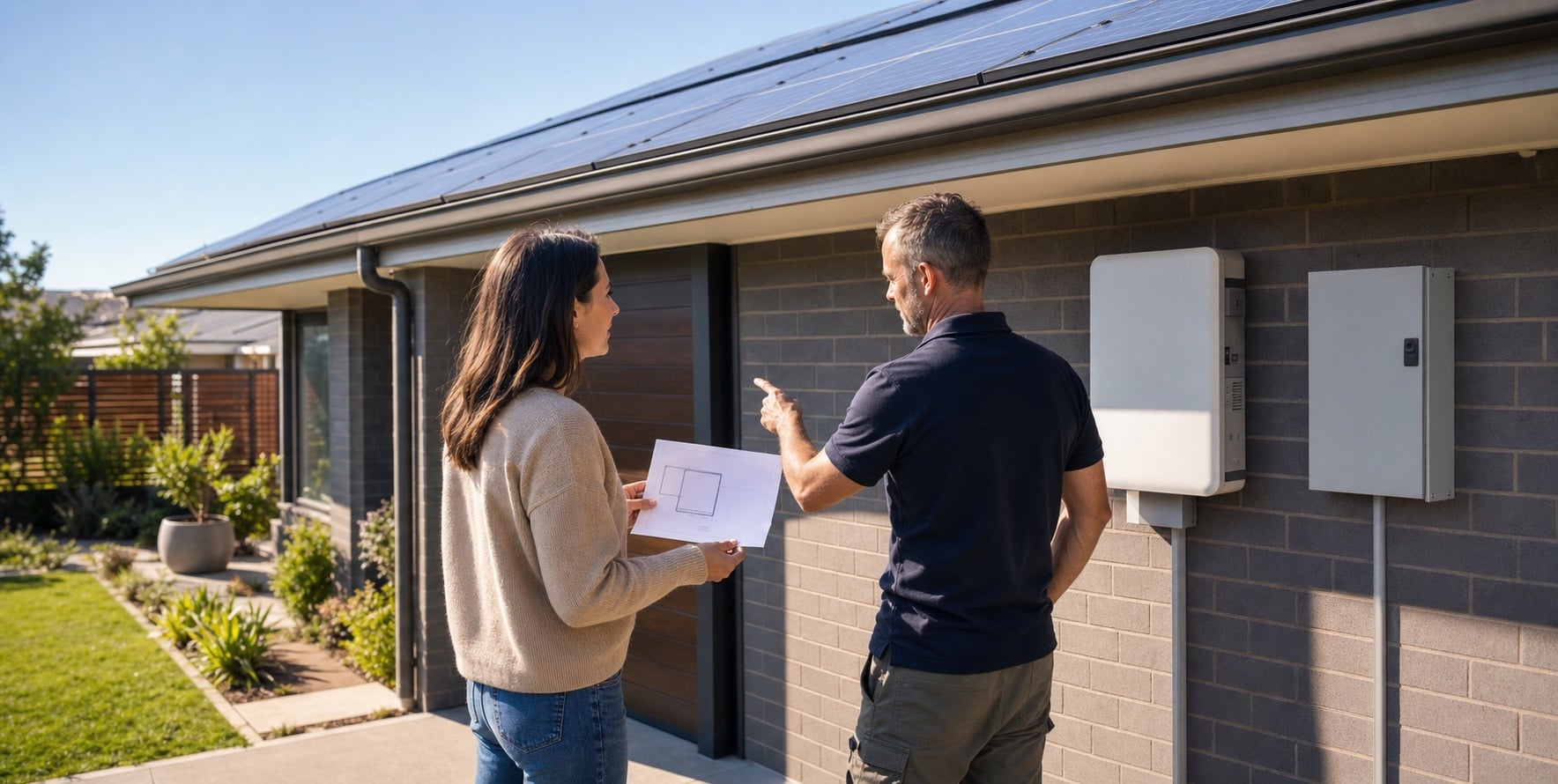
A good solar inverter location is shaded, practical to access and agreed before installation—not chosen hurriedly when the crew arrives. For a wall-mounted string or hybrid inverter, the Australian Government Solar Consumer Guide recommends discussing the position with the retailer or installer, keeping it close to the switchboard where possible and preferring a shaded wall.
This checklist helps you review the proposed position. It does not replace the inverter’s installation instructions or the installer’s site-specific design. Microinverters sit beneath the panels, so use the microinverters and string inverters guide if you are still comparing inverter types.
Start with shade and heat exposure
Direct Australian sun is an avoidable burden for a wall-mounted inverter. The government guide says extreme heat can shorten inverter life and suggests discussing a shade cover when the only practical location is exposed to direct sunlight.
Ask the installer to show you when the proposed wall receives sun, especially during the hotter part of the day. A position that looks shaded during a morning site visit may be exposed later. If a cover is proposed, ask them to confirm that its design suits the selected inverter’s instructions, ventilation and access needs.
An outdoor rating is not a reason to ignore the location. Ask the installer to explain how the exact model, wall orientation and any shelter work together rather than relying on a general statement that the unit can be mounted outside.
Keep the switchboard in the discussion
The Australian Government guidance says wall-mounted inverters should be close to the switchboard where possible. That does not mean every home has one automatic answer: doors, windows, garages, fences and the available cable route can change the practical options.
Ask for the proposed inverter position and cable route to be marked on a photo or simple site plan. If the preferred shaded wall is farther from the switchboard, ask the installer to explain the design choice and whether it changes the installation scope. The switchboard work checklist can help you separate the inverter position from any additional electrical work in the quote.
Make monitoring and future access practical
Solar inverters usually provide basic operating or generation information on the unit, and many systems add app-based monitoring. Choose a position where you can reasonably view indicator lights or the display, identify the model and serial number, and photograph an error message without moving stored items or entering an awkward space.
If monitoring uses your home internet connection, ask how the signal will reach the proposed location and what happens if your router changes. The position should also leave practical access for future inspection or service. Keep the area free from permanent shelving, garden structures or other planned additions that would make the unit difficult to reach.
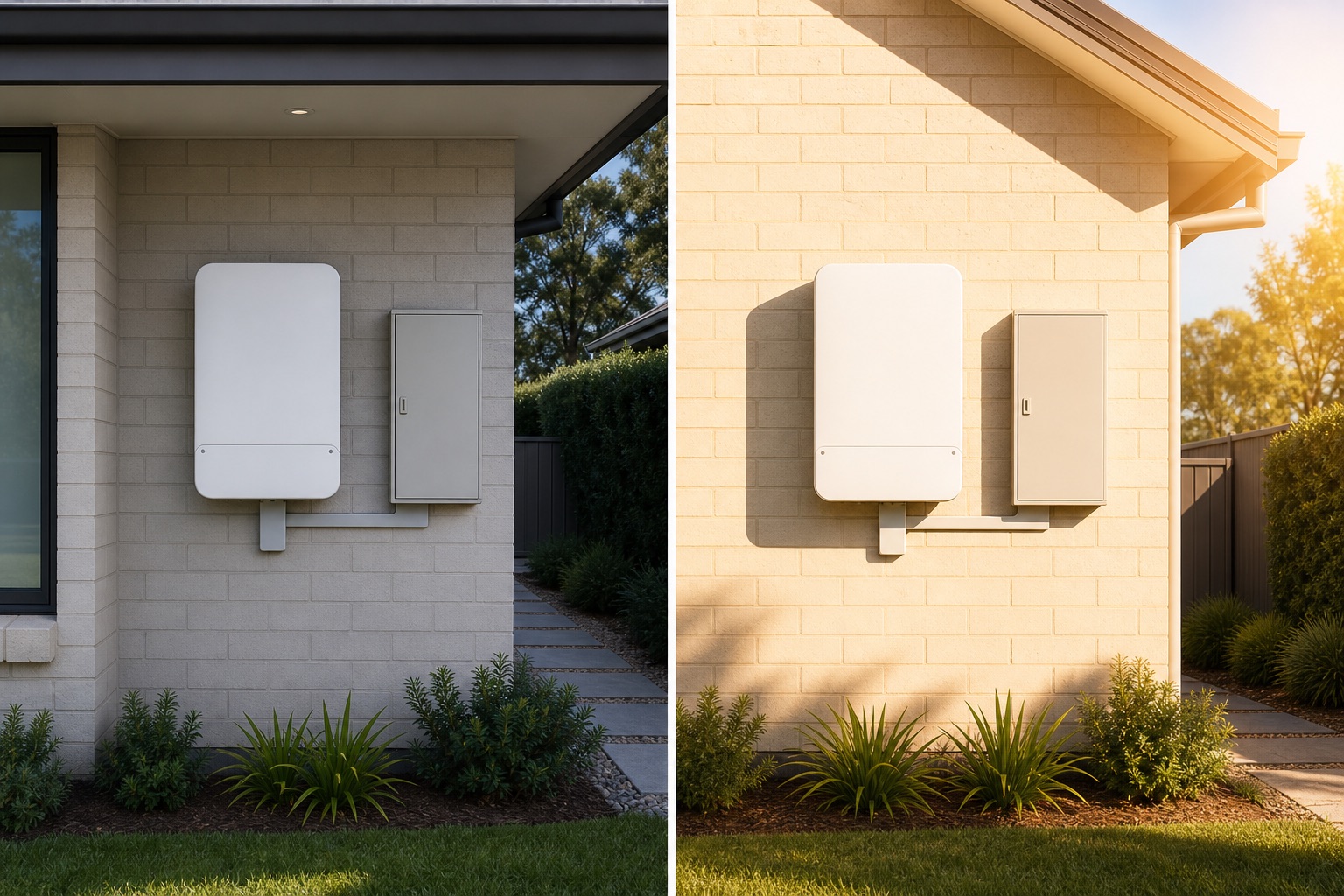
This visual compares shade exposure only. It is illustrative, not a wiring or compliance diagram; the installer must assess the actual wall and equipment instructions.
Compare the proposed options
| Possible location | What to ask before agreeing |
|---|---|
| Shaded exterior wall near the switchboard | Does the model suit this position, and are its access and ventilation needs clear? |
| Exterior wall with strong direct sun | Is there a genuinely shaded alternative, or an installer-designed cover suited to the equipment? |
| Inside a garage | Do the product instructions allow it, and will access, airflow and monitoring remain practical? |
| Detached garage or shed | Why is this position preferred, and how does the cable and monitoring path affect the design? |
Do not choose from the table on location alone. Ask the installer to compare the feasible positions for your home and record why the recommended one is suitable.
Get the position agreed in writing
Before installation day, keep a photo or plan showing the wall, approximate mounting position, nearby switchboard and any shade cover. Record how monitoring will connect and whether gates or access arrangements matter.
The Australian Government guide notes that designs can change after a site visit or network review and says changes should be communicated, explained and agreed in writing. If the inverter position changes, ask what else changes with it before work continues.
Use the solar warranty checklist to confirm that the proposed environment is consistent with the written product terms. Then add the position to the broader installer quality checklist so every quote is compared on the same basis.
What to check next
Ask each retailer to mark the inverter location on the proposal and answer the same four questions: where it goes, when the wall receives sun, how you will monitor it and how it can be accessed later. A clear answer now is easier to compare than a verbal decision made on installation day.
Sources checked
Last reviewed July 2026
This guide is reviewed against current Australian solar policy and market guidance where available. Confirm retailer prices, rebates, and product eligibility before making a purchase decision.
Randy Osifo-Doe is the Brisbane-based founder and lead writer of Aussie Solar Guide. His background is in finance, banking and household budgeting, and he writes from lived experience as a solar homeowner. He is not presented as an engineer, electrician, solar installer or renewable-energy professional.