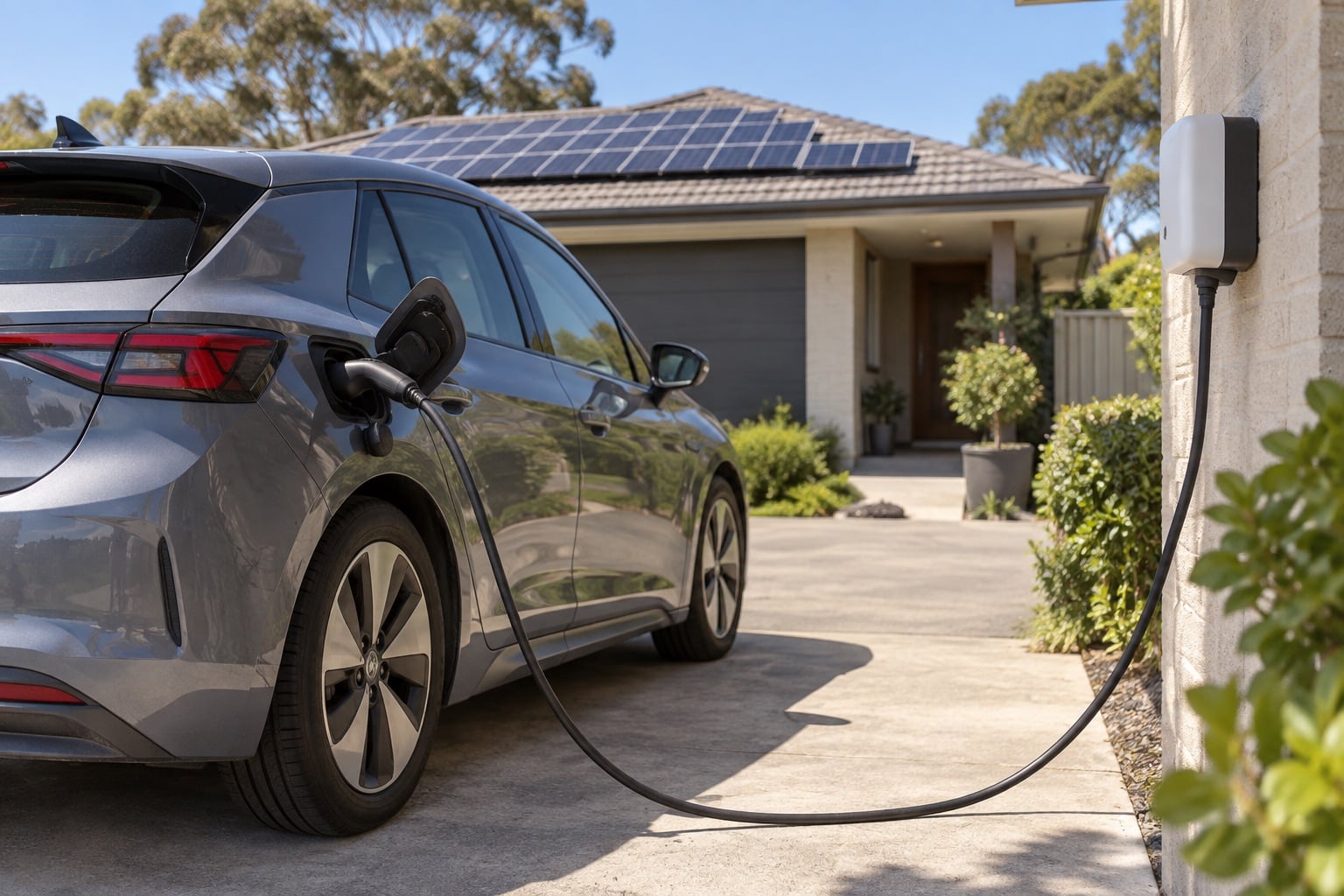
Charging an EV With Solar: Start With When the Car Is Home
Match your EV charging plan to the hours the car is at home, your solar surplus and the charging speed you actually need.
 Randy Osifo-Doe
Charging an EV with solar starts with an ordinary question: is the car at home while the panels are generating? A larger solar system or faster charger cannot send midday power to a car parked elsewhere. Before buying equipment, compare your driving routine with the hours you can actually plug in.
The Australian Government recommends charging while the sun is shining if you have rooftop solar. That is useful advice, but it does not mean every charging session will use only solar. Your household is using electricity at the same time, solar output changes, and a charger may draw from the grid when the available solar is not enough.
Map the week before choosing equipment
Write down when the car is normally parked at home, how much driving you need to replace and when you next need the car. Include weekends, not just a typical weekday. Then look at your solar monitoring app or interval data to see when the home usually has spare generation. Our solar monitoring guide explains why generation and household consumption are different figures.
| Your routine | Practical starting point | Question to test |
|---|---|---|
| Car home on sunny weekdays | Try a daytime charging window | Is there enough surplus after household use? |
| Car home mainly on weekends | Plan for weekend solar and another charging window | Will that meet the next week's driving? |
| Car away most daylight hours | Plan a reliable evening or other charging option | What electricity source and plan apply then? |
Find a repeatable window that still leaves the car ready when you need it.
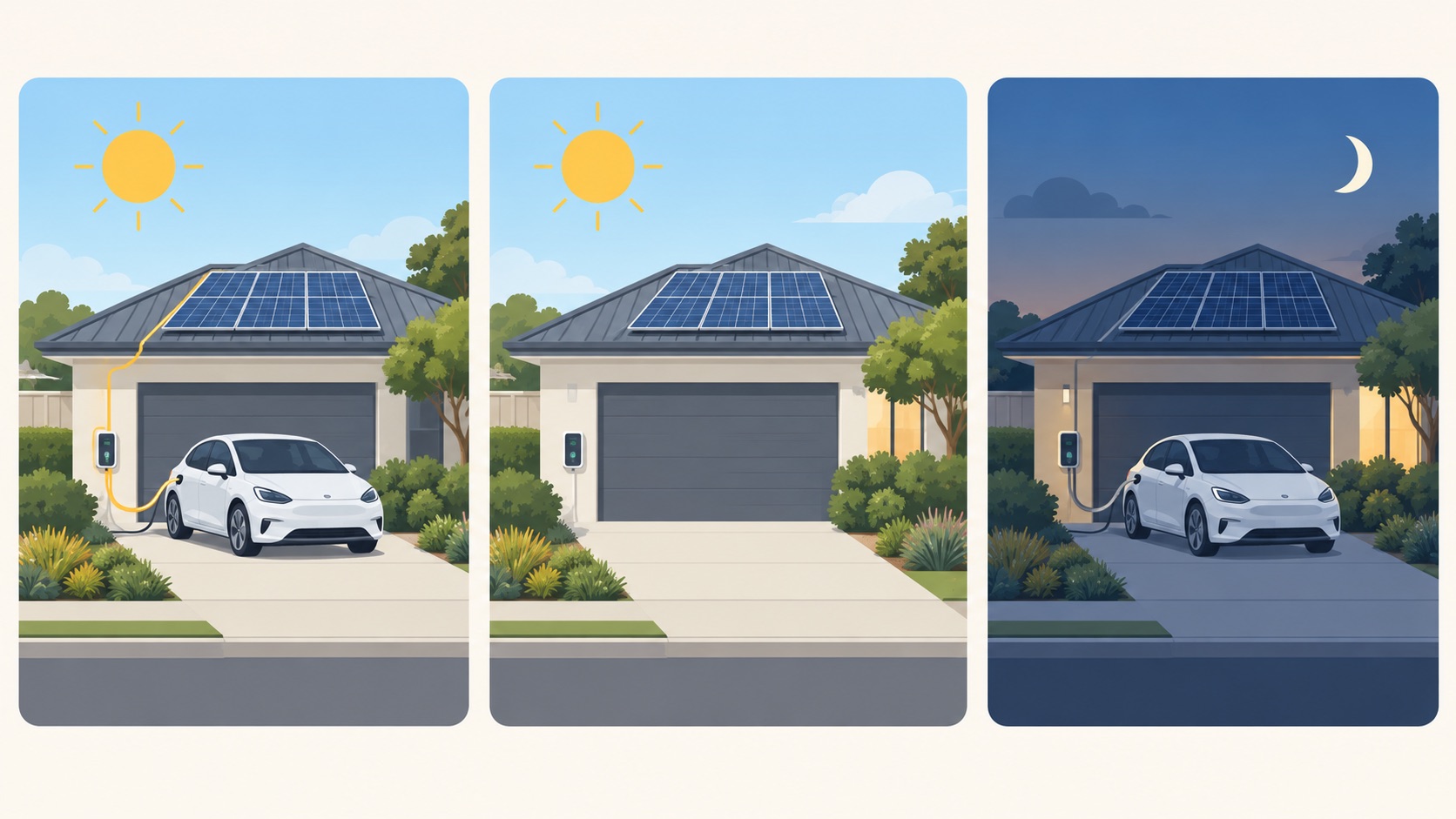
These scenes compare parking times with solar hours. They are a timing concept, not an electrical wiring or energy-flow diagram.
Choose the charging speed you need
A standard power point can charge an EV slowly, while a dedicated home charger can charge faster. The Australian Government's home charging guide says the right option depends on your driving and available parking. Faster is useful when your time at home is short, but it does not create extra solar generation.
A smart charger or home energy management system may schedule charging for chosen times or respond to excess solar. Check what it measures and controls. Ask whether it can use solar surplus, how it behaves when cloud or other household loads reduce that surplus, and whether it can still provide a reliable top-up before a planned trip. The home energy management guide explains the wider difference between monitoring and control.
If you are considering a dedicated charger, have a licensed electrician assess the home's electrical setup and the charger location. Charging capability varies by home. The government charging guide explains why the charger, vehicle and battery state affect charging speed.
Check the solar design against the routine
If you are buying or changing rooftop solar, tell the designer about the EV, likely driving and realistic parking hours. The Government's solar design guide says current and future electricity use both matter, including when you use power. Ask the retailer to show the expected charging window alongside household demand rather than adding a fixed amount of panel capacity solely because an EV is on the driveway.
If the system is already installed, start with the monitoring data you have. Look at generation, household use and exports across comparable days. Exports show power was available, but annual totals cannot show whether the car was plugged in. The solar sizing guide can help you question a proposal's production assumptions.
A home battery can store some excess solar for later use, but that is a separate design and purchasing decision. It is not required for EV charging. If one is proposed, ask what portion of stored energy would realistically be available to the car after normal household use, and review the battery capacity guide.
Put the right questions in the quote
Ask each supplier to explain the same five things in writing:
- Which days and hours is the car expected to charge at home?
- What household solar surplus has the proposal assumed for those hours?
- Which charging speed does the vehicle accept, and what can this home supply?
- What happens when solar generation falls or the car needs an urgent top-up?
- What is included for monitoring, scheduling, installation and handover?
This is where I would slow down: a claim that the car will run on “free solar” skips the timing and other electricity uses that decide what actually happens. Keep the charging plan flexible enough for real life, then compare equipment against that plan. If you are still choosing a solar layout, use the site visit checklist to have the practical property details confirmed before accepting the quote.
Sources checked
Last reviewed September 2026
This guide is reviewed against current Australian solar policy and market guidance where available. Confirm retailer prices, rebates, and product eligibility before making a purchase decision.
Randy Osifo-Doe is the Brisbane-based founder and lead writer of Aussie Solar Guide. His background is in finance, banking and household budgeting, and he writes from lived experience as a solar homeowner. He is not presented as an engineer, electrician, solar installer or renewable-energy professional.