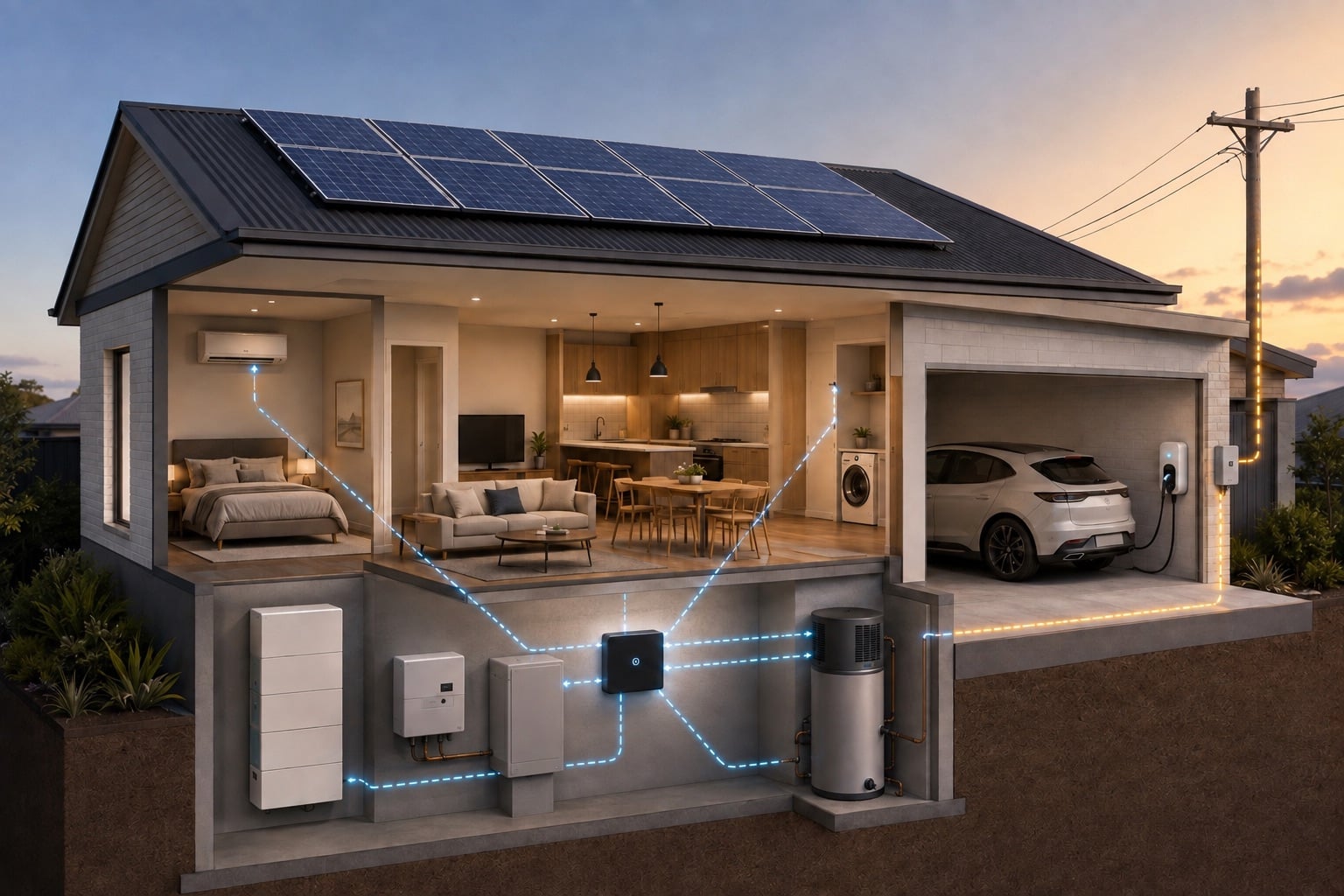
Home Energy Management Systems: What They Actually Control
Learn the difference between energy monitoring, scheduling and automatic control before adding a HEMS to your solar, battery or appliances.
 Randy Osifo-Doe
A home energy management system can be anything from a detailed energy monitor to software that schedules hot water, a battery or EV charging. The important question is not whether a quote says “smart”. It is what the system can actually see, what it can control and what still depends on you.
That distinction matters because an inverter app, a smart meter and a HEMS may all show energy data, but they do different jobs. Before paying for extra hardware or relying on automation, get the functions and limitations written into the proposal.
Monitoring is not the same as control
The Australian Government's Your Home guidance describes HEMS at several levels. A monitoring-only system can show real-time or circuit-level information but cannot change how equipment runs. A basic system adds schedules. More capable systems can optimise compatible devices using preferences you set, while orchestrated systems may respond to outside price or control signals.
Use the quote to separate four different functions:
- Monitor: It may show solar, battery, grid or circuit data. Confirm which flows and circuits are actually measured.
- Schedule: It may run compatible loads at set times. Confirm whether it controls the device or only sends a reminder.
- Optimise: It may adjust connected devices using your priorities. Confirm which settings you can choose or override.
- Respond externally: It may act on a provider or grid signal. Confirm which agreement enables this and whether you can opt out.
This is where I think homeowners need to slow down. A colourful dashboard may be useful, but it does not prove that the system can control the battery, hot-water unit, air conditioner or charger shown in the sales demonstration.
Separate the meter, inverter app and HEMS
A smart meter records electricity imported from and exported to the grid for metering purposes. It does not automatically give you appliance-level control.
An inverter or battery app usually starts with the equipment attached to that system. The Australian Government's solar monitoring guide explains that some apps show only generation or battery operation, while extra monitoring hardware may be needed to show whole-home use, grid imports, exports or individual circuits.
A HEMS becomes more useful when it brings several compatible devices into one decision. For example, it might schedule a hot-water system or pool pump for a sunny period, or coordinate a battery and EV charger around household priorities. The solar self-consumption guide explains the energy terms, while the daytime load-shifting guide covers the practical timing decision.
Check where the intelligence lives
Your Home describes three broad HEMS types: functions integrated into equipment such as an inverter, a separate controller installed at the home, or cloud-based software coordinating compatible devices through the internet.
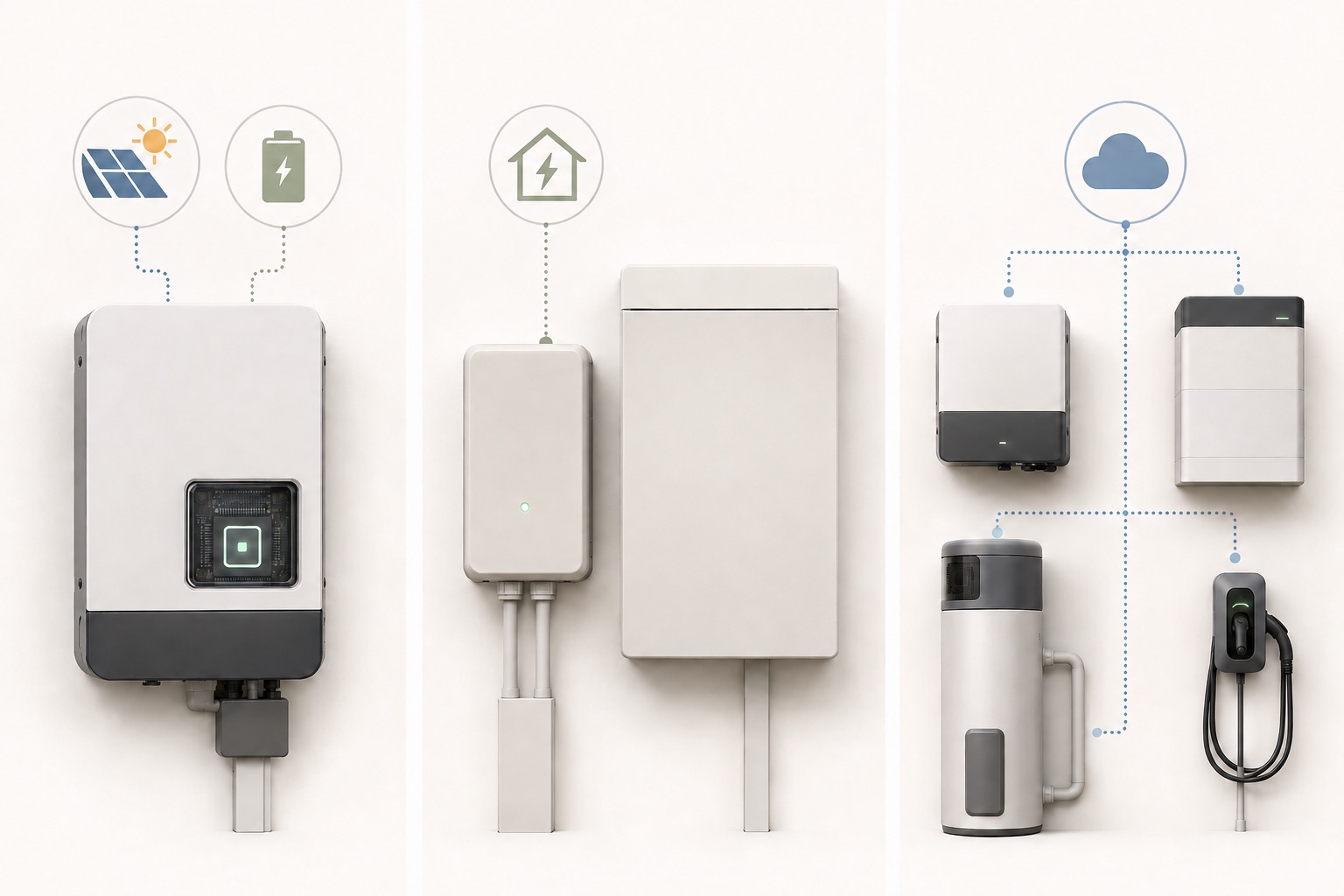
A HEMS may be built into another device, use separate hardware or operate through cloud software. The illustration shows the architecture, not a specific product or installation design.
None of these arrangements is automatically better. An integrated system may be simpler but limited to the equipment it supports. Separate hardware may add broader measurement or control but can require extra installation. Cloud software may avoid another box on the wall, although its useful functions depend on internet access, device compatibility and continued service support.
The practical test is whether the proposed arrangement will still do the job when one device, app or internet connection is unavailable. If account access or remote connectivity is part of the system, use the inverter app security checklist to cover ownership, updates and handover.
Put these questions in the quote
Ask the supplier to answer these in writing:
- Which energy flows and individual circuits will be measured?
- Which devices can the HEMS control, rather than only monitor?
- Is the controller integrated, separate hardware or cloud-based?
- What extra meters, sensors, subscriptions or internet connections are required?
- Which device makes and models are compatible today?
- Can you set priorities, pause automation and use a manual override?
- What data or control is lost if the internet or provider service stops?
- Who owns the main account, and how is access transferred with the home?
The Australian Government smart-home guide also recommends checking connectivity and compatibility. If a proposal uses the word “optimise”, ask the retailer to demonstrate one real routine using the exact equipment on your quote. A promise to “manage everything” is too vague to compare.
What to check next
Start with the household decision you want the HEMS to improve. That might be seeing whole-home consumption, scheduling one large load, coordinating a battery, or managing several flexible devices. Then compare only the functions needed for that job.
Keep the HEMS scope beside the panel, inverter, battery and appliance details in each proposal. If one quote includes genuine control and another includes monitoring only, they are not equivalent. Use the quote comparison path once the hardware, compatibility, account access and ongoing service requirements are clear.
Sources checked
Last reviewed September 2026
This guide is reviewed against current Australian solar policy and market guidance where available. Confirm retailer prices, rebates, and product eligibility before making a purchase decision.
Randy Osifo-Doe is the Brisbane-based founder and lead writer of Aussie Solar Guide. His background is in finance, banking and household budgeting, and he writes from lived experience as a solar homeowner. He is not presented as an engineer, electrician, solar installer or renewable-energy professional.