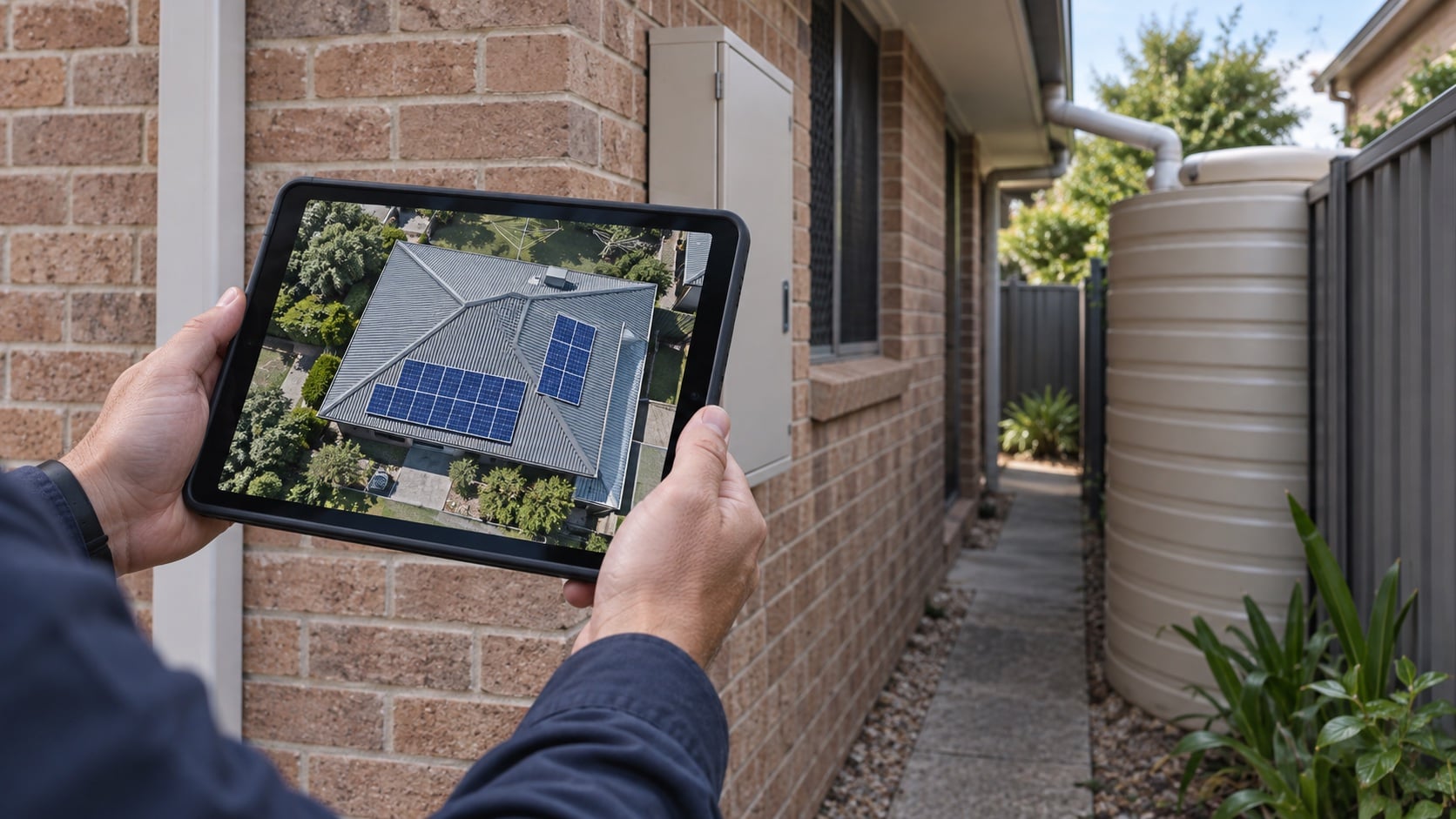
Solar Site Visit vs Satellite Quote: What to Check
Understand what a solar site visit adds to a remote quote, which details to confirm and how to turn the findings into a clear written proposal.
 Randy Osifo-Doe
A solar site visit helps turn a roof layout into a proposal that fits the actual property. A satellite quote can be a useful starting point, but ask which details have been checked, which are assumptions and what still needs to be confirmed before installation.
You do not need to reject every online quote. The useful distinction is between a proposal supported by enough information about your home and one that leaves important questions unanswered. A visit is valuable when it resolves those questions and the findings make their way into the written design.
What a satellite quote can tell you
A remote assessment can help a retailer prepare a panel layout using imagery of your roof. Solar Victoria's quote guide says credible retailers do quote this way, while recommending at least one on-site inspection to check the home's suitability.
Treat that as practical guidance, not a claim that every Australian quote must legally involve a visit. Ask the supplier what information it used and whether the drawing reflects the property as it is today. If you have added a patio, replaced part of the roof or know about a nearby building project, mention it rather than assuming the imagery shows it.
A neat drawing is helpful, but it is only one part of the assessment. It does not tell you what the supplier has checked beyond the roof picture.
What to resolve during a visit
The Australian Government's retailer and installer guidance identifies switchboard issues, roof access, inverter location and shading as complications a site visit can help uncover.
Use those areas to structure the conversation:
| Area | Question to ask | Useful written outcome |
|---|---|---|
| Roof and shade | Does the proposed layout reflect the actual roof and obstructions? | Confirmed layout and shade assumptions |
| Access | How will the crew reach the work areas? | Access arrangements and any extra work |
| Switchboard | Has its condition been assessed for the proposed installation? | Defined electrical scope and who handles it |
| Inverter position | Where is it proposed, and has that location been checked? | Position shown in the design |
This is a discussion checklist, not a homeowner inspection procedure. Leave technical assessment to the appropriate professionals. If the roof already leaks or repairs are planned, use the roof-before-solar guide to settle the sequence of work.
Prepare information that improves the design
Have your electricity bills or available meter data ready, along with any realistic plans for an EV, new appliances or a change in household routine. The Government's design guidance recommends sharing current and future electricity needs with the designer.
Also tell the visitor about known property issues and preferences: an area you need to keep accessible, a roof repair already booked or a proposed equipment position you want discussed. Put these points in one short email so the retailer and installer are working from the same information.
I think the most useful question is: “What could still change this proposal?” It invites the supplier to identify uncertainty while there is time to address it.
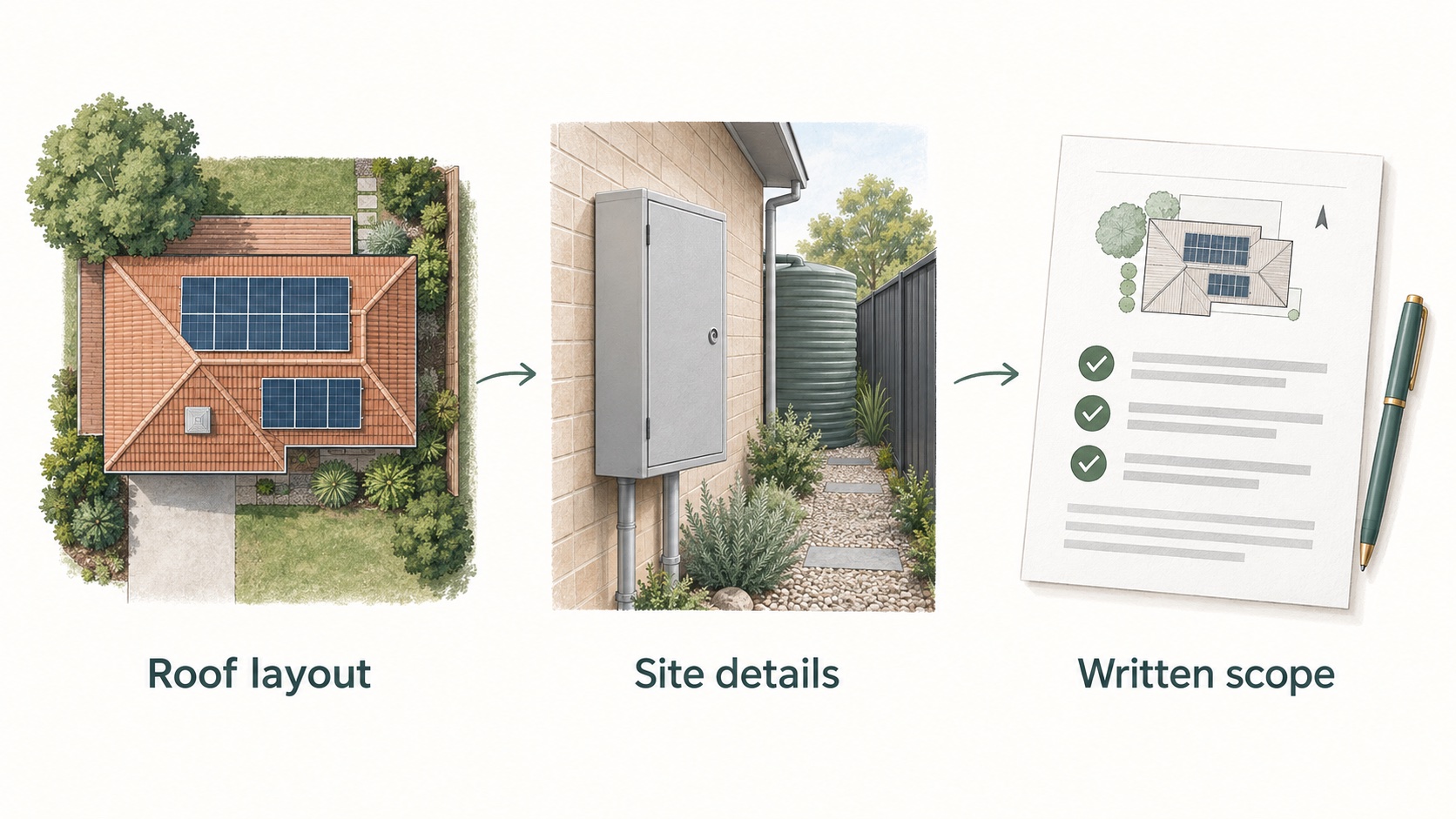
The aim is to connect the proposed layout, the actual property and the written scope. This illustration is not a technical installation plan.
If nobody can visit before quoting
Ask how the missing details will be checked and when. The Government's retailer guide recommends giving the supplier switchboard information or a photo when there is no site visit, and asking for necessary upgrades to be included in the quote. Do not remove electrical covers to collect information.
Request a short list of unresolved items rather than accepting “subject to site inspection” as the whole explanation. For each item, ask who will confirm it and whether the answer could alter the layout, scope or installation arrangements. Our switchboard quote checklist helps with that particular part of the proposal.
Make the findings part of the quote
After the assessment, ask for the complete proposal to reflect what was confirmed. Keep the layout and scope together, with remaining assumptions clearly identified. A verbal explanation is difficult to compare later if different people handle sales and installation.
The Government's installation-day guide says a prior visit can help avoid unexpected access, roof, positioning and electrical-work issues. It does not make every later change impossible. If the proposal changes, use the quote change checklist to compare the versions.
Before accepting the design, send the retailer your unresolved questions and ask for written answers. The useful result is a proposal you understand, with a clear plan for checking anything that remains uncertain.
Sources checked
Last reviewed September 2026
This guide is reviewed against current Australian solar policy and market guidance where available. Confirm retailer prices, rebates, and product eligibility before making a purchase decision.
Randy Osifo-Doe is the Brisbane-based founder and lead writer of Aussie Solar Guide. His background is in finance, banking and household budgeting, and he writes from lived experience as a solar homeowner. He is not presented as an engineer, electrician, solar installer or renewable-energy professional.