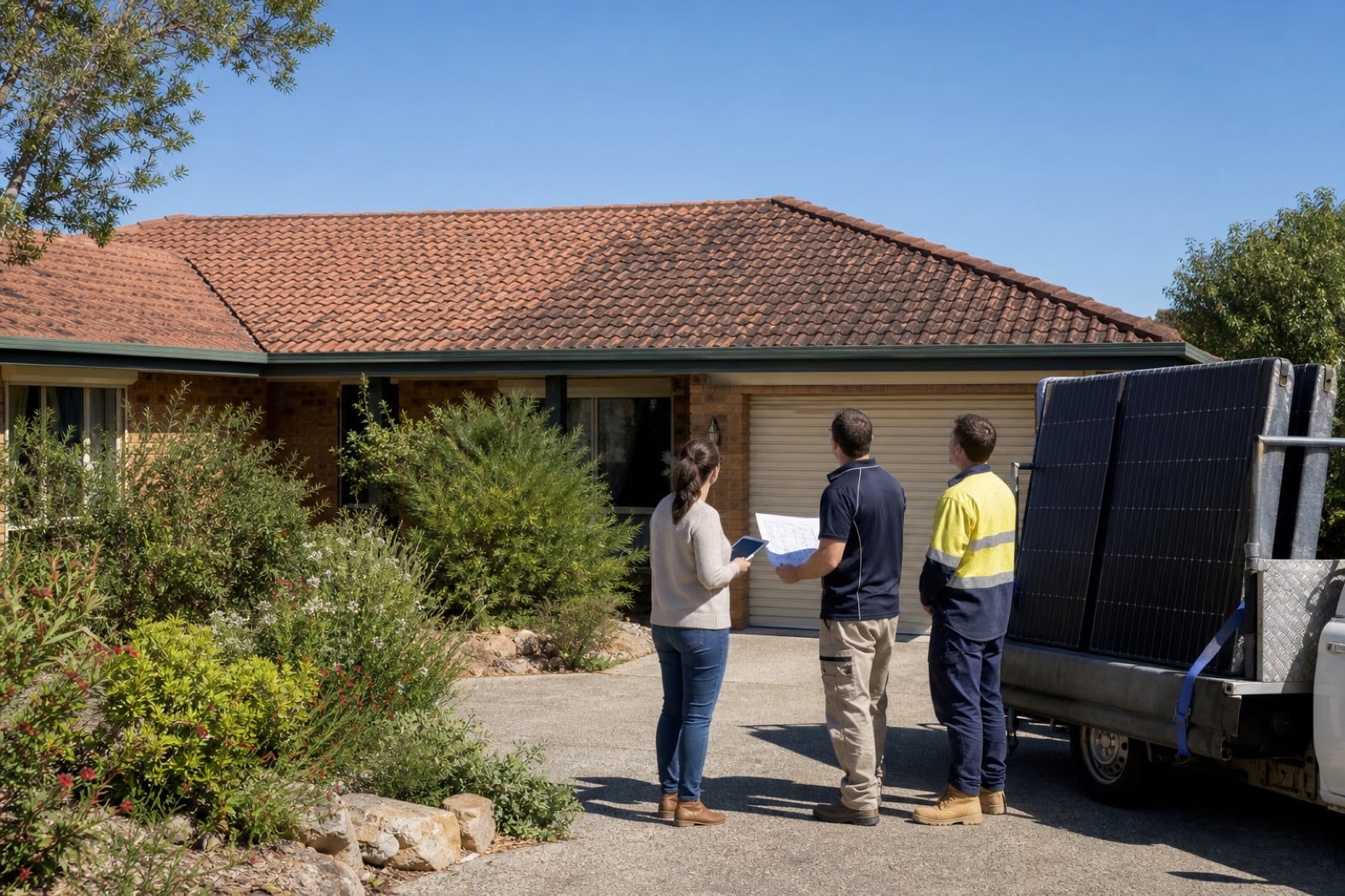
Should You Repair Your Roof Before Installing Solar?
Check roof condition, access and repair timing before panels go on, so your solar quote reflects the home you actually have.
 Randy Osifo-Doe
If you may need to repair your roof before solar, settle that question before accepting a panel layout. Solar equipment is designed to stay in place for years, so putting it over a roof that soon needs major work can turn one project into two.
The Australian Government's solar design guidance says roof repair or replacement expected in the next few years should be completed before panels are installed. That does not mean an older roof automatically fails. It means its condition, remaining work and access need a proper conversation before the quote becomes a contract.
Start with roof condition, not panel count
A solar proposal should be based on the roof that will carry the system. Look for issues you already know about, such as active leaks, cracked or slipping tiles, corrosion, damaged roof sheets, previous patching or a roof replacement already being planned.
Do not climb up to diagnose the roof yourself. Ask an appropriate roofing professional to assess visible damage or a roof nearing replacement, and make sure the solar retailer or installer receives the findings. The NSW Government's household solar guidance says the roof should be in good condition and strong enough for the panels and the people installing them.
| Roof situation | Sensible next step | What the solar quote should show |
|---|---|---|
| Sound roof with no known repair plan | Continue to a site-specific solar design | Panel layout, mounting approach and access |
| Minor repair already identified | Complete or coordinate the repair before installation | Who does each task and when |
| Leak, damaged surface or uncertain strength | Pause the solar decision for a roof assessment | Revised design only after the condition is clear |
| Roof replacement likely within a few years | Compare doing the roof first with delaying solar | No assumption that panels can simply stay in place |
Match the mounting plan to the roof
Roof material and shape change how panels are fitted. The Australian Government notes that corrugated steel roofs are generally easier to attach to than tiled roofs, while steep, double-storey and some flat roofs can require more care with access or waterproofing.
That detail should appear in the site discussion rather than as a surprise on installation day. Ask:
- What roof type and condition has the proposal allowed for?
- Where will rails and mounting points sit?
- Are any roof repairs required before the crew arrives?
- Who is responsible if the layout changes after a closer inspection?
- Will the work affect an existing roof warranty?
For a tiled roof, the Government's installation-day guide explains that tiles may need to be cut or ground around mounting brackets and that some tiles can be damaged despite careful work. Ask whether spare matching tiles should be available before installation.
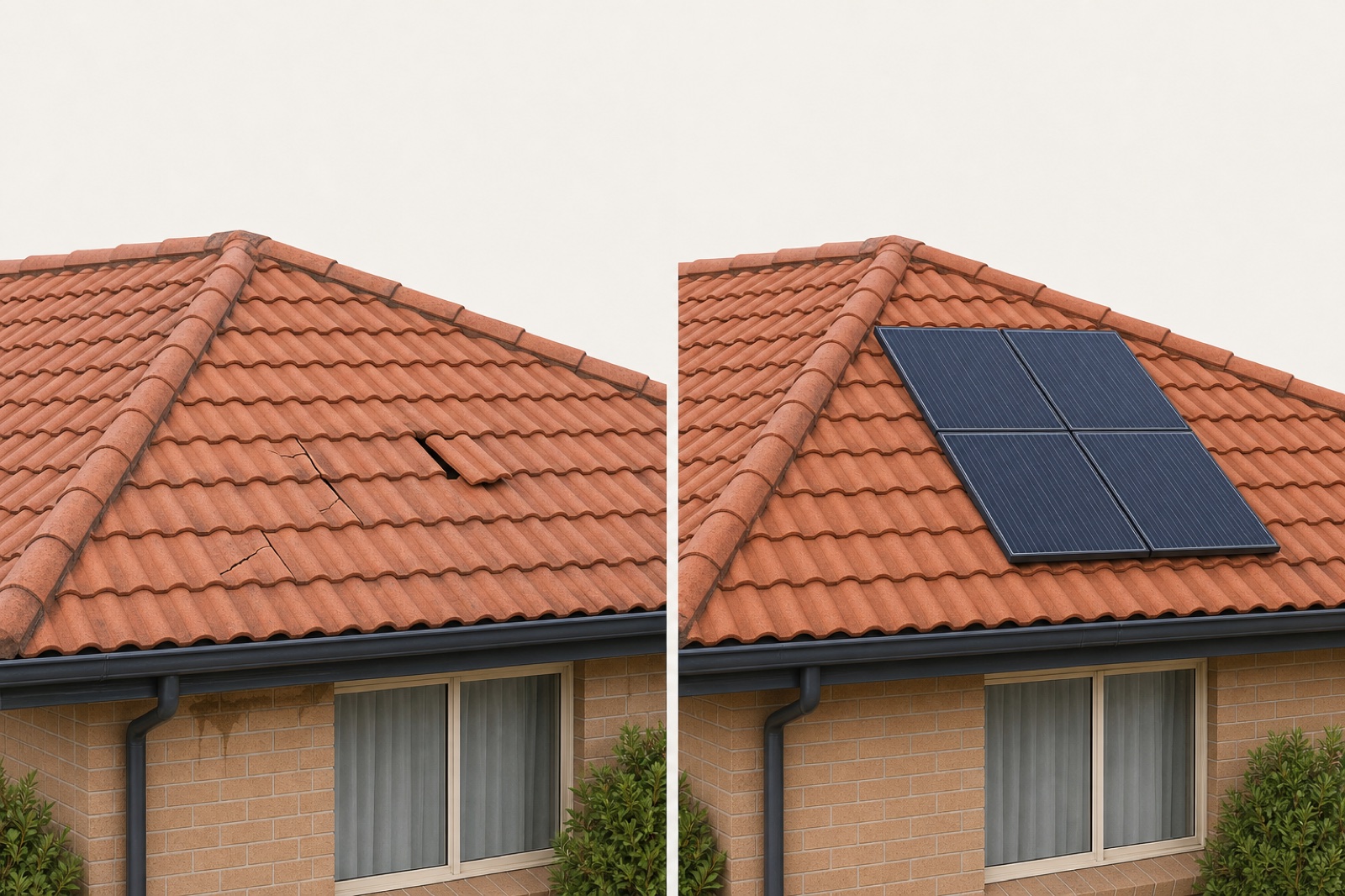
This conceptual comparison shows the order of work, not a method for inspecting, repairing or mounting equipment on a real roof.
Keep the roof and solar scopes clear
If roof work is needed, get the roof scope and solar scope in writing. The documents should make clear which work happens first, who checks the completed roof, and whether either contractor needs to coordinate penetrations, flashing, access or scheduled dates.
Avoid relying on a vague promise that panels can be removed later. NSW Government guidance warns that removing and reinstalling solar can be risky and expensive. If future roof work is a real possibility, ask for the expected process in writing without assuming the original installer, equipment or price will still be available.
A site visit can reduce this uncertainty. The Australian Government's retailer and installer guidance recommends a site-specific design and notes that an on-site visit is more likely to uncover roof access, shading, switchboard and inverter-location complications.
Review the complete roof plan
Once the roof condition is settled, compare layouts rather than choosing on panel count alone. Use the solar shading checklist to test shade assumptions, the panel efficiency versus wattage guide to check roof fit, and the inverter location guide to review the rest of the installation.
Also separate roof work from other extras. If the proposal includes electrical changes, use the switchboard quote checklist so each contractor, task and cost is itemised.
The calm next step is simple: resolve any known roof question, then ask solar retailers to quote against the same confirmed condition and layout. That gives you a cleaner comparison and reduces the chance of redesigning the job after you have signed.
Sources checked
Last reviewed July 2026
This guide is reviewed against current Australian solar policy and market guidance where available. Confirm retailer prices, rebates, and product eligibility before making a purchase decision.
Randy Osifo-Doe is the Brisbane-based founder and lead writer of Aussie Solar Guide. His background is in finance, banking and household budgeting, and he writes from lived experience as a solar homeowner. He is not presented as an engineer, electrician, solar installer or renewable-energy professional.