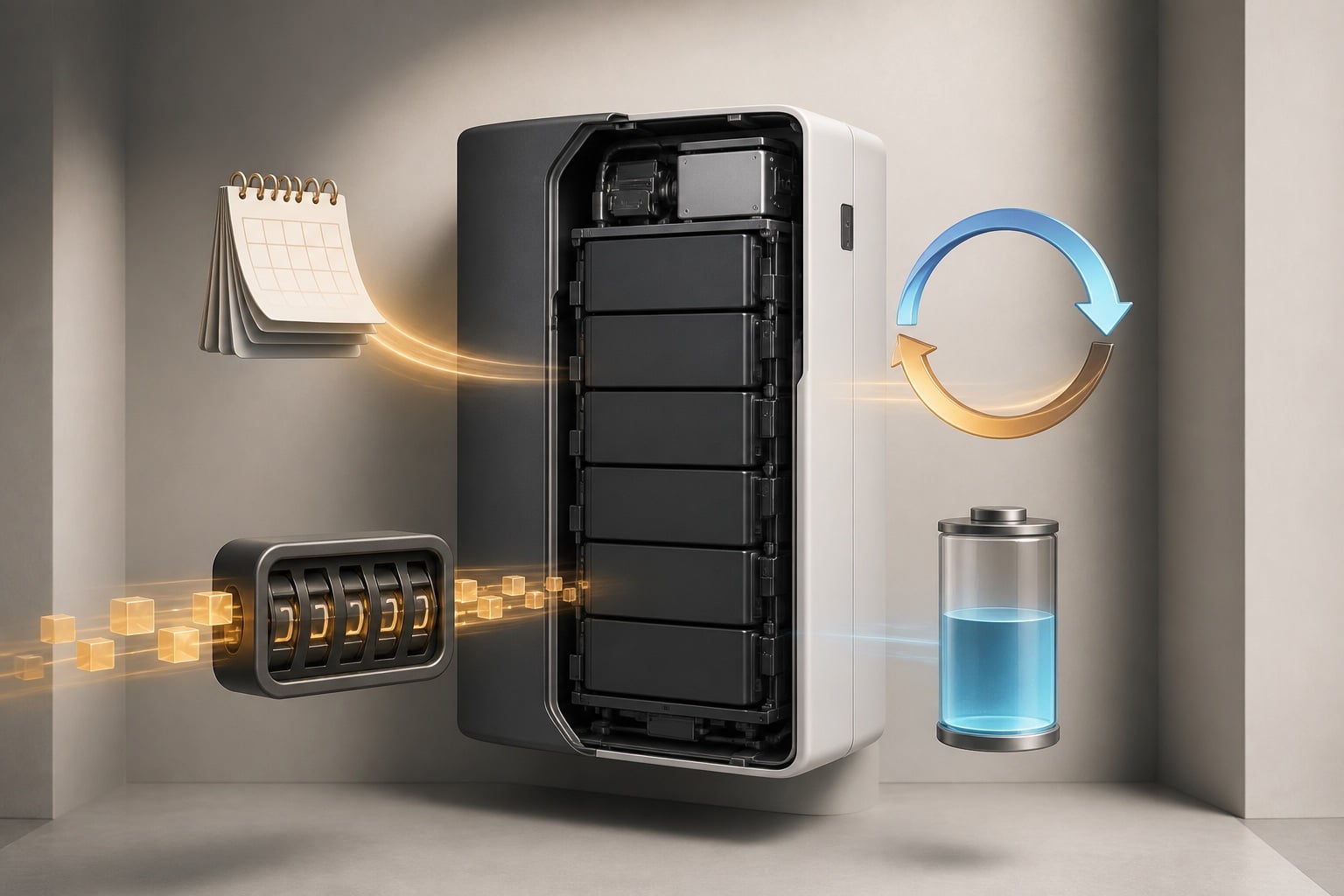
Battery Warranty Cycles and Throughput: Quote Guide
Learn how years, cycles, energy throughput and retained capacity can place different limits on an Australian home-battery warranty.
 Randy Osifo-Doe
Battery warranty cycles and throughput can make two home-battery quotes look similar while covering different amounts of use. A long headline warranty period is only one part of the comparison.
The practical question is which limit applies first under the way you expect to use the battery. Check the calendar term, cycle or throughput allowance, retained-capacity promise and operating conditions together before treating one warranty as stronger.
The 4 warranty measures to find
The Australian Government's battery warranty guidance explains that manufacturers may use time, cycles, energy throughput and end-of-warranty capacity to describe their cover.
| Warranty measure | What it describes | What to find in the document |
|---|---|---|
| Calendar term | How long the warranty runs | Start date, end date and any shorter component terms |
| Cycle allowance | How many charge-and-discharge cycles are covered | The warranty's definition of a cycle and any daily-use condition |
| Energy throughput | The total energy the battery can deliver during the warranty period | The allowance in kWh or MWh and how it is measured |
| Retained capacity | The minimum capacity promised at a stated point | Whether it refers to nominal or usable capacity and the test method |
Do not assume every warranty uses all 4 measures. Some use a calendar period plus one usage limit. Others describe retained capacity separately. The written warranty for the exact model on the quote is the document that matters.
A calendar term may not be the only limit
A warranty can state a number of years and still include a cycle or throughput condition. The Australian Government notes that battery warranties may apply for a fixed term or a minimum number of cycles, often with the first limit reached determining the outcome. Throughput warranties can also sit inside a calendar period.
This is where I think homeowners need to slow down. “Covered for years” sounds simple, but it does not tell you how much battery use is covered during those years. Ask the retailer to point to the clause that explains how time and usage limits work together.
Cycles and throughput measure use differently
A cycle is based on charging and discharging the battery. Throughput measures the cumulative energy stored and delivered, normally in kWh or MWh. They are related, but they are not interchangeable headline numbers.
The definition of a full cycle can vary between warranty documents. Do not convert partial charges into a cycle estimate unless the document explains how they are counted. With throughput, confirm whether the figure refers to energy charged, energy discharged or another defined measurement point.
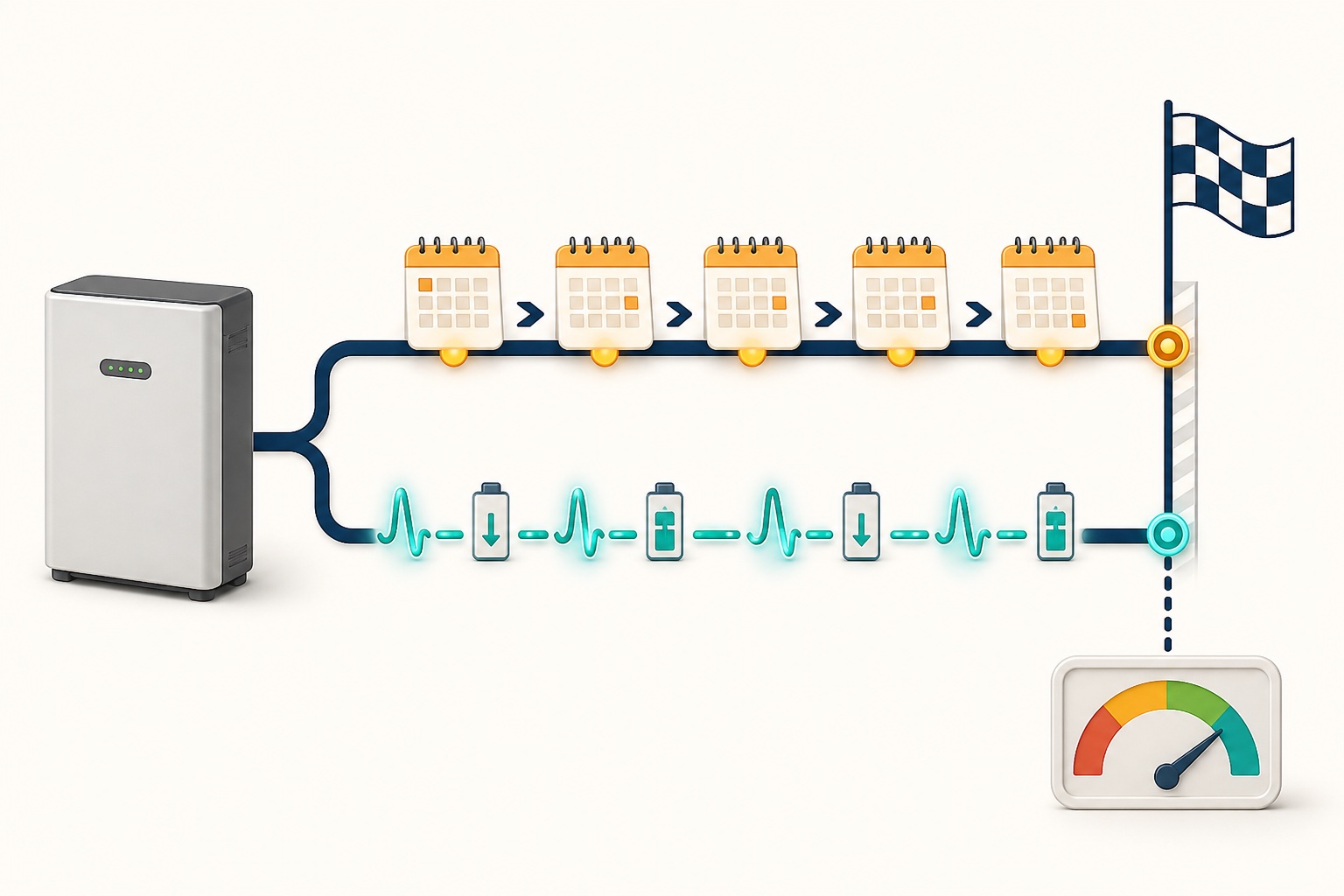
Time and usage limits can move at different rates. The written warranty explains which one applies first and how retained capacity is checked.
If the quote mixes power and energy figures, read the kW versus kWh guide before comparing throughput. For the difference between headline storage and available storage, use the usable versus nominal capacity guide.
Retained capacity is a different promise
Batteries lose some capacity over time. A retained-capacity term describes the minimum capacity covered at a stated point or under stated conditions. It does not mean the battery will deliver its original usable capacity for the full warranty period.
Check the starting figure as carefully as the ending one. If one quote uses nominal capacity and another uses usable capacity, the percentages are not yet a like-for-like comparison. Ask how the capacity test is performed, who can perform it and what evidence is needed for a claim.
The wider solar warranty checklist explains the difference between product, performance and workmanship cover.
Read the operating conditions before comparing
The Australian Government guidance says warranty conditions can cover how often a battery is charged and discharged, whether it stores electricity from the grid and the weather conditions it can be exposed to. The Queensland Government's battery buyer guidance also recommends checking warranty support and the manufacturer or supplier responsible for it.
For each quote, ask:
- Which limit ends or reduces the cover first: time, cycles or throughput?
- What retained capacity is covered, and is it based on usable or nominal capacity?
- Are there separate terms for the battery modules, inverter or other system components?
- Do the proposed settings and operating mode stay within the warranty conditions?
- Who handles a claim in Australia, and what records should you keep?
What to check next
Put the 2 warranty documents beside the quotes and write the 4 measures in one comparison table. If a figure is missing, ask for the full warranty rather than relying on a brochure summary.
Then compare the complete system design, not the warranty in isolation. The AC-coupled versus DC-coupled battery guide can help you check whether the proposed battery and inverter arrangement suits the home as well as the paperwork.
Sources checked
Last reviewed August 2026
This guide is reviewed against current Australian solar policy and market guidance where available. Confirm retailer prices, rebates, and product eligibility before making a purchase decision.
Randy Osifo-Doe is the Brisbane-based founder and lead writer of Aussie Solar Guide. His background is in finance, banking and household budgeting, and he writes from lived experience as a solar homeowner. He is not presented as an engineer, electrician, solar installer or renewable-energy professional.