
kW vs kWh: How to Read a Solar and Battery Quote
Learn what kW and kWh mean across solar panels, inverters, batteries and electricity bills before you compare Australian quotes.
 Randy Osifo-Doe
kW vs kWh is one of the most useful distinctions to understand before comparing a solar or battery quote. Kilowatts describe how quickly electricity can be supplied at a moment; kilowatt-hours describe how much electricity is generated, stored or used over time.
The two units answer different questions. A solar array, inverter, export limit or battery output may be shown in kW. Your electricity bill, estimated solar generation and battery storage are usually shown in kWh. Reading them as if they were interchangeable can make two very different proposals look similar.
Start with power and energy
Think of kW as a rate and kWh as an amount. The Australian Government's solar panel guidance compares power with the flow rate from a tap and energy with the total volume that comes out over time.
A simple appliance example makes the relationship clearer. If an appliance draws 3 kW continuously for two hours, it uses 6 kWh of energy. The 3 kW figure describes the load while it is running. The 6 kWh figure describes the energy used across those two hours.
This does not mean a 6 kW solar system will always generate 6 kWh every hour. Its kW rating is measured under standard test conditions. Actual energy generation varies with sunlight, time of day, season, panel direction, shade and other system factors.
Find each unit in a solar quote
Use this table to separate the figures before comparing proposals.
| Quote or household figure | Usually shown as | What it tells you |
|---|---|---|
| Solar panel array size | kW | The combined rated power of the panels |
| Inverter capacity | kW | The power the inverter is designed to convert at a moment |
| Export limit | kW | The maximum power the system may send to the grid at a moment |
| Estimated solar generation | kWh per day or year | The energy the design is expected to generate over time |
| Battery usable capacity | kWh | The energy available to store and use |
| Battery continuous output | kW | The power the battery can supply at once |
| Household electricity use | kWh | The energy used during the measured period |
The Australian Government's system sizing guidance explains that solar system size is the total rated capacity of the panels in kW, while average daily use on a bill is measured in kWh. Use the solar system sizing guide for the next step, but ask the retailer to show the assumptions behind any generation estimate.
Read battery capacity and output separately
A battery needs both figures because storing energy and supplying power are different jobs. Battery capacity in kWh describes how much energy it can hold. Rated output in kW describes how quickly it can supply that energy to the home.
A proposal can therefore list a battery with enough kWh for several hours of normal use but not enough kW to run every large appliance at once. The Australian Government's battery guidance says output limits the number and size of appliances a battery can power at one time without help from the grid.
Ask whether the quoted capacity is total or usable, then ask for continuous output rather than relying only on the headline storage number. If backup matters, separately confirm which circuits the design is intended to support. The battery sizing guide and battery calculator can help you organise those questions without choosing a product for you.
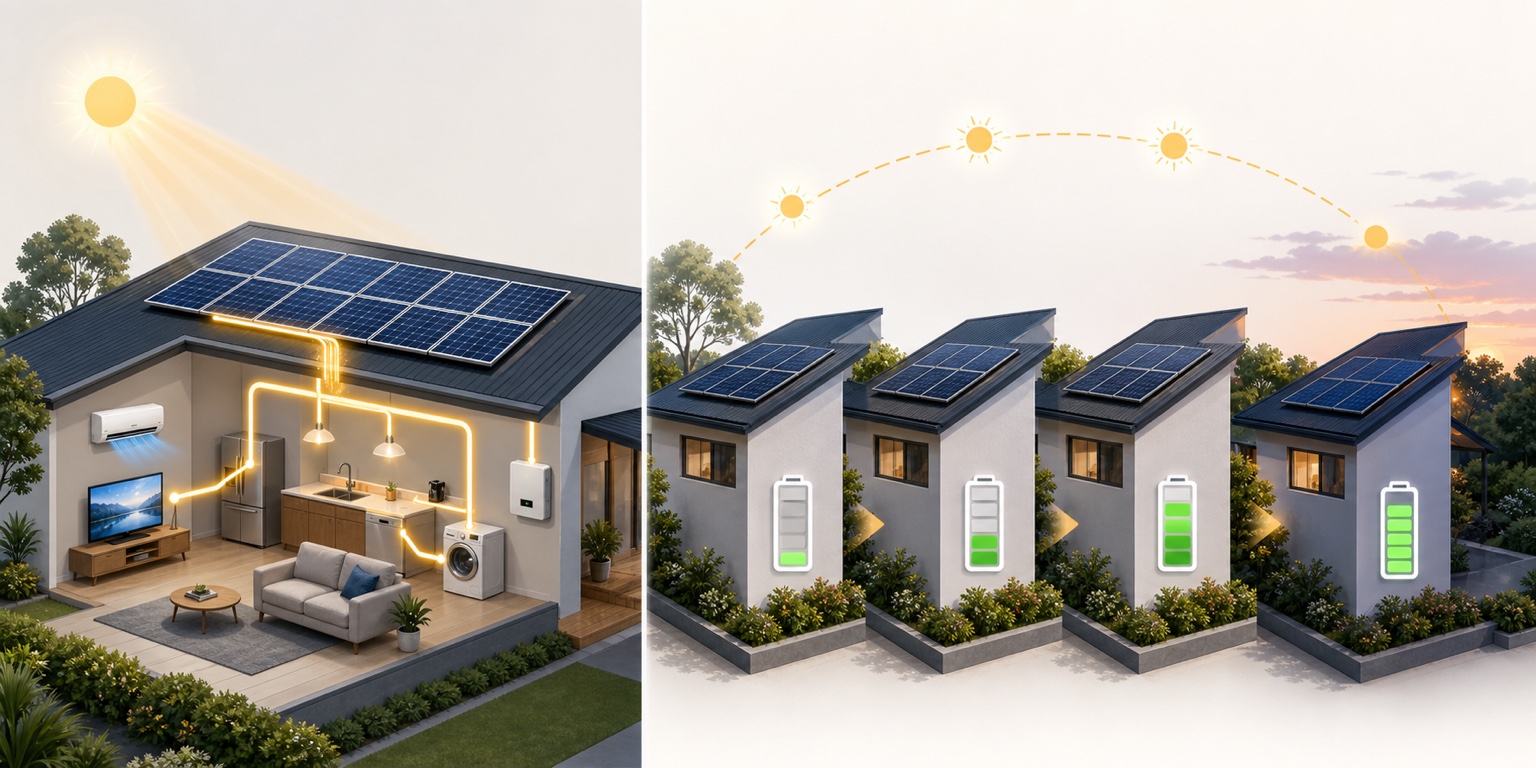
The left side represents power being supplied at a moment. The right side represents energy accumulating over time; it is an illustration, not a performance forecast.
Connect the quote to your bill
Your bill records electricity use in kWh. The Australian Energy Regulator's bill guidance notes that usage and variable charges are presented per kilowatt-hour. That makes recent bills useful for checking whether a quote's daily or annual kWh assumptions resemble your household's actual use.
Do not compare your daily kWh use directly with the solar array's kW rating and assume the numbers should match. Instead, compare the quote's estimated kWh generation with your kWh consumption, then consider when each occurs. The solar panel shading checklist explains one reason actual generation may differ from a simple headline estimate.
Ask the same five questions on every quote
Before choosing a proposal, ask:
- Which figure is panel capacity in kW, and which is estimated generation in kWh?
- What inverter capacity and export limit apply in kW?
- For a battery, what are the usable kWh and continuous kW figures?
- What household usage data and generation assumptions were used?
- Are the same units and time periods being used across every quote?
Write the answers beside each proposal. Once the units line up, differences in design are easier to see and questions about system size, battery behaviour and expected generation become much more specific.
Sources checked
Last reviewed July 2026
This guide is reviewed against current Australian solar policy and market guidance where available. Confirm retailer prices, rebates, and product eligibility before making a purchase decision.
Randy Osifo-Doe is the Brisbane-based founder and lead writer of Aussie Solar Guide. His background is in finance, banking and household budgeting, and he writes from lived experience as a solar homeowner. He is not presented as an engineer, electrician, solar installer or renewable-energy professional.