When to Replace an Old Solar System: Repair, Upgrade or Recycle?
A practical guide to deciding whether an ageing solar system needs one repair, a selective upgrade or full replacement—and planning for old equipment.
 Randy Osifo-Doe
Knowing when to replace an old solar system is not as simple as counting the years since installation. A drop in generation might point to one failed component, a maintenance issue or a design that no longer suits the household. It does not automatically mean every panel needs to come off the roof.
The practical starting point is diagnosis. Work out what has changed, what still works and what you want the system to do next. Then compare a repair, a selective upgrade and full replacement on the same scope.
Age is a clue, not the final answer
The Australian Government's replacement and recycling guide says reduced performance may not mean a component needs replacement. Monitoring and a system-wide check by an accredited installer can help identify whether there is a fault and which part is affected.
Start with your recent monitoring history rather than one cloudy day. The solar monitoring guide explains how to compare similar conditions and separate inverter generation from smart-meter or electricity-bill data. If the system is showing a fault code, repeated shutdowns or an unusual drop on comparable sunny days, contact the retailer, installer or an appropriately qualified professional.
This is where I think homeowners need to slow down. “Old” is not a diagnosis, and “new system” is not the only possible quote.
What commonly reaches end of life first
Government guidance gives broad average lifespans of 20–30 years for solar panels, 10–15 years for a string inverter, 20–25 years for microinverters and 10–15 years for a lithium-ion battery. These are planning ranges, not expiry dates. Use, maintenance, operating conditions and the individual equipment all matter.
That means an inverter or battery may need attention while the panels are still serviceable. The solar warranty checklist can help you separate product, performance and workmanship cover before paying for work that may still fall within a warranty.
Compare the three realistic paths
| What the evidence shows | Path to price and assess | What to confirm |
|---|---|---|
| One component has failed and the rest tests well | Repair or replace that component | Compatibility, warranty and monitoring changes |
| The system works but no longer suits your electricity use | Selective upgrade or redesigned addition | What stays, what changes and expected generation assumptions |
| Several parts are failing, damaged or unsuitable for the proposed upgrade | Full replacement | Complete scope, roof work, removal and end-of-life handling |
| Roof repair or replacement is approaching | Coordinate roof and solar work before deciding | Removal, temporary storage, reinstallation and warranty responsibility |
The Australian Government's design guidance says panels can sometimes be added to an existing system, but compatibility and the original configuration matter. New panels may need to match the existing equipment, or the better design may involve a different inverter. Ask for both the retained and replaced components to be named in writing.
If roof work is likely, use the roof-before-solar guide to coordinate the sequence. Removing and reinstalling panels can change the comparison between keeping the existing array and replacing it, but the answer depends on a site-specific assessment.
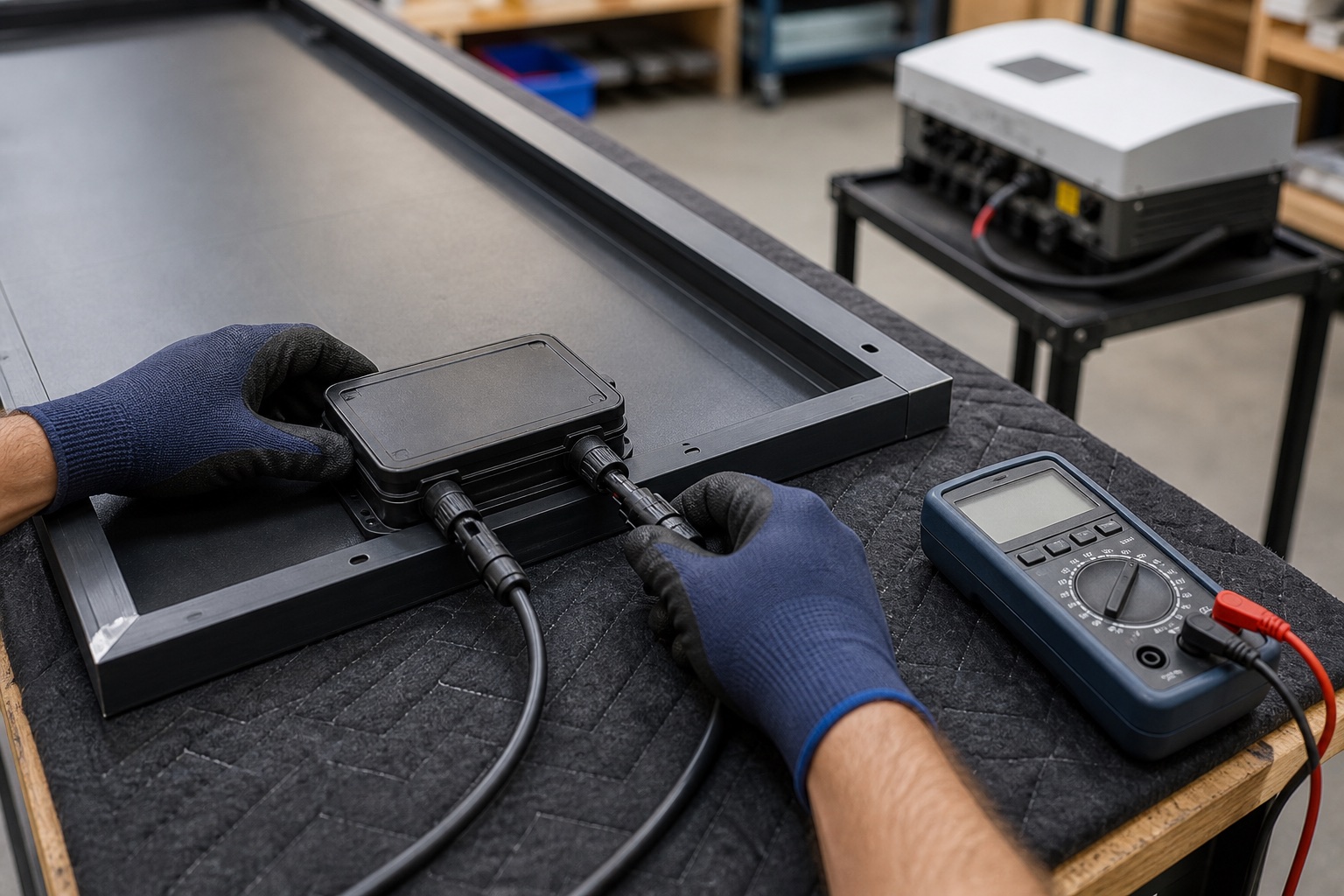
A component-level diagnosis can show whether the problem is isolated. The equipment shown is disconnected in a workshop; solar electrical testing is not a DIY job.
Decide what happens to the old equipment
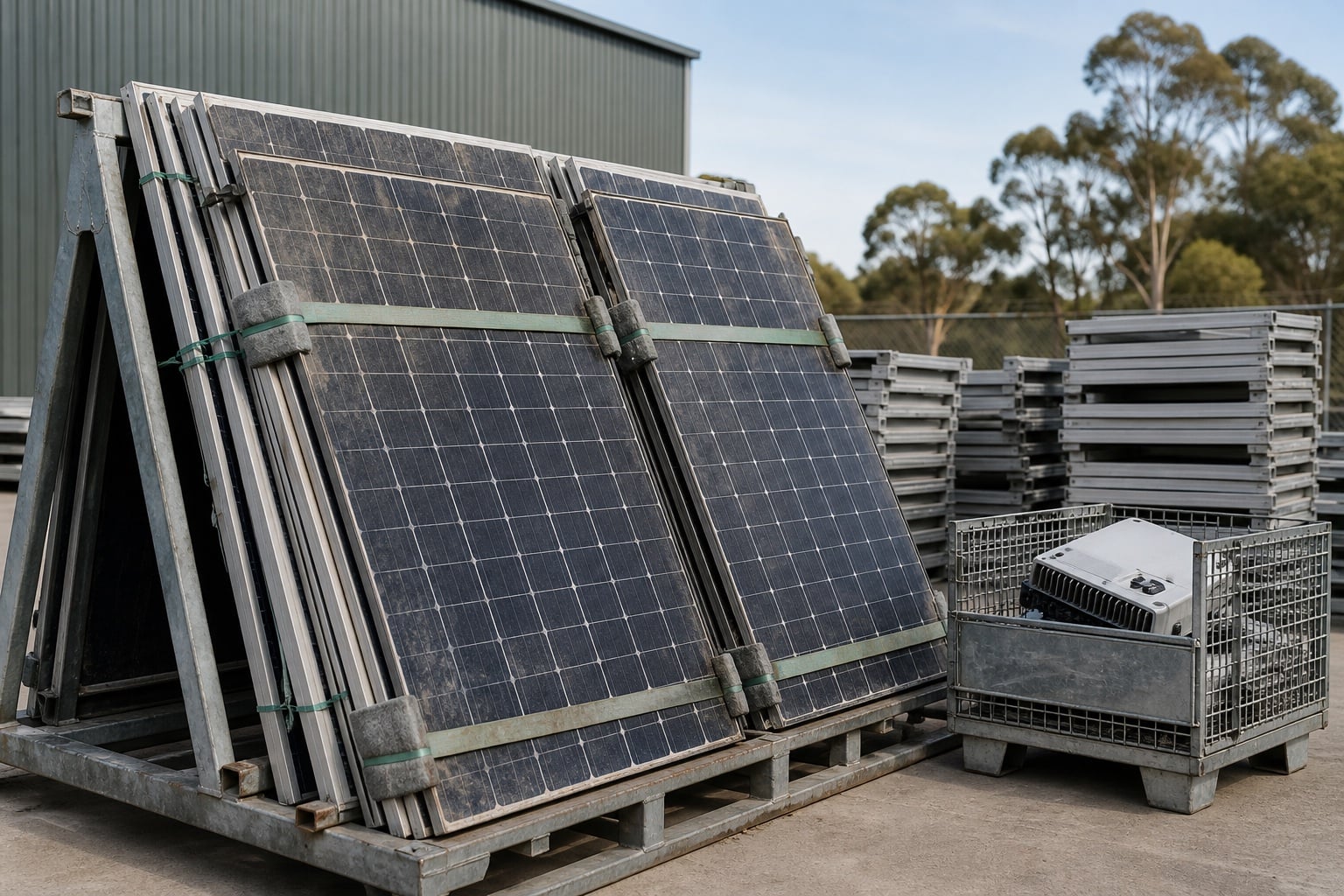
Removal should be part of the quote, not an afterthought. The Australian Government advises using a licensed electrician to remove or replace solar components and recommends an installer accredited by Solar Accreditation Australia to manage the work. Do not remove panels, an inverter or a battery yourself.
Most solar-panel materials can be recycled, although services and fees vary. Ask whether the installer will take removed panels away and where they will go. Old inverters may be accepted through an installer, local council or e-waste service. Batteries need a separate plan: government guidance says homeowners should not remove, store or transport an old battery themselves and should contact the provider or an accredited installer about disposal.
Put these questions in the quote
- What test result shows which component has failed?
- Which existing panels, inverter, mounting equipment and monitoring hardware will stay?
- Is the proposed replacement compatible with the retained system?
- Will roof, switchboard, meter or network work also be required?
- Who removes the old equipment, and is transport or recycling included?
- Which warranties apply to the new work and the components that remain?
Keep the diagnosis and each option on separate lines. That makes it easier to compare the real scope instead of comparing one repair price with another supplier's full replacement price. For the next step, review the solar maintenance guide and get the proposed work documented before anything is removed.
Sources checked
Last reviewed August 2026
This guide is reviewed against current Australian solar policy and market guidance where available. Confirm retailer prices, rebates, and product eligibility before making a purchase decision.
Randy Osifo-Doe is the Brisbane-based founder and lead writer of Aussie Solar Guide. His background is in finance, banking and household budgeting, and he writes from lived experience as a solar homeowner. He is not presented as an engineer, electrician, solar installer or renewable-energy professional.