Aussie Solar Guide
Solar Maintenance

Solar Panel Maintenance Guide: Keep Your System Running at Peak Performance

Do solar panels need maintenance? Yes, but it's minimal. Learn the simple steps to keep your system producing maximum power for 25+ years.

December 30, 2025
9 min read

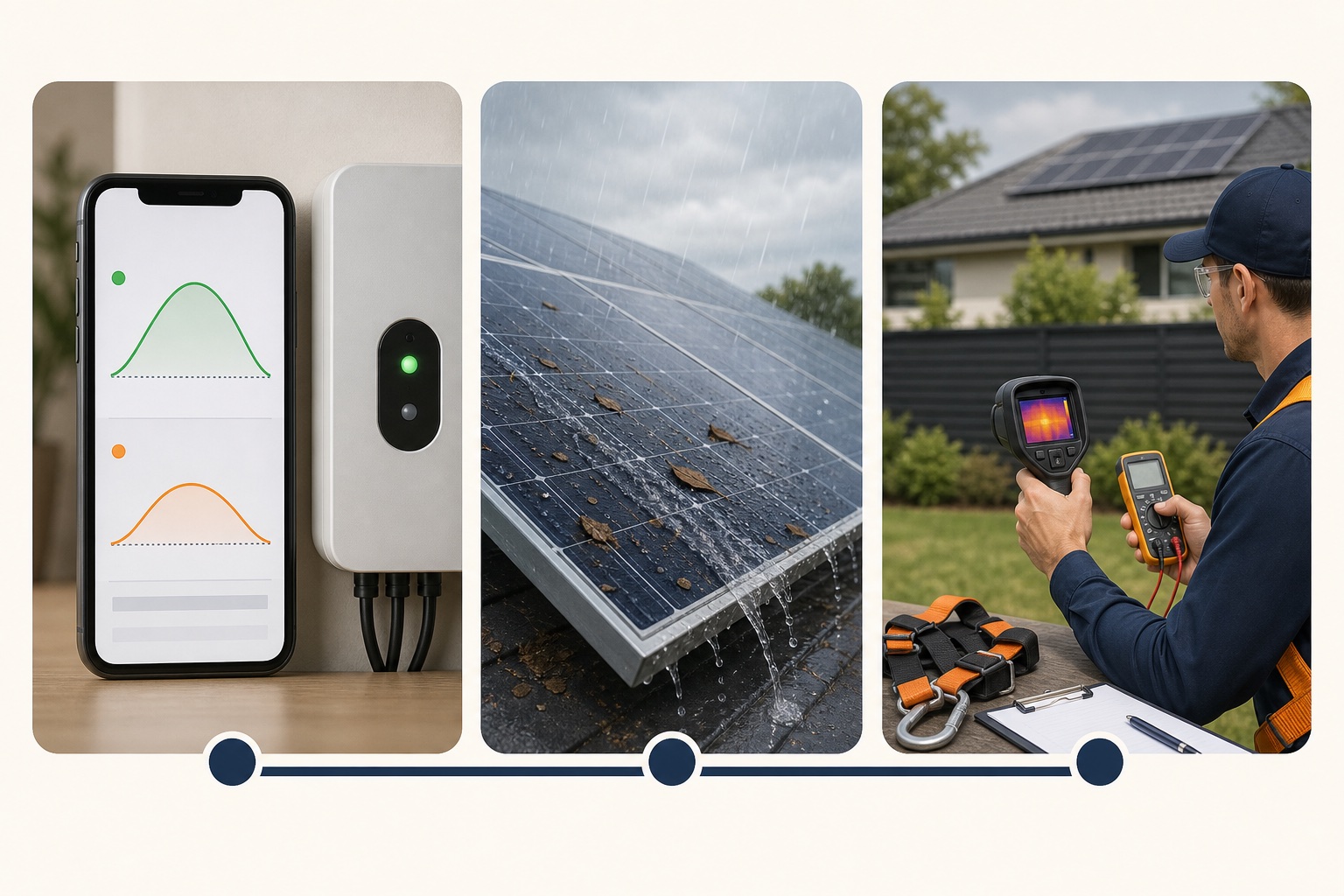
![Solar Maintenance] Maintenance Guide: Keep Your System Running at Peak Performance

Good news: Solar panels are remarkably low-maintenance. But "low" doesn't mean "no" maintenance. This guide covers everything you need to keep your system running at peak efficiency for 25+ years.

The Short Answer

Annual Maintenance Requirements:

  • Panel cleaning: 1-2 times per year (often optional)
  • Visual inspection: 2-4 times per year
  • Professional checkup: Every 3-5 years
  • Annual cost: $100-$300 typically

Expected Issues Over 25 Years:

  • Inverter replacement (Year 10-15): $1,200-$2,500
  • Minor repairs: $200-$500 total
  • Total 25-year maintenance: $3,000-$5,000

Daily Monitoring (5 Minutes)

What to Check

Morning Routine:

  • Open monitoring app
  • Verify system is generating (if sunny)
  • Check for error messages
  • Note any performance drops

What's Normal:

  • Cloudy days: 10-30% of sunny day output
  • Morning/evening: Low generation
  • Seasonal variation: 30-40% less in winter
  • Gradual decline: 0.5% per year

What's Not Normal:

  • Zero generation on sunny day
  • Sudden 20%+ drop
  • Persistent error codes
  • One panel significantly lower than others

Monitoring App Features

Track:

  • Daily generation (kWh)
  • Current power output (kW)
  • Total system production
  • Environmental offset (CO₂)
  • Financial savings

Set Alerts For:

  • System offline
  • Low production vs expected
  • Grid connection issues
  • Inverter errors

Visual Inspection (Monthly)

What to Look For

From Ground Level:

  1. Physical Damage:

    • Cracked or broken panels
    • Loose panels or mounting
    • Damage from storms or debris
    • Bird nesting under panels
  2. Obvious Soiling:

    • Heavy dust buildup
    • Bird droppings
    • Leaf accumulation
    • Pollen coverage
  3. Inverter Status:

    • Green lights (good)
    • Red lights (problem)
    • Error codes on display
    • Unusual sounds
  4. Vegetation:

    • New shading from tree growth
    • Branches near panels
    • Climbing plants on walls

Don't Climb on Roof: Safety first! Most issues visible from ground.

Panel Cleaning

When to Clean

Signs Cleaning Needed:

  • Visible dirt or bird droppings
  • Performance drop 5-10%
  • After bushfire smoke events
  • Post-construction dust
  • Heavy pollen season

How Often:

  • Urban areas: 1-2 times per year
  • Near trees: 2-3 times per year
  • Coastal areas: 2-4 times per year (salt spray)
  • Rural/dusty areas: 3-4 times per year
  • Clean environments: Annually or less

Best Timing:

  • Early morning or late afternoon (cooler panels)
  • Before summer (maximize peak production)
  • After pollen season (spring)

DIY Cleaning

Safe Method:

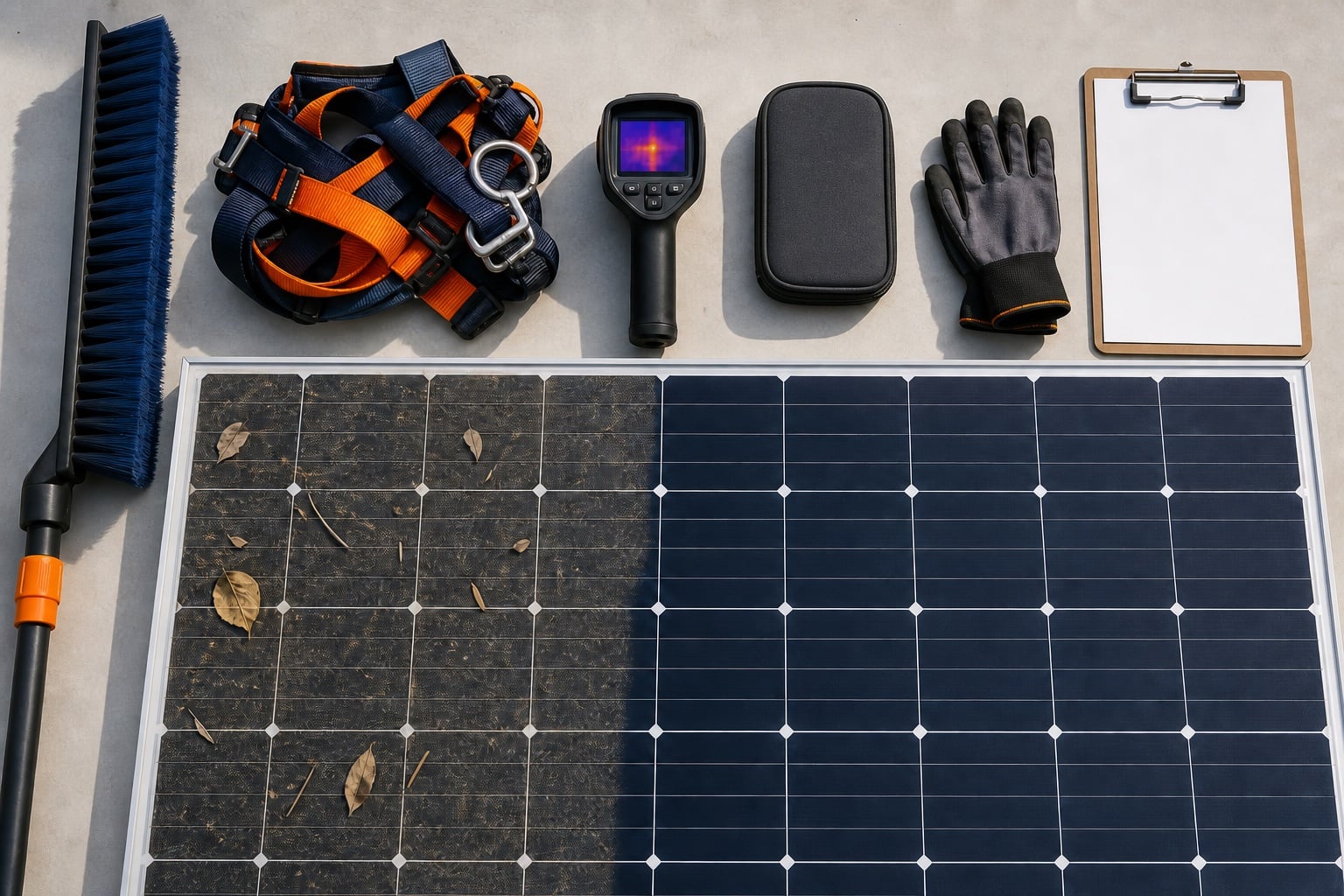
Equipment Needed:

  • Garden hose with spray nozzle
  • Soft-bristle brush or squeegee (optional)
  • Telescoping extension pole
  • Safety considerations

Process:

  1. Early morning when panels cool
  2. Spray with hose from ground level
  3. If accessible safely, gentle brush
  4. Rinse thoroughly
  5. Check monitoring for improvement

Never:

  • Use pressure washer (can damage cells)
  • Clean on hot days (thermal shock)
  • Use abrasive materials
  • Use chemicals or detergents
  • Walk on panels
  • Clean in unsafe conditions

Cost: $0-$50 (equipment)

Professional Cleaning

When to Hire Professional:

  • 2-storey installation
  • Steep roof pitch
  • Safety concerns
  • Stubborn soiling
  • Large array

What They Do:

  • De-ionized water system
  • Inspection while cleaning
  • Difficult access methods
  • Report on panel condition

Cost: $150-$350 depending on size

Frequency: Annually or bi-annually

Is Cleaning Worth It?

Rain Doesn't Clean Well:

  • Research shows 5-10% buildup even with rain
  • Bird droppings and sticky residue resist rain
  • Coastal salt spray requires manual cleaning

ROI Calculation:

  • 6.6kW system producing 9,000 kWh/year
  • 8% loss from soiling = 720 kWh lost
  • Value: 720 × $0.30 = $216 per year
  • Professional clean: $200-$300
  • Break-even to positive ROI

Inverter Maintenance

Expected Lifespan

String Inverters: 10-15 years typical
Microinverters: 20-25 years typical
Hybrid Inverters: 10-15 years typical

Daily Checks

Normal Indicators:

  • Green LED during generation
  • Display showing current output
  • No error codes
  • Slight humming sound normal

Problem Indicators:

  • Red or flashing lights
  • Error codes
  • No display activity on sunny day
  • Loud buzzing or clicking

Common Inverter Issues

Error Code Appears:

  1. Note the code
  2. Check manual for meaning
  3. Call installer if persistent
  4. Don't attempt repairs yourself

Inverter Not Starting:

  • Check isolation switches
  • Verify grid power present
  • Wait for sunrise (night = no generation!)
  • Call installer if persists

Professional Inspections

Recommended Schedule

Every 3-5 Years:

  • Comprehensive system check
  • Electrical safety testing
  • Performance verification
  • Warranty documentation

Cost: $200-$400 depending on system size

What's Checked

Professional Service Includes:

  1. Visual Inspection:

    • Panel condition
    • Mounting integrity
    • Cable condition
    • Weatherproofing
  2. Electrical Testing:

    • Voltage and current
    • Earth continuity
    • Insulation resistance
    • String testing
  3. Performance Analysis:

    • Compare to expected output
    • Identify underperforming panels
    • Check degradation rate
    • Monitor system efficiency
  4. Safety Verification:

    • Isolation switches functional
    • Earthing intact
    • No fire hazards
    • Comply with standards

Seasonal Maintenance

Summer

Priority: Maximize peak production

Tasks:

  • Clean panels before summer
  • Trim any new shading
  • Check cooling (inverter ventilation)
  • Monitor for heat-related issues

Watch For:

  • Inverter overheating (very hot days)
  • Increased dust (depending on location)
  • Storm damage

Winter

Priority: Minimize impact of reduced production

Tasks:

  • Check for shading (winter sun angle)
  • Clear leaf buildup
  • Inspect for storm damage
  • Monitor wet-weather performance

Watch For:

  • Water ingress issues
  • Condensation in junction boxes
  • Gutter overflow near panels

Common Problems & Solutions

Problem 1: Birds

Issue: Birds nesting under panels, droppings on panels

Solution:

  • Bird mesh/critter guard ($500-$800 installed)
  • Professional cleaning for droppings
  • Regular monitoring

Prevention: Install bird-proofing at installation time

Problem 2: Shading

Issue: Tree growth creating new shading

Solution:

  • Professional tree trimming
  • May need council permit
  • Cost: $300-$1,000 depending on tree

Prevention: Consider future growth at installation

Problem 3: Weather Damage

Issue: Hail, storm, or debris damage

Solution:

  • Contact installer immediately
  • Check home insurance coverage
  • Professional assessment needed
  • Panel replacement if cracked

Note: Modern panels withstand 35mm hail

Problem 4: Performance Decline

Issue: Gradual or sudden output reduction

Causes:

  • Soiling (clean panels)
  • Shading (trim trees)
  • Inverter issue (call installer)
  • Panel degradation (normal if gradual)
  • Grid voltage (network issue)

Action:

  • Check simple causes first
  • Compare to similar sunny days
  • Call installer if unexplained

Warranty Maintenance Requirements

Panel Warranties

Product Warranty: 10-25 years

  • Covers manufacturing defects
  • Physical damage not covered
  • Installation damage not covered

Performance Warranty: 25-30 years

  • Guarantees minimum output
  • Typically 80-92% at 25 years
  • May require maintenance records

Maintain Warranty:

  • Keep installation documentation
  • Document any maintenance
  • Use qualified technicians
  • Report issues promptly

Inverter Warranties

Typical: 5-10 years (10-25 for microinverters)

Extended Warranties:

  • Often available for purchase
  • Consider for string inverters
  • Less critical for microinverters

Claim Process:

  • Contact installer first
  • Provide serial numbers
  • Describe fault
  • Arrange assessment

DIY Safety Rules

NEVER:

  • Touch electrical components
  • Work in wet conditions
  • Climb on roof if inexperienced
  • Open inverter or junction boxes
  • Attempt electrical repairs

ALWAYS:

  • Turn off system if working nearby
  • Use appropriate safety equipment
  • Stay off roof in unsafe conditions
  • Call professionals for electrical work
  • Follow manufacturer guidelines

Maintenance Checklist

Daily

  • Check monitoring app for generation
  • Note any error messages
  • Verify system is online

Monthly

  • Visual inspection from ground
  • Check inverter status lights
  • Look for new shading or obstructions
  • Review monthly production data

Quarterly

  • Assess cleaning needs
  • Check for vegetation growth
  • Inspect mounting and brackets (if visible)
  • Compare performance to previous quarter

Annually

  • Professional or DIY cleaning
  • Comprehensive visual inspection
  • Review annual generation data
  • Check warranty documentation still accessible

Every 3-5 Years

  • Professional system inspection
  • Electrical safety testing
  • Performance analysis
  • Update service records

Costs Summary

Typical 25-Year Maintenance Budget

Item Frequency Cost Each 25-Year Total
Annual cleaning (DIY) 25 times $0-$50 $0-$1,250
Professional clean Every 2-3 years $250 $2,000-$3,000
Professional inspection Every 5 years $300 $1,500
Inverter replacement Once (Year 12) $2,000 $2,000
Minor repairs As needed $500 total $500
Total $6,000-$8,250

Per Year Average: $240-$330

As % of System Value: 4-6% over 25 years

Maximizing Lifespan

Panel Lifespan

Expected:

  • Physical life: 30-40 years
  • Warranty: 25-30 years
  • Economic life: 25-30 years

Degradation Rate:

  • Premium panels: 0.25-0.40% per year
  • Standard panels: 0.40-0.55% per year
  • At year 25: 88-92% original output

Extend Lifespan:

  • Keep clean
  • Prevent physical damage
  • Monitor performance
  • Address issues promptly

Inverter Lifespan

String Inverters:

  • Expect replacement once (Year 10-15)
  • Budget $1,200-$2,500
  • New inverter adds 10-15 years

Microinverters:

  • Typically last system lifetime
  • Individual replacement if needed
  • $200-$400 per microinverter

Extend Lifespan:

  • Ensure good ventilation
  • Protect from weather
  • Monitor for errors
  • Address issues quickly

When to Call Installer

Immediate Call:

  • System completely offline
  • Smoke or burning smell
  • Physical damage visible
  • Electrical hazard (exposed wires)
  • Roof leak near panels

Soon (Within Week):

  • Persistent error codes
  • 20%+ unexplained production drop
  • Inverter unusual sounds
  • Multiple panels underperforming

Non-Urgent:

  • General performance questions
  • Cleaning recommendations
  • Scheduled maintenance
  • Warranty questions

The Bottom Line

Solar panels are incredibly low-maintenance. With annual cleaning, basic monitoring, and one inverter replacement over 25 years, your system will perform reliably for decades.

Key Takeaways:

  • Check monitoring daily (5 minutes)
  • Clean 1-2 times annually
  • Professional inspection every 3-5 years
  • Budget $240-$330 per year
  • Inverter replacement Year 10-15 ($2,000)
  • Total 25-year maintenance: $6,000-$8,000

Compare to Other Investments:

  • Pool: $2,000-$4,000 annually
  • Car: $2,000-$5,000 annually
  • Solar: $240-$330 annually

Solar maintenance is minimal compared to most home investments, while generating returns every single day.

Start your solar journey with our Solar Calculator to see your potential savings!

Compare Solar Quotes