Storm Damage to Solar Panels: Safe First Checks
After a storm, keep clear of damaged solar equipment, record what you can safely observe and ask the right people for an assessment.
 Randy Osifo-Doe
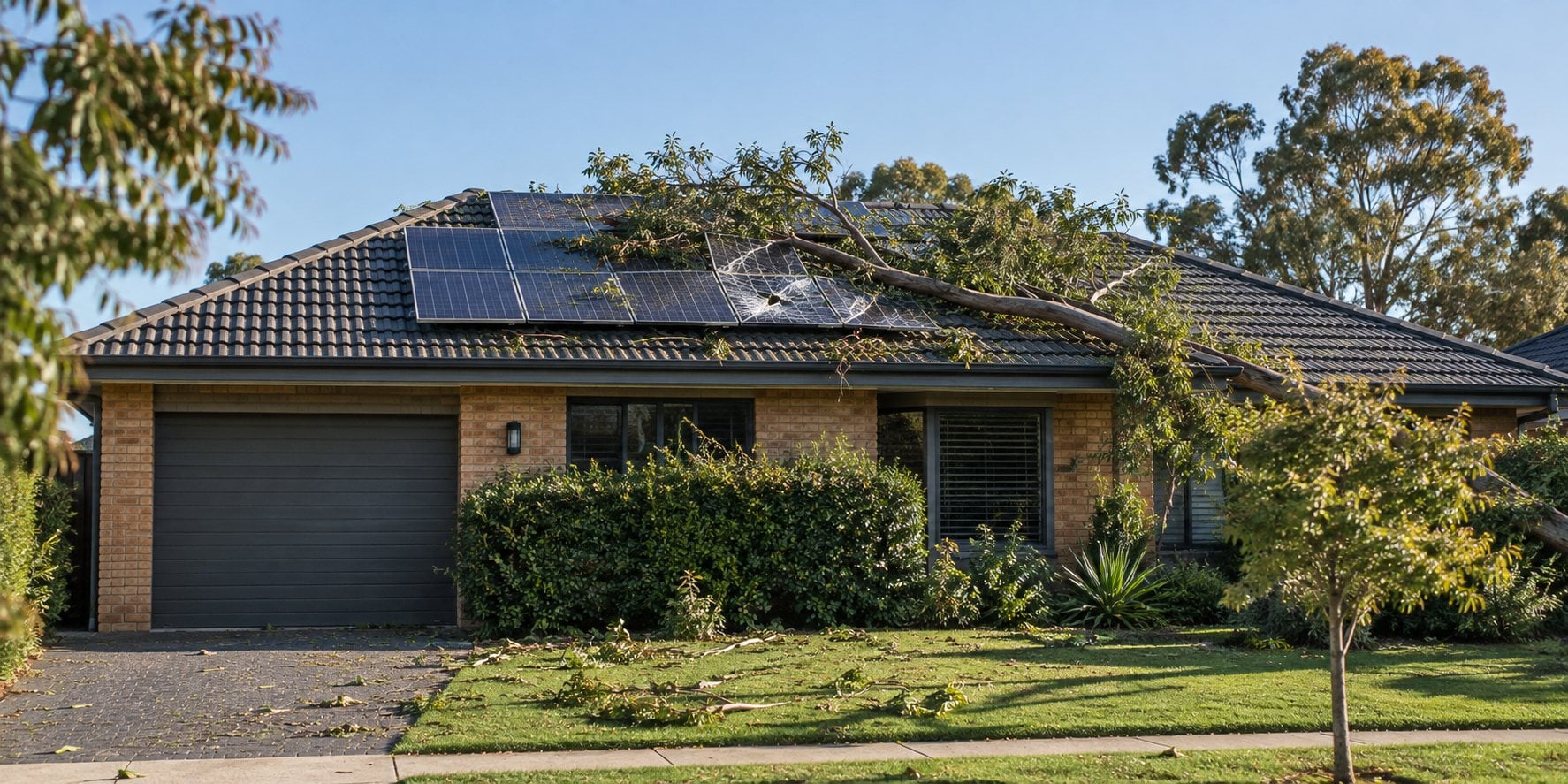
Storm damage to solar panels calls for a different response from ordinary dirt or a low reading in your app. If you can see a cracked panel, a fallen branch on the array or damaged cables, keep clear of that area. Do not go onto the roof, move debris or touch the equipment to find out whether it still works.
The useful first step is to make the situation safe and get a qualified assessment. You can record what you notice from a safe location, but you do not need to diagnose the electrical fault yourself.
Treat visible damage as an electrical concern
Solar panels can produce electricity when light reaches them. The Australian Government's system-care guidance says that even when mains electricity is switched off, a solar system may still be energised. Extreme weather can damage panels, wiring, switches or other parts, and repairs need an appropriately qualified professional.
Energy Safe Victoria's storm advice is direct: stay away from damaged solar or battery equipment and cables, and call a licensed electrician to make the system safe. That is Victorian guidance; the exact emergency and electrical-work process can vary by state or territory. If there is an immediate danger, use the local emergency response appropriate to the situation.
Do not rely on a dark inverter screen or an app showing zero generation as proof that a damaged array is safe. If the system has a documented isolation procedure, leave decisions about damaged or inaccessible equipment to the professional you contact. Avoid copying a switch sequence from another installation.
Record only what you can observe safely
You can help the retailer or electrician without approaching the roof or outdoor equipment. From indoors or another safe location, note when the storm happened, what you could see, any app alert or fault code, and whether generation changed after the weather cleared. A photograph is useful only if you can take it without moving closer to damaged equipment.
The Australian Government's monitoring guide explains that apps may show generation history and fault status, although the detail varies by system. Save screenshots with dates. A single low-output day during cloud or heavy rain is not a diagnosis; visible breakage matters more than a tidy-looking chart.
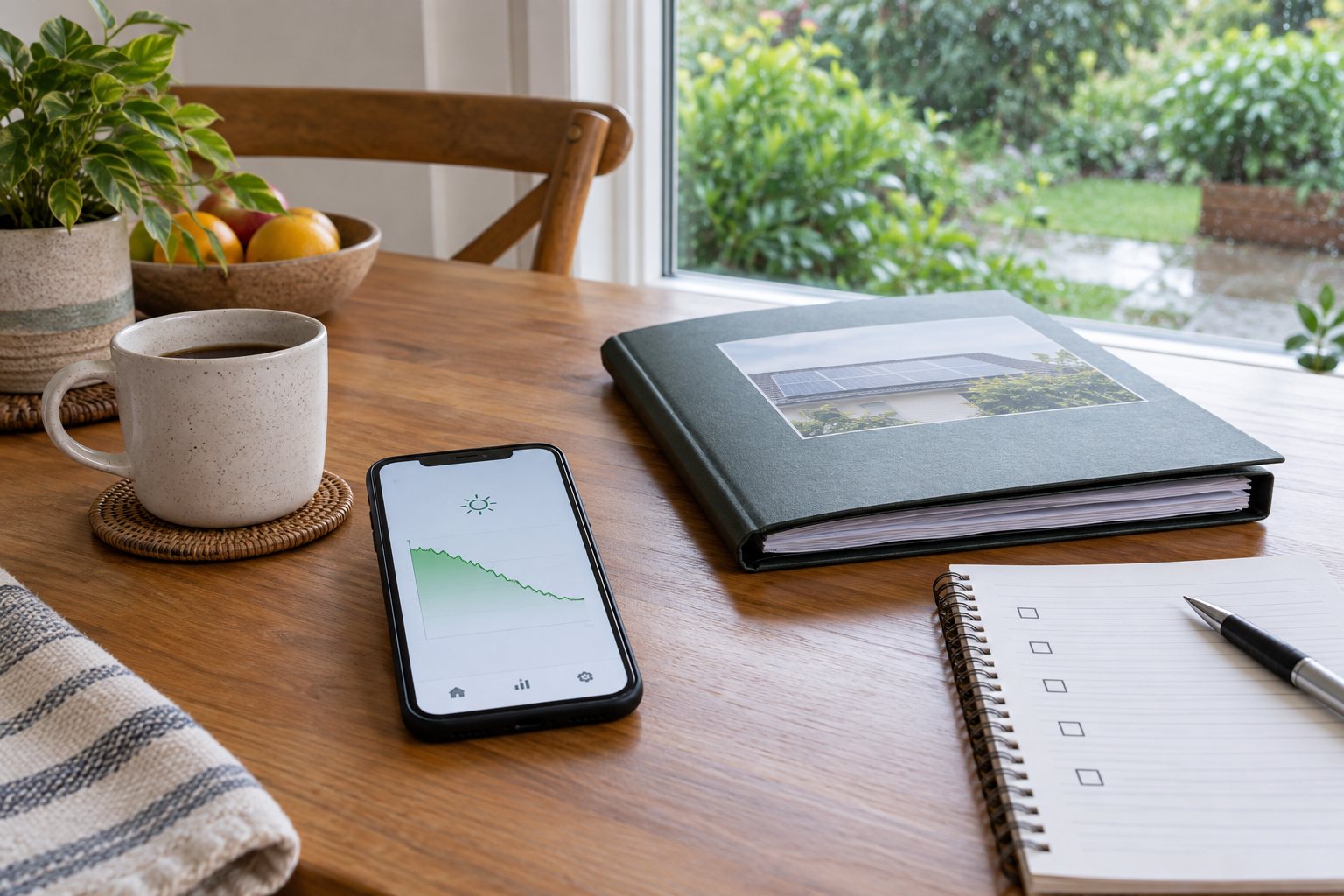
The phone graphic is illustrative. Keep the monitoring record and system documents together, without approaching damaged equipment to collect them.
Use this short record when you call:
| Record | Why it helps |
|---|---|
| Storm date and visible change | Sets a clear starting point for the assessment |
| App screenshot or fault code | Shows what the system reported; it does not prove the cause |
| System model and installer contact | Helps identify who should respond and which documents apply |
| Safe photo from a distance, if possible | Shows the visible problem without making a homeowner inspection necessary |
Our solar monitoring guide explains which app figures are useful. Do not restart the system simply to produce a reading.
Ask for a written professional assessment
Start with the solar retailer or installer listed in your handover documents and explain that storm damage may be involved. The Government's maintenance advice identifies the retailer or installer as the first contact for a system problem. If they cannot respond and there is a safety concern, contact a licensed electrician for advice on making the area safe.
Ask the person assessing the system to identify what has been inspected, what is damaged, whether any equipment remains unsafe or isolated, and what work is needed before normal operation. Request the findings and proposed scope in writing. An app alert alone cannot tell you whether the panels, mounting, cabling, inverter, battery or roof need work.
This is where I think homeowners should resist a quick “replace the lot” answer without a diagnosis. Our repair-or-replace guide helps compare a component repair with a wider replacement once the system is safe and the condition is known.
Keep the repair and claim records together
Find the accepted quote, installation handover pack, equipment list, warranties and any previous service report. The solar warranty checklist separates product, performance and workmanship documents; it does not establish whether storm damage is covered. Any insurance or warranty outcome depends on the actual terms and assessment, so ask the relevant provider rather than assuming a claim will be accepted.
If roof repairs are also needed, ask who will coordinate any solar removal, testing and reinstatement. The roof-repair planning guide explains why the roof and solar scopes should be agreed together. Keep the professional report and any revised quote with your system record before authorising work.
The next step is a qualified assessment with a written account of what is safe, what is damaged and what needs to happen before the system runs normally again.
Sources checked
Last reviewed September 2026
This guide is reviewed against current Australian solar policy and market guidance where available. Confirm retailer prices, rebates, and product eligibility before making a purchase decision.
Randy Osifo-Doe is the Brisbane-based founder and lead writer of Aussie Solar Guide. His background is in finance, banking and household budgeting, and he writes from lived experience as a solar homeowner. He is not presented as an engineer, electrician, solar installer or renewable-energy professional.