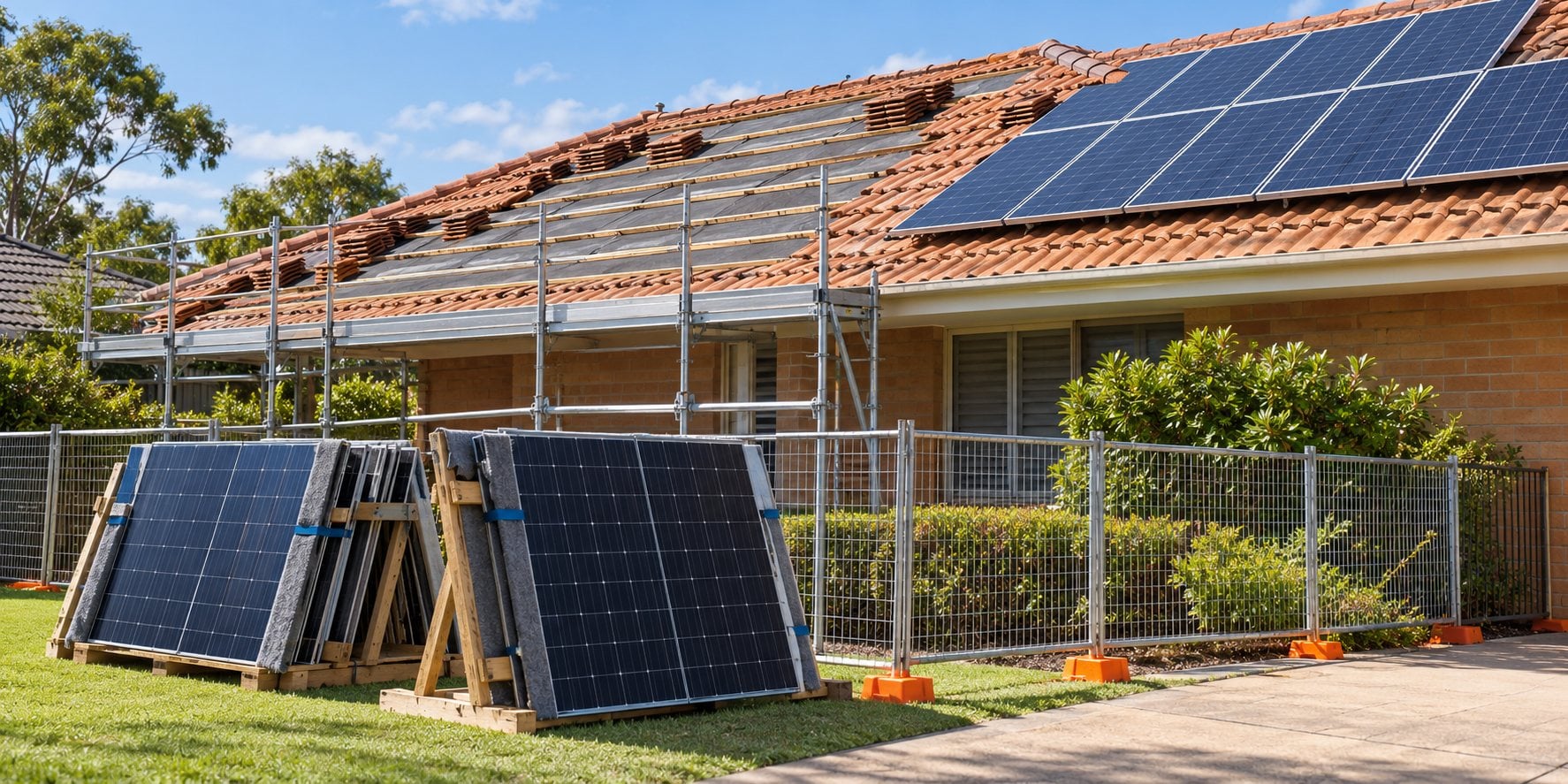
Roof Repairs With Solar Panels: Plan the Removal and Return
If roof work needs panels moved, agree on the solar removal, roof repair, storage and return checks before either trade starts.
 Randy Osifo-Doe
Roof repairs with solar panels already installed need two scopes of work. The roofer needs access to the surface. A suitable solar professional needs to make the array safe, remove the affected equipment and put it back when the roof is ready. Before booking either trade, get a written plan for the gap between those jobs.
The plan matters even when only part of the roof needs attention. The affected panels may need temporary storage, and the repaired roof may change where the existing mounting equipment can go. Ask the people quoting to inspect the actual roof and system before promising that everything can simply be lifted and returned.
Start with the roof and solar assessments
Ask the roofer to identify the area that needs work and any access, tile, flashing or waterproofing issues. Then ask a solar retailer or installer to assess which parts of the array would be affected. The roof-before-solar guide is aimed at new installations, but its advice to settle roof condition and the work sequence applies here too.
If the panels have also shown a fault or reduced output, get that checked separately. A roof repair should not quietly become a full solar replacement quote without a diagnosis. Our repair, upgrade or replace guide helps separate those decisions.
The Australian Government says solar components should be removed or replaced by a licensed electrician and recommends an accredited solar installer to manage the process. It also warns against removing components yourself. Solar equipment can remain energised even when the mains supply is off, so leave disconnection and handling to qualified people. Government maintenance guidance makes the same boundary clear for repairs.
Put the hand-off in writing
This is where I would slow down. A roofer may quote only for the roof, while a solar quote covers only taking panels off. You need to know who owns each step and when the next trade can start.
| Stage | Ask for a written answer |
|---|---|
| Before removal | Which panels and mounting parts must move, and who confirms the system's condition? |
| Temporary storage | Where will intact equipment be kept, who protects it, and who is responsible if it is damaged? |
| Roof work | What area will be repaired, and who confirms it is ready for solar reinstallation? |
| Reinstallation | Will the original layout and equipment be reused, and what happens if a part cannot be reused? |
| Handover | Who checks operation, monitoring access and the final roof condition? |
The NSW Government's solar guidance notes that removing and reinstalling panels for roof work can be risky and expensive. That is a reason to get the scope and responsibility clear before work starts, not a prediction of the cost or outcome at your home. Ask both trades to identify any exclusions, the order of visits and the point at which the roof is ready for the solar team.
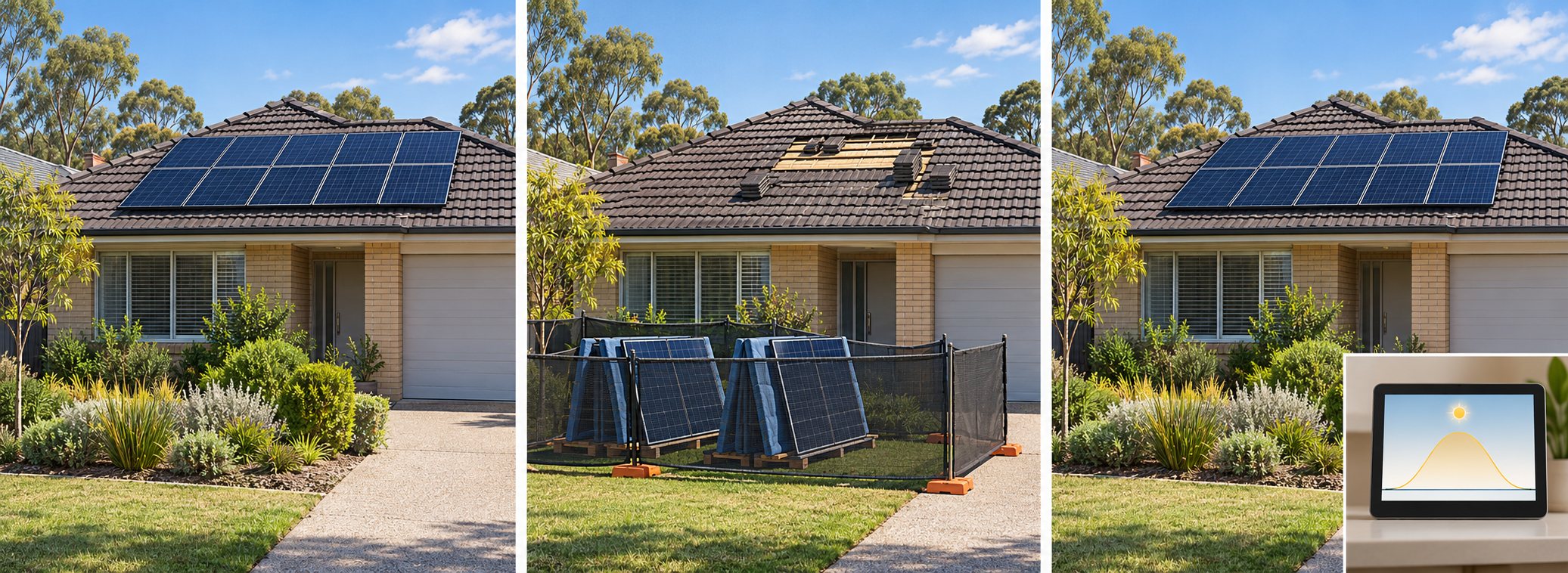
A conceptual work sequence. The actual removal method, storage arrangement and return checks belong in the contractors' written scopes.
Check the paperwork before work starts
Keep the original solar quote, system layout, equipment list, installation documents, warranties and recent monitoring records together. Photographs taken safely from the ground may help show the array and roof condition before work begins. Ask the solar professional what condition and performance records they will make before removal and after return.
Check your actual product, installation and roof warranty documents. The Australian Government's warranties and insurance guide separates product warranties from workmanship coverage. It does not establish who will cover damage during this particular job. Ask each provider how its terms apply, and record the answer rather than assuming the old cover follows every removed component.
If the solar team recommends replacing a panel, rail or inverter, request the reason and a separate itemised option. That keeps the roof repair decision distinct from an upgrade. If equipment is retired, ask who takes it away; the Government's replacement and recycling guide recommends planning professional removal and disposal rather than leaving old parts on site.
Confirm the system after the roof is finished
Once the roof work is complete, the solar professional should confirm what was reinstalled, what changed and when the system is ready to operate. Ask for any updated layout or electrical documents, the work record and a demonstration that monitoring is receiving current data. The Australian Government's monitoring guide suggests checking generation against what is reasonable for the season and weather; one sunny reading alone is not a long-term performance test.
If the app does not update after the work, use the monitoring connection checklist to separate stale data from an apparent system fault, then contact the solar team with the work record. Do not test electrical switches or open equipment yourself.
The next step is to ask the roofer and solar professional for linked written scopes before either booking is final. Make sure the plan covers removal, storage, roof sign-off, return and the operating check.
Sources checked
Last reviewed October 2026
This guide is reviewed against current Australian solar policy and market guidance where available. Confirm retailer prices, rebates, and product eligibility before making a purchase decision.
Randy Osifo-Doe is the Brisbane-based founder and lead writer of Aussie Solar Guide. His background is in finance, banking and household budgeting, and he writes from lived experience as a solar homeowner. He is not presented as an engineer, electrician, solar installer or renewable-energy professional.