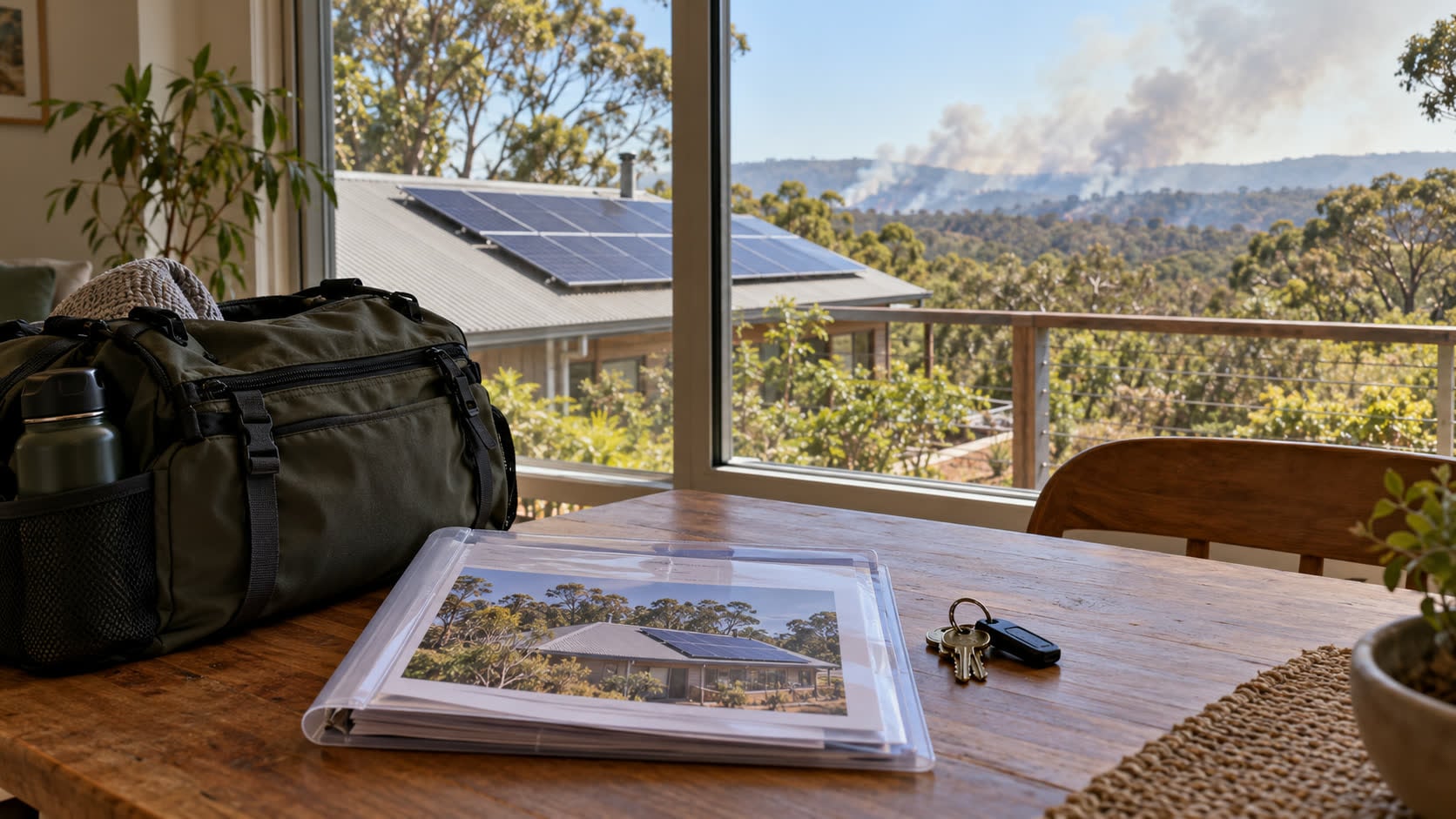
Solar Panels and Bushfires: Prepare, Leave and Return
Keep your solar system in the household bushfire plan. Know where its instructions are, leave when advised and arrange a check after fire exposure.
 Randy Osifo-Doe
Solar panels and bushfires belong in the same household emergency plan if you live in a fire-prone area. Keep the installer’s shutdown instructions and contact details where you can find them quickly. During a threat, follow your local fire service’s advice and leave when your plan or an official warning tells you to.
Solar equipment can remain electrically active when light reaches the panels, even if mains power is off. A switch at the house does not make a fire-affected roof safe to approach. The useful preparation is knowing what equipment you have and who can assess it, without making solar a reason to delay leaving.
Prepare while conditions are calm
Find the operating and emergency instructions supplied with your system. The installation handover checklist lists the documents worth keeping together: system details, installer contacts, maintenance advice and the procedure for your actual equipment. If the instructions are missing or unclear, ask the installer to explain them now. Do not improvise a sequence from another household’s inverter.
If you have a battery, record its make, model and location alongside the solar details. A battery’s backup reserve setting tells you something about stored energy; it does not replace an evacuation plan or confirm what the system will do in a fire. Keep an electronic copy of the documents somewhere you can access away from home.
Prepare the property and your household plan using your state or territory fire service guidance. The NSW Rural Fire Service bushfire survival plan, for example, puts deciding when to leave, preparing the property and following current warnings ahead of equipment decisions. Check the equivalent advice for your location.
When a fire threatens
Your first decision is whether it is safe to remain and what local authorities are telling you to do. Do not climb onto the roof, move panels or return to the property to check the app. If emergency responders attend, tell them the home has rooftop solar and a battery if one is installed. The Queensland Fire Department gives that advice because panels can keep generating in light even after mains supply is disconnected.
Energy Safe Victoria’s bushfire guidance describes turning off solar and batteries before leaving if time allows. That is Victorian guidance, and your own labelled procedure and local emergency instructions matter. If you have not been shown how to do it, the equipment is damaged, conditions are unsafe or leaving is urgent, do not spend time trying to work out switches. Follow the fire service’s direction and get clear.
The South Australian Metropolitan Fire Service also says emergency shutdown procedures vary between systems. Ask the installer to show you yours in advance, rather than treating a general article as an operating manual.
After fire or heat exposure
Return only when authorities say it is safe. A roof can look intact from the ground while heat or debris has affected equipment. Do not touch panels, cables, a battery or an inverter that looks damaged, and do not restart equipment to see whether it works. Energy Safe Victoria advises keeping away from any solar or battery equipment that concerns you and calling a licensed electrician to make it safe. Its guidance is for Victoria; follow local authorities and qualified electrical advice elsewhere.
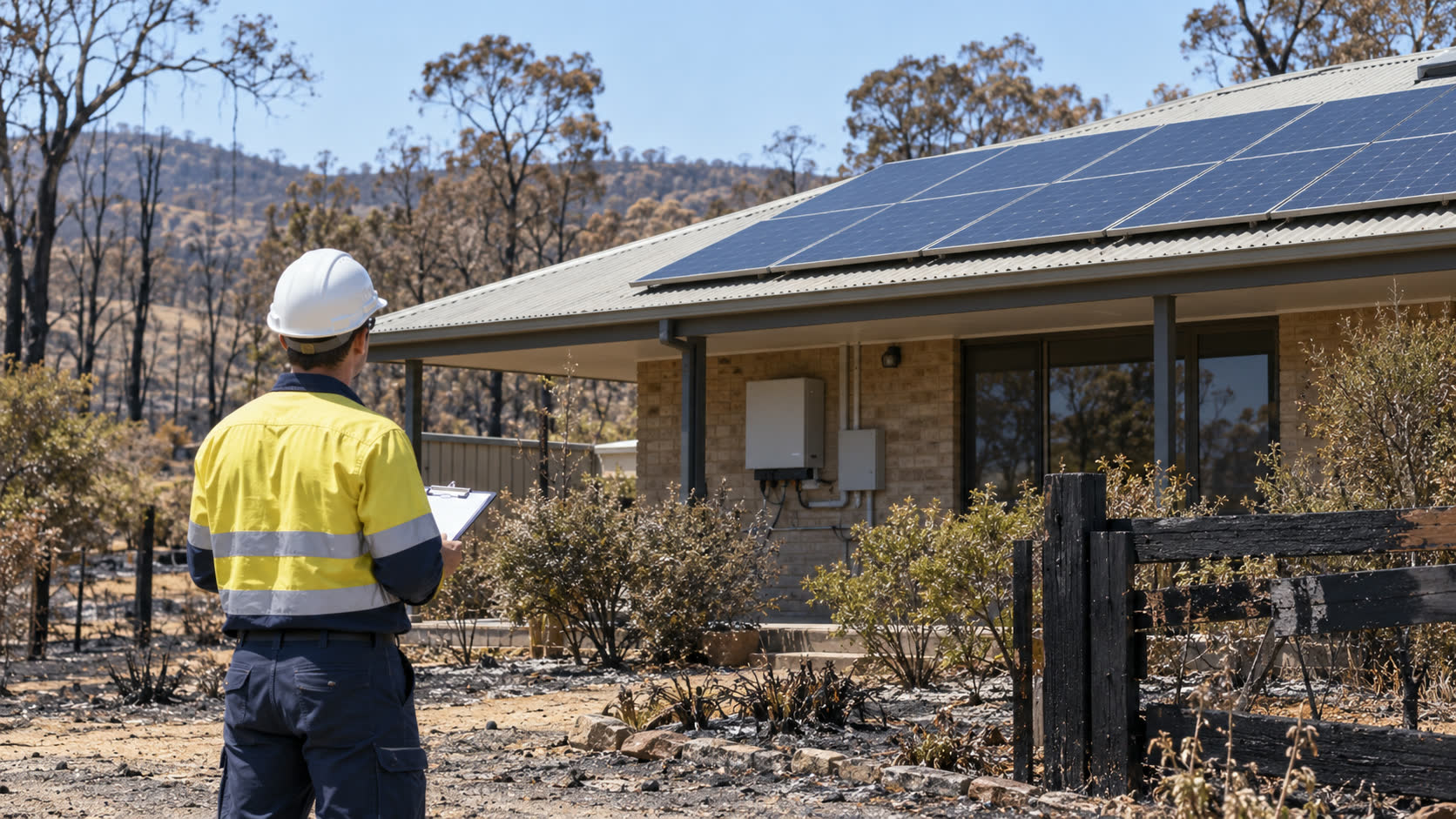
This scene illustrates a later professional assessment. An apparently intact array does not establish that the system is safe to operate.
Use this short sequence once access is permitted:
- From a safe place, note visible damage or heat exposure without approaching the equipment.
- Give the solar retailer or installer your system records and explain what happened. If there is an immediate electrical concern, seek a licensed electrician’s advice on making the area safe.
- Ask for a written assessment of the panels, cabling, inverter and battery where relevant, including what must happen before normal operation resumes.
The Australian Government’s solar maintenance guidance says repairs belong with an appropriately qualified professional. A monitoring graph is useful history, but it cannot certify the system after fire exposure. The storm-damage first checks explain the same boundary for visibly damaged equipment, while the post-outage guide applies when the issue is generation after grid power returns without known fire damage.
Keep the assessment, any isolation or repair record and the installer’s return-to-service instructions with your system documents. That gives you a clear next step without guessing from a switch position or an app reading.
Sources checked
Last reviewed October 2026
This guide is reviewed against current Australian solar policy and market guidance where available. Confirm retailer prices, rebates, and product eligibility before making a purchase decision.
Randy Osifo-Doe is the Brisbane-based founder and lead writer of Aussie Solar Guide. His background is in finance, banking and household budgeting, and he writes from lived experience as a solar homeowner. He is not presented as an engineer, electrician, solar installer or renewable-energy professional.