Solar Panel Temperature Coefficient: What Heat Does to Output
Learn how heat affects rooftop solar output, how to read the Pmax temperature coefficient and what to compare on an Australian solar quote.
 Randy Osifo-Doe
A solar panel temperature coefficient tells you how much a panel's rated power changes as the panel itself gets hotter than its test reference. It is usually shown as a negative percentage per degree Celsius, often beside Pmax on the panel data sheet.
This does not mean solar stops working in hot weather. Bright sunlight is still the main input. The practical point is that a very hot panel may produce a little less power than the same panel would under equally strong sunlight at a cooler temperature.
The 25°C figure is panel temperature
The Australian Government's Solar Consumer Guide explains that panel wattage is measured under standard test conditions. That rating gives you a consistent comparison point; it is not a promise that a panel will sit at its nameplate output on your roof.
The Government's Your Home rooftop-solar guidance uses 25°C as the standard test temperature. That refers to the panel, not the day's forecast air temperature.
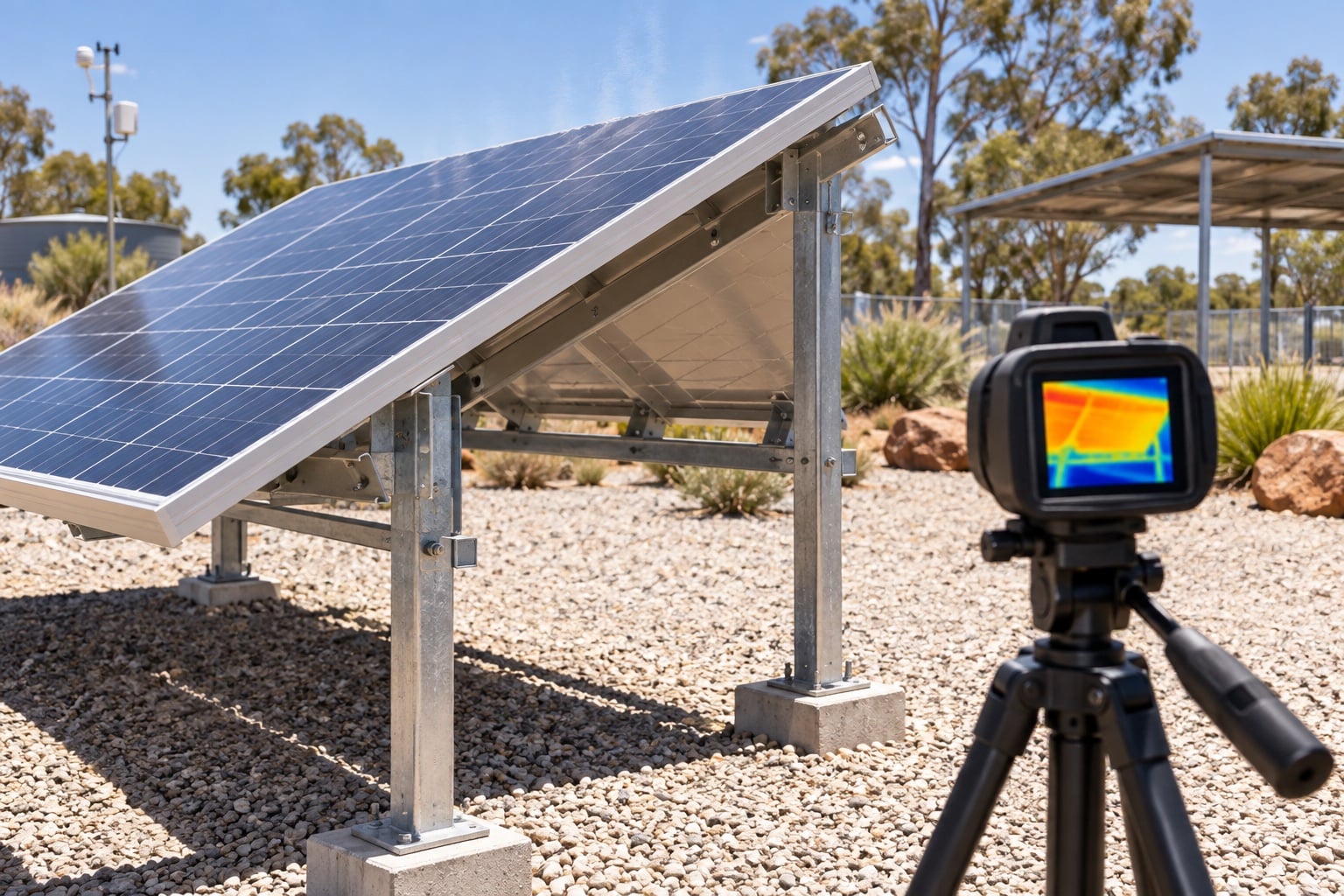
A dark module in strong sun can be much hotter than the surrounding air. CSIRO guidance says module temperature also depends on sunlight, wind and the installation arrangement. That is why a still, bright afternoon and a breezy morning with similar sunshine can produce different instantaneous readings.
Read the Pmax number this way
Look for wording such as “temperature coefficient of Pmax” or a similar maximum-power label on the exact model's data sheet. A figure of −0.35%/°C means the panel's maximum power is estimated to fall by 0.35% for each degree the panel rises above the 25°C reference, under otherwise comparable test conditions.
For a simple example, if the panel itself reached 55°C, that is 30°C above the reference. Multiplying 30 by 0.35% gives a 10.5% temperature-related reduction from rated maximum power. This is a simplified specification calculation, not a prediction of the day's energy in kWh. Cloud, sun angle, shade, dirt, inverter behaviour and other system conditions still matter.
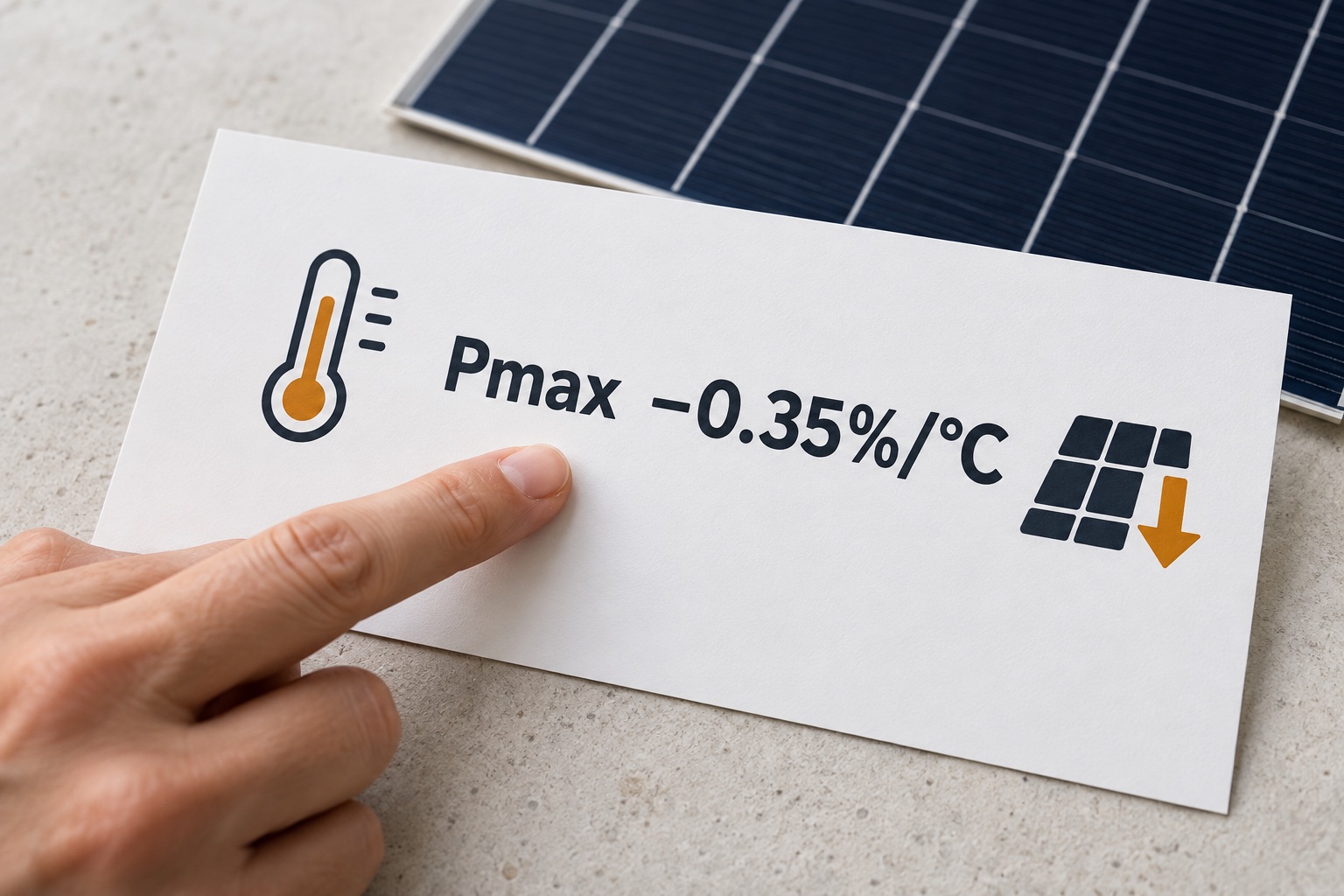
The Pmax temperature coefficient is normally a negative percentage per degree Celsius. Use the figure from the exact panel model on your quote.
When comparing two negative coefficients, the number closer to zero loses less rated power as temperature rises. For example, −0.28%/°C represents a smaller temperature effect than −0.35%/°C. Keep the sign attached to the number so the comparison does not get reversed.
Do not turn one specification into a quality ranking
A better temperature coefficient can be useful in a hot climate, but it is only one line on the proposal. The Government's system-sizing guidance says very hot temperatures can reduce generation marginally, while the amount of sunlight falling on the panels remains more important.
Compare the coefficient alongside:
- the exact panel model and rated wattage
- panel efficiency, dimensions and count
- the proposed roof layout, direction and shade assumptions
- the annual generation estimate and the assumptions behind it
- product and performance warranty terms
- the complete system design, including the inverter
The solar panel efficiency versus wattage guide helps separate the first four panel numbers. Then use the generation-estimate guide to compare the assumptions used for your home.
Ask about airflow without redesigning the roof
Your Home and CSIRO both identify ventilation around a module as one factor in operating temperature. A panel with air moving around it can shed heat more readily than one with restricted airflow.
That does not make “more gap” a do-it-yourself rule. Mounting also has to suit the roof, wind conditions, the equipment and the installation requirements. Ask the retailer or installer to explain how the proposed mounting arrangement manages ventilation while meeting the design requirements for your property. For a flat roof, the flat-roof solar quote checklist covers tilt frames, row spacing and usable roof area without prescribing a layout.
If your system already looks low on a hot day
Do not compare one hot afternoon's peak with the system's total panel rating and assume there is a fault. Compare similar clear days, similar times and the same operating view where possible. Check whether the app is showing DC panel power, AC inverter output or daily energy, because those are not the same measurement.
Temperature is only one possible reason for a lower reading. Shade, cloud, dirt, export control, inverter limits and faults can also change what you see. Use the solar monitoring guide for a broader check, and contact the retailer or an accredited installer when the pattern is unexplained or a fault code appears.
Questions to put beside each quote
- What is the exact panel model and its Pmax temperature coefficient?
- Is the quoted figure based on panel temperature, not ambient air temperature?
- What roof layout and ventilation arrangement is proposed?
- Does the generation estimate account for the home's location and design?
- Which other panel and system specifications explain the difference between the quotes?
The temperature coefficient is useful when it helps you compare like with like. It should sharpen the decision, not replace the rest of the solar design.
Sources checked
Last reviewed September 2026
This guide is reviewed against current Australian solar policy and market guidance where available. Confirm retailer prices, rebates, and product eligibility before making a purchase decision.
Randy Osifo-Doe is the Brisbane-based founder and lead writer of Aussie Solar Guide. His background is in finance, banking and household budgeting, and he writes from lived experience as a solar homeowner. He is not presented as an engineer, electrician, solar installer or renewable-energy professional.