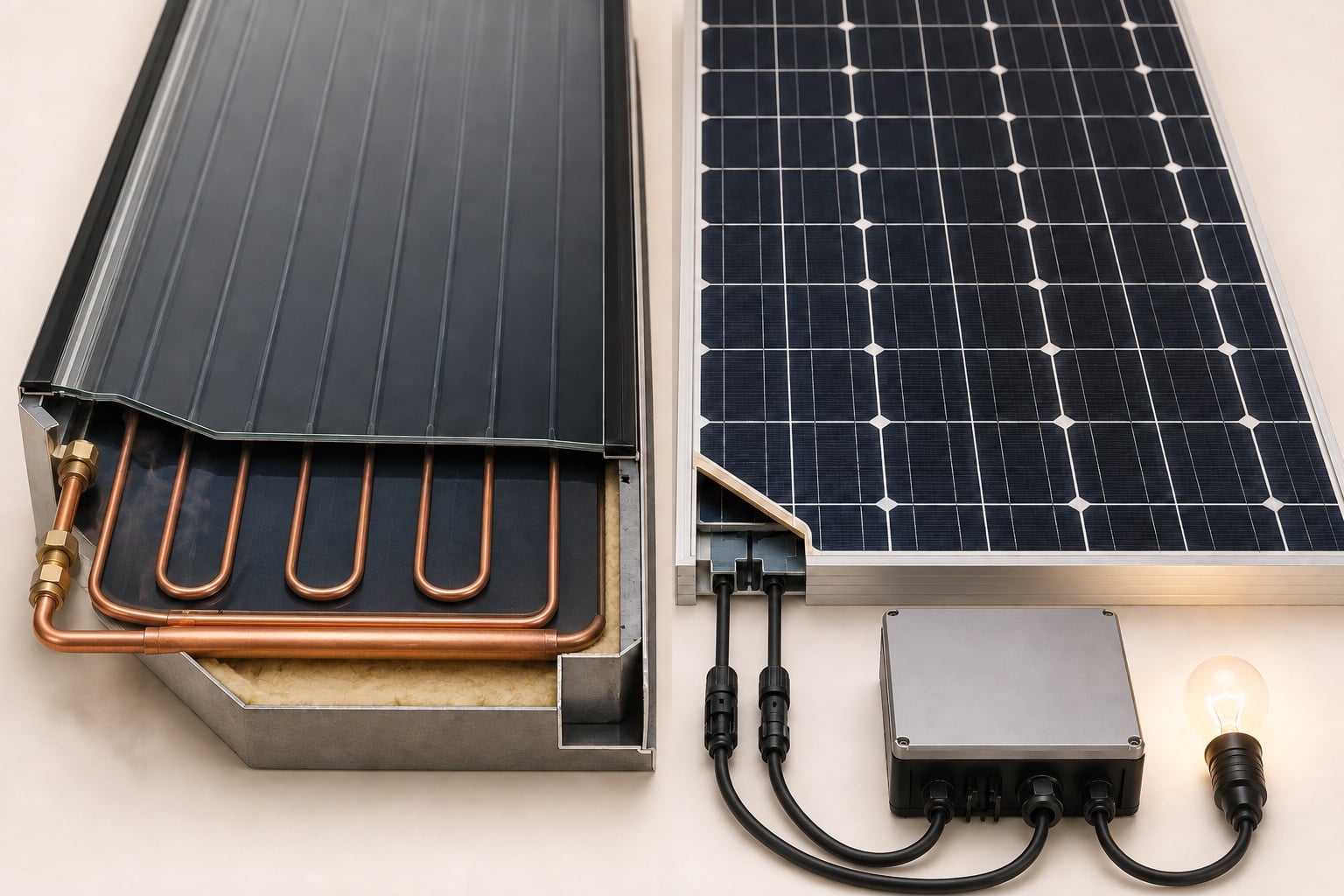
Solar Hot Water vs Solar Panels: What Each One Does
Learn the practical difference between solar thermal collectors, rooftop solar PV and PV-powered heat pumps before comparing a hot-water upgrade.
 Randy Osifo-Doe
If you're comparing solar hot water vs solar panels, start by separating two systems that use the same sunshine in different ways. Solar hot water uses roof collectors to heat water. Rooftop solar photovoltaic panels, usually called solar PV, make electricity that can run many things in the home.
Solar PV can power a heat-pump or electric-storage water heater, but the PV panels are not heating the water directly. That distinction affects the roof space, pipes, wiring, booster and controls you should expect to see in a quote.
Same sunshine, three different pathways
The Australian Government's hot-water systems guide describes solar hot water as a collector-and-tank system. Sunlight heats water or heat-transfer fluid in the roof collector, and the heat is carried through pipes to stored water. An electric or gas booster may be needed when solar heat is not enough.
Solar PV works differently. Its panels turn sunlight into electricity. That electricity can feed a conventional electric-storage water heater or a heat pump, as well as other household loads.
| System | What the sun produces first | How the water is heated | What to confirm |
|---|---|---|---|
| Solar hot water | Heat in a roof collector | Heated fluid or water transfers heat to the tank | Collector type, tank position and booster |
| Solar PV with electric storage | Electricity | A resistance element heats the tank | Element load, timer and grid fallback |
| Solar PV with a heat pump | Electricity | The heat pump moves heat from surrounding air into the water | Operating range, controls, noise and backup element |
This is where I think homeowners need to slow down. “Runs on solar” can describe three quite different arrangements, and the quote should name the actual pathway rather than leaving you to guess.
Compare roof space and equipment location
A solar hot-water system needs suitable roof space for collectors or evacuated tubes. Depending on the design, the storage tank may also be on the roof, or it may sit at ground level with water circulated between the tank and collectors. Roof shade can reduce the useful solar heat collected.
A heat pump does not need a roof collector. It needs an appropriate place for the tank and heat-pump unit, with the model's airflow, climate and noise requirements considered. Solar PV still needs roof area, but the electricity it produces is not locked to hot water and can serve other loads.
If roof area is tight, ask the hot-water supplier and solar designer to show both layouts on the same roof plan. The flat-roof solar guide explains why usable area and spacing matter, while the roof-before-solar checklist helps when repairs or replacement work are already approaching.
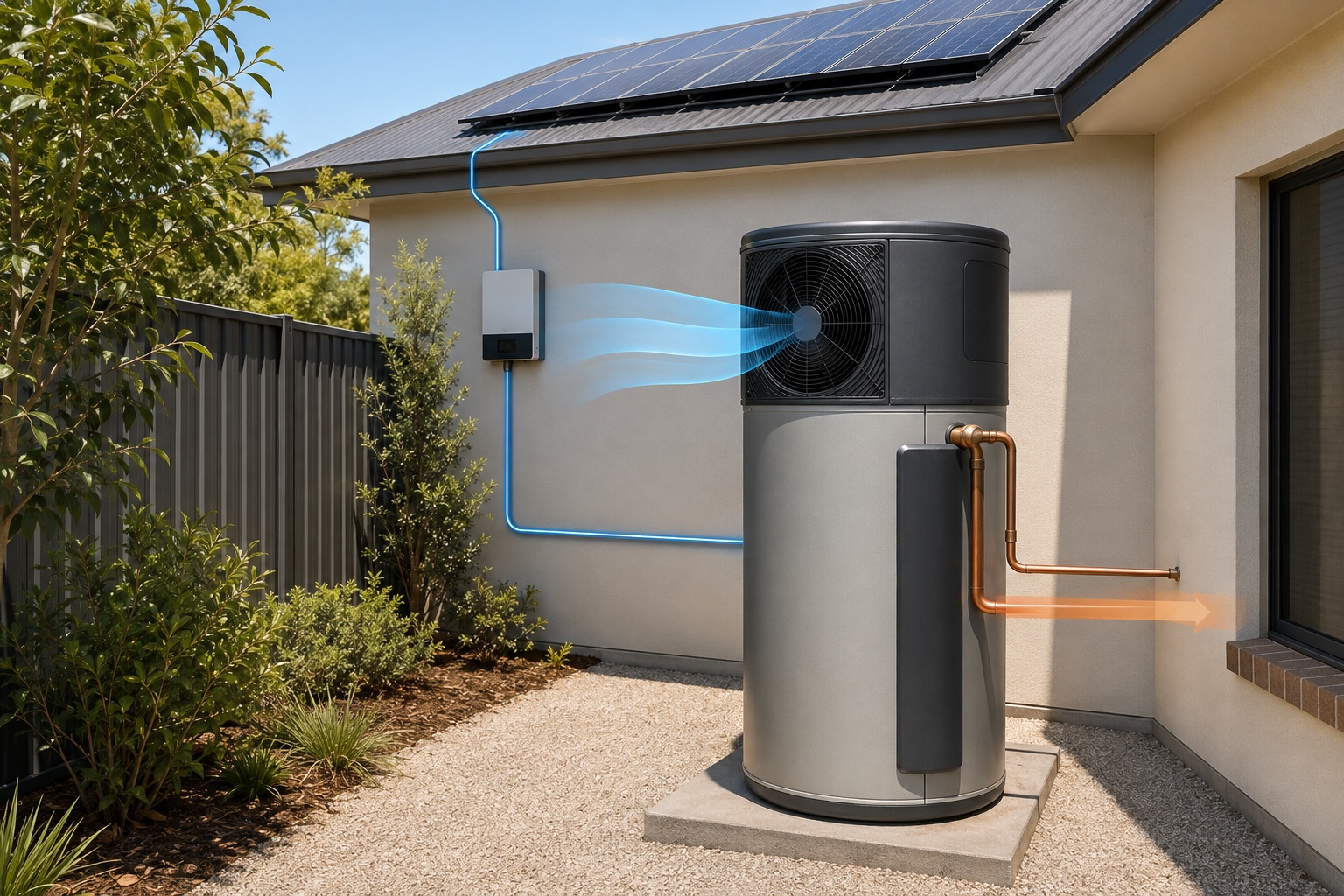
Solar PV makes electricity for the heat pump; the heat pump then moves heat from the air into stored water. The illustration shows the energy path, not installation clearances.
Timing changes what solar-powered means
Solar Victoria's hot-water buyer guidance says a heat pump can be timed to run during the day and use excess rooftop solar electricity. The actual solar contribution will still depend on the PV system size, weather, other household loads, tank demand and how the controls are set.
That is different from a solar-thermal collector, which gathers heat directly but normally has a booster for cloudy periods or seasons with lower solar input. In both cases, the tank stores hot water for later use. The practical comparison is not simply “solar or no solar”; it is how each system gathers energy, stores heat and covers the shortfall.
Use the solar self-consumption guide to keep the electricity terms straight. The daytime load-shifting guide also explains why a timer helps only when it matches the home's generation and other loads.
Put the same questions to every quote
Ask each supplier to write down:
- whether the proposal is solar thermal, electric storage powered by solar PV, or a PV-powered heat pump
- the collector or PV area, tank size and any booster or backup element
- where the roof equipment, tank, heat pump and controls will be placed
- how shade, local temperatures, airflow and noise were considered
- when the system will run and what happens when solar input is insufficient
- which plumbing, electrical and roof work is included
- who handles the equipment, installation and service warranties.
The Australian Government's Your Home hot-water guide recommends matching the system to hot-water demand, available energy sources, roof space, climate and installation constraints. Those are the assumptions worth comparing. A headline efficiency figure or the word “solar” on its own does not tell you whether the proposed system fits your home.
What to check next
Get the proposed pathway and equipment locations onto one itemised scope before comparing offers. If two quotes use different technologies, compare the hot-water service each is designed to provide, the space it needs, its fallback energy source and how it will be controlled. Then ask for any claimed operating estimate to show the household-use and timing assumptions behind it.
Sources checked
Last reviewed September 2026
This guide is reviewed against current Australian solar policy and market guidance where available. Confirm retailer prices, rebates, and product eligibility before making a purchase decision.
Randy Osifo-Doe is the Brisbane-based founder and lead writer of Aussie Solar Guide. His background is in finance, banking and household budgeting, and he writes from lived experience as a solar homeowner. He is not presented as an engineer, electrician, solar installer or renewable-energy professional.