
Portrait vs Landscape Solar Panels: Check the Roof Layout
A practical way to compare panel rotation on a crowded roof and ask for a layout that fits the actual space and shade.
 Randy Osifo-Doe
If you are weighing up portrait vs landscape solar panels for your roof, the question is how many panels can fit on the useful, unshaded area. Portrait means the long side of each panel runs up the roof; landscape turns it across the roof. The panel still faces the same roof direction unless the design moves it to another roof section.
This matters most when a skylight, vent, hip, valley or short roof face breaks up the available space. Ask the retailer to draw both layouts on the same measured roof before assuming one arrangement gives you a better system.
What changes when the panels turn
The Australian Government's solar design guidance says portrait is the usual arrangement because of how mounting systems are commonly designed. It also says landscape placement may allow a larger system where roof space is tight. Its system sizing guide treats sunny roof area as a real limit on system size and confirms that panels can be placed either way to use that area.
Turning a panel does not change its rated power. What can change is the number that fits on the proposed roof face, the mounting arrangement and how much clear space remains around roof features. The answer depends on the dimensions of the actual panel model, not a generic rectangle in a sales sketch.
A landscape row might fit below a skylight where a portrait row does not. On another roof, portrait rows may use the space more cleanly. It is worth comparing both, but only after the retailer has accounted for the roof edges, access needs and obstacles in a buildable drawing. Those details belong with the installer, not a homeowner's rough count from an aerial photo.
Keep roof direction separate from panel rotation
Portrait and landscape describe the way each rectangular panel sits on one roof surface. North, east, west and south describe the direction that surface faces. A panel turned sideways on a north-facing roof still faces north.
If the proposal moves panels to a different roof face as well as rotating them, ask for that change to be shown separately. The roof-direction guide covers when different faces produce electricity during the day. A different panel count and a different roof direction can both affect the generation estimate, so comparing only the finished kW number hides what changed.
Compare the usable area, not the neatest drawing
The plan needs to reflect shade as well as space. An extra panel placed in a shaded corner may contribute less than the quote suggests. The Government's design guidance asks retailers and installers to account for trees, buildings and other obstructions. Our shade checklist gives you questions to use when the layout crosses more than one roof section.
Ask for two versions using the same panel model and the same roof measurements. A useful comparison shows:
| On the drawing | What to ask |
|---|---|
| Panel count and model | Are both options using the same panel dimensions and rating? |
| Roof features | Which skylights, vents, hips and valleys are excluded from the panel area? |
| Shade | Does either option put more panels in shade at a particular time? |
| Mounting | Does the rotation change the proposed rails or installation approach? |
| Estimated output | What annual generation is expected from each buildable layout? |
The generation-estimate guide explains how to compare the output assumptions. A higher panel count is useful only if the proposed panels fit the roof and the estimate uses the actual layout.
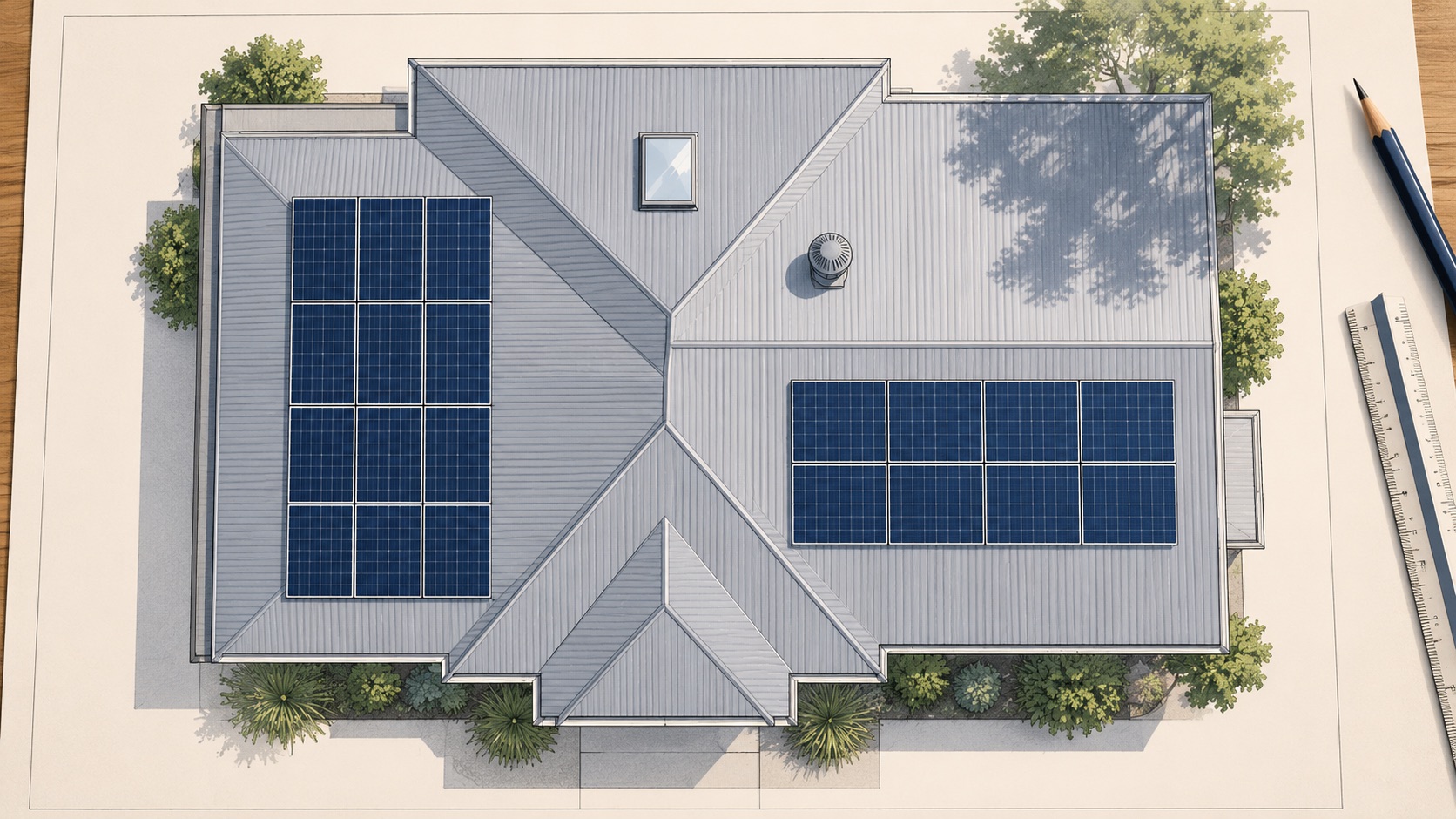
An illustrative roof plan can help you ask about obstacles and shade. It is not an installation drawing or a required clearance diagram.
Ask for the final layout in writing
The Government recommends comparing quotes and asking for a site visit when roof conditions need a closer look. If a remote quote shows a surprisingly tidy fit, ask how the roof dimensions and obstacles were checked. The site visit versus satellite quote guide sets out what a visit can resolve.
Before accepting a quote, keep the proposed panel model, count, roof drawing and generation estimate together. Ask what will happen if the installer finds that the layout needs to change on installation day. You can then compare the options while the design is still open to change.
Sources checked
Last reviewed October 2026
This guide is reviewed against current Australian solar policy and market guidance where available. Confirm retailer prices, rebates, and product eligibility before making a purchase decision.
Randy Osifo-Doe is the Brisbane-based founder and lead writer of Aussie Solar Guide. His background is in finance, banking and household budgeting, and he writes from lived experience as a solar homeowner. He is not presented as an engineer, electrician, solar installer or renewable-energy professional.