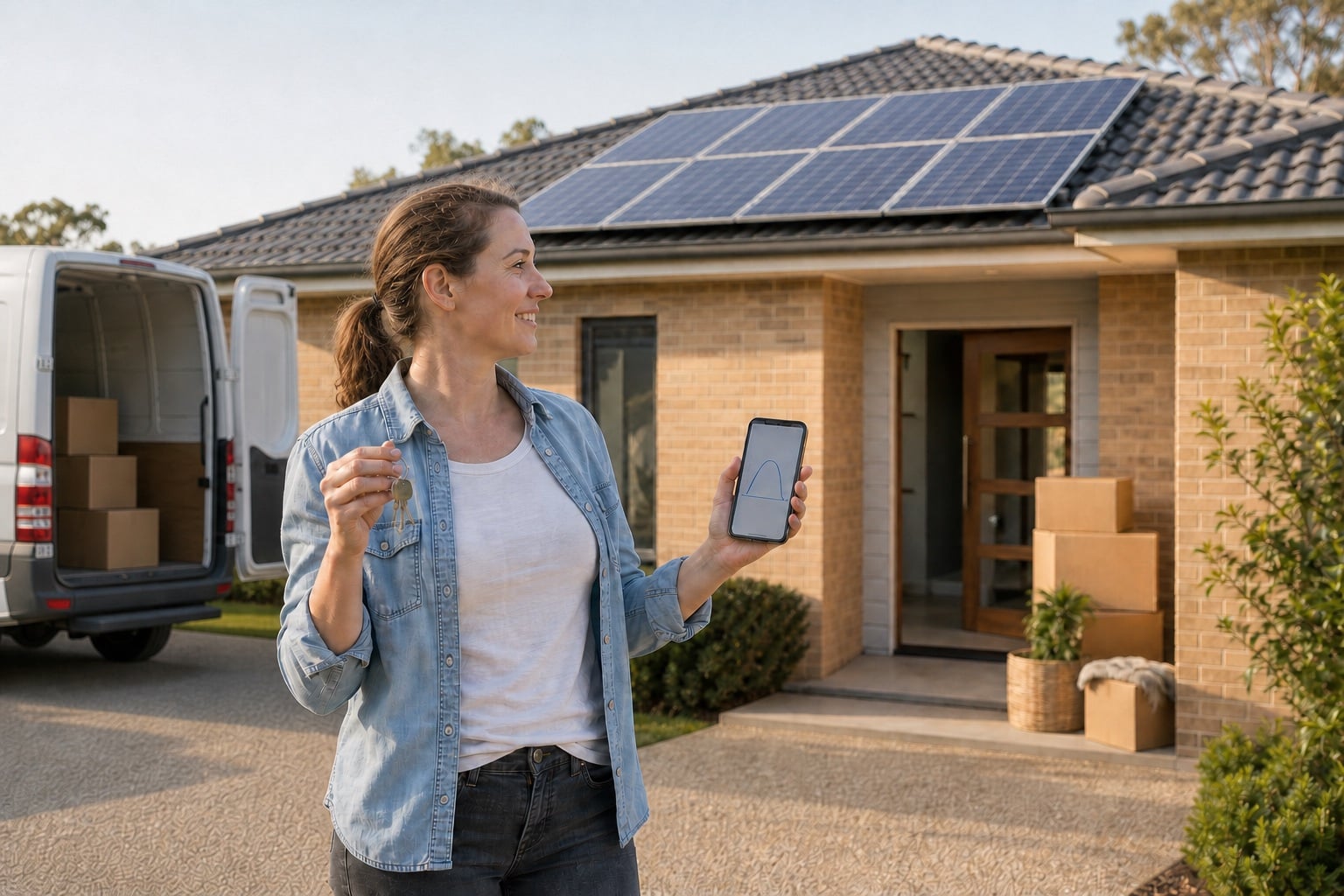
Moving Into a House With Solar? First Checks
A practical first-week checklist for checking an existing rooftop solar system, gaining monitoring access and finding the records you may need later.
 Randy Osifo-Doe
Moving into a house with solar can feel like receiving an appliance without the manual. The panels are already on the roof, but you may not know the system's age, whether it is working normally or who still has access to the monitoring account.
Start with a simple handover check. You do not need to climb onto the roof or open electrical equipment. Your first job is to collect the records, confirm that you can see the system's normal operation and work out who to contact if something looks wrong.
Get monitoring access early
The Australian Government's Solar Consumer Guide recommends checking that an existing system works by viewing the monitoring app or a recent electricity bill. Ask the seller or property agent to transfer the app login, or find out whether the installer or inverter manufacturer can help create access for the new owner.
Once you are in, do not judge the system from one cloudy day. Generation changes with weather and season. Use the app to confirm that the system reports during daylight hours, then build a baseline across several comparable sunny days. The solar monitoring app guide explains what a normal pattern can look like and which changes deserve follow-up.
This is where I think a new owner should slow down. A working app is useful, but it is not proof that every panel, cable or warranty detail is in order. Treat monitoring as the first check, not the whole inspection.
Build a basic system record
Ask for the system specifications, installation date, warranties, maintenance history and contact details for the solar retailer and installer. The government's installation and handover guidance lists documents commonly supplied after installation, including operating instructions, product information, warranty records, maintenance advice and a commissioning sheet.
You may not receive every document, especially for an older system. Record what you can see safely from the ground: the inverter make and model, any installer contact sticker and the approximate number of panels. Photograph labels without removing covers or touching wiring. Keep the images and documents together in a cloud folder that another household member can access.
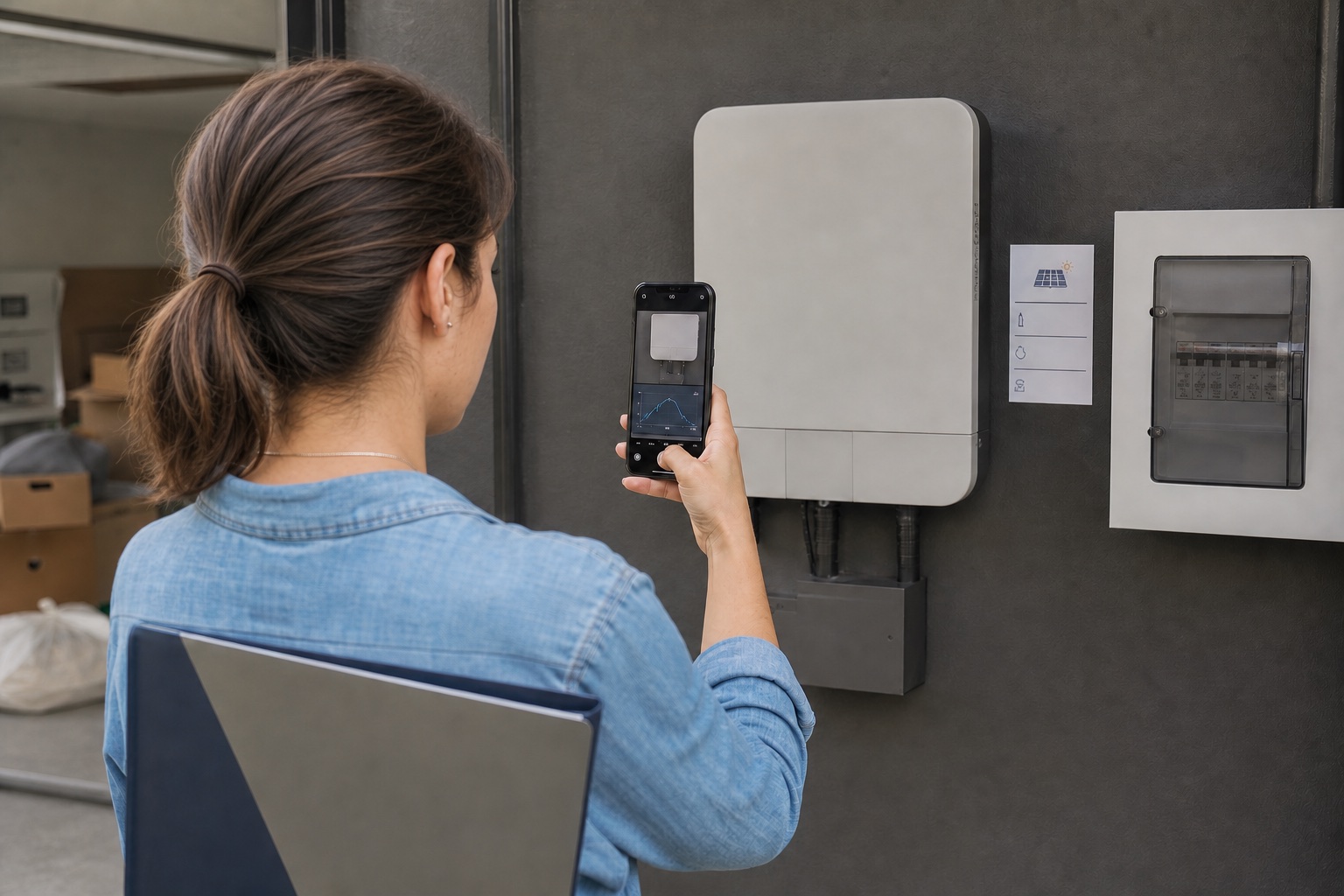
A simple equipment photo, monitoring login and document folder make future support or warranty conversations much easier.
Check age, condition and warranty boundaries
Find out when the system was installed and whether it has had any professional inspections or repairs. A warranty may have expired, require particular records or apply differently after ownership changes, so read the actual terms rather than assuming it transfers automatically. The solar warranty checklist explains how product, performance and workmanship cover differ.
The Queensland Government's maintenance and inspection guidance recommends monitoring performance and making visual observations from the ground. Do not open the inverter or switchboard, touch cables or go onto the roof. If equipment looks damaged, the inverter shows a persistent warning or the history is unclear, arrange advice from an appropriately qualified professional.
| What you need | Practical first step |
|---|---|
| Monitoring access | Ask for account transfer and confirm daylight data appears |
| System identity | Photograph closed equipment labels from ground level |
| Warranty position | Collect the terms and check age, owner-transfer rules and contacts |
| Maintenance history | Ask for service reports and note any unresolved faults |
| No reliable records | Request a professional system check rather than guessing |
Set up the household for the next issue
Save the retailer, installer and manufacturer contact details before you need them. Add a note showing where the inverter is, where the monitoring login is stored and which documents belong to the system. If the panels are dirty or output appears low, use the solar panel maintenance guide to separate cleaning from a proper service.
Also compare the equipment and roof layout with the installation day checklist. You are not trying to recreate the original handover. You are creating a reliable starting record for the system you now own.
The calm next step is to watch a few clear days, organise the documents and write down the gaps. If the system reports normally and there are no visible concerns, you have a useful baseline. If something is missing or inconsistent, you will know exactly what to ask a qualified professional to check.
Sources checked
Last reviewed August 2026
This guide is reviewed against current Australian solar policy and market guidance where available. Confirm retailer prices, rebates, and product eligibility before making a purchase decision.
Randy Osifo-Doe is the Brisbane-based founder and lead writer of Aussie Solar Guide. His background is in finance, banking and household budgeting, and he writes from lived experience as a solar homeowner. He is not presented as an engineer, electrician, solar installer or renewable-energy professional.