Replacing a Solar Inverter While Keeping Your Panels
If your inverter may need replacing, get a diagnosis and a quote that explains what stays, what changes and how monitoring will work afterwards.
 Randy Osifo-Doe
Solar inverter replacement may be the right repair when the panels still work but the inverter has failed. It is not a reason, on its own, to replace the whole solar system. Before accepting a quote, ask for the fault diagnosis and a clear list of what the installer will keep, replace and set up again.
That matters because an inverter quote can look simple while leaving out monitoring, removal or changes needed to make the new unit work with the existing array. You do not need to choose the electrical design yourself. You do need enough detail to compare two proposals for the same job.
Confirm the fault before choosing a new unit
Start with the symptoms: a fault code, repeated shutdowns, no generation on comparable sunny days or a monitoring app that has stopped updating. Save the dates and screenshots. An offline app alone does not prove that the inverter has stopped producing electricity; the solar monitoring guide explains why app data and system operation need to be checked separately.
The Australian Government's replacement guide says a fall in performance may not mean a component needs replacing. Contact your retailer or installer for an assessment and ask what test result points to the inverter. If the system is still under a relevant warranty, check the claim route before paying for new equipment. Our warranty checklist helps separate inverter product cover from installation workmanship cover.
Do not open an inverter or switchboard to investigate. The Government advises using a licensed electrician for removal or replacement and recommends an accredited solar installer to manage the work.
Make the quote explain what stays
An inverter converts the electricity from solar panels into electricity the home can use. The replacement has to be assessed against the panels and system arrangement already installed, not selected from its headline power rating alone. Ask the installer to identify the existing panel groups, roof directions and any battery or monitoring equipment that will remain.
The Government's inverter guide explains that different inverter types and panel arrangements have different jobs. A replacement proposal should show how the retained array connects to the proposed unit and whether any other equipment or setting must change. If the installer recommends replacing panels too, ask for the separate reason and test evidence. The broader repair, upgrade or replace guide is useful when the scope grows beyond one component.
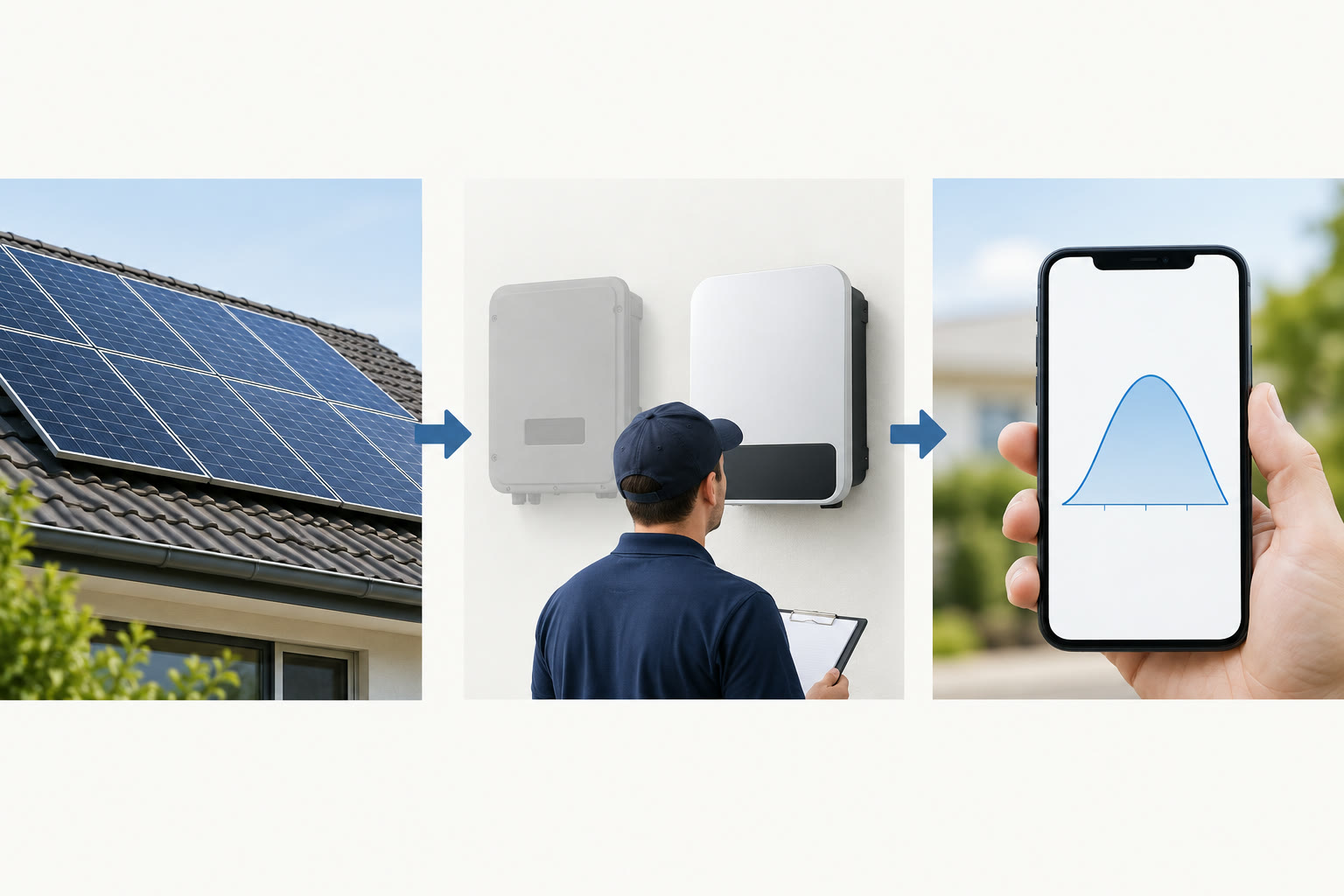
The panels may remain while the inverter changes. This is a decision aid, not a wiring plan or a promise that a particular app will carry over.
Compare the complete job
Ask for these items in each written proposal:
| Decision | What the quote should explain |
|---|---|
| Diagnosis | What was tested and why repair or replacement is recommended |
| Retained equipment | Which panels, panel groups, battery equipment and meters will stay |
| New equipment | The proposed inverter model, its role in the existing design and any additional work |
| Monitoring | Who creates the new account, which data it will show and whether old history can be retained |
| Completion | Removal of the old unit, commissioning, documents and who handles follow-up faults |
Monitoring deserves its own line. The Government's monitoring guide explains that some apps show generation only, while home use and grid flows can require extra measurement. Do not assume a new inverter will preserve the old app, historical data or household-consumption view. Ask the installer to demonstrate what the new arrangement will actually show.
This is where I think a short, itemised quote is better than a broad promise of a “like-for-like” swap. A replacement can be reasonable while its monitoring and handover still differ from what you had.
Check the handover and old equipment
Before the installer leaves, ask them to show the system's normal operating display, give you access to the monitoring account and explain any remaining connection or setup step. The Government's installation and handover guide says owners should receive operating information and product and installation warranty documents. Keep the revised system details with your original panel records.
Ask who takes the old inverter away. The Government lists installers, local council facilities and e-waste services as possible recycling routes. Do not assume removal or disposal is included unless the quote says so.
If two quotes differ, compare the diagnosis, retained equipment, monitoring and handover before comparing their totals. Then ask the installer to explain any extra work against the system you actually have. That is the useful next step; a new inverter model name alone is not enough.
Sources checked
Last reviewed October 2026
This guide is reviewed against current Australian solar policy and market guidance where available. Confirm retailer prices, rebates, and product eligibility before making a purchase decision.
Randy Osifo-Doe is the Brisbane-based founder and lead writer of Aussie Solar Guide. His background is in finance, banking and household budgeting, and he writes from lived experience as a solar homeowner. He is not presented as an engineer, electrician, solar installer or renewable-energy professional.