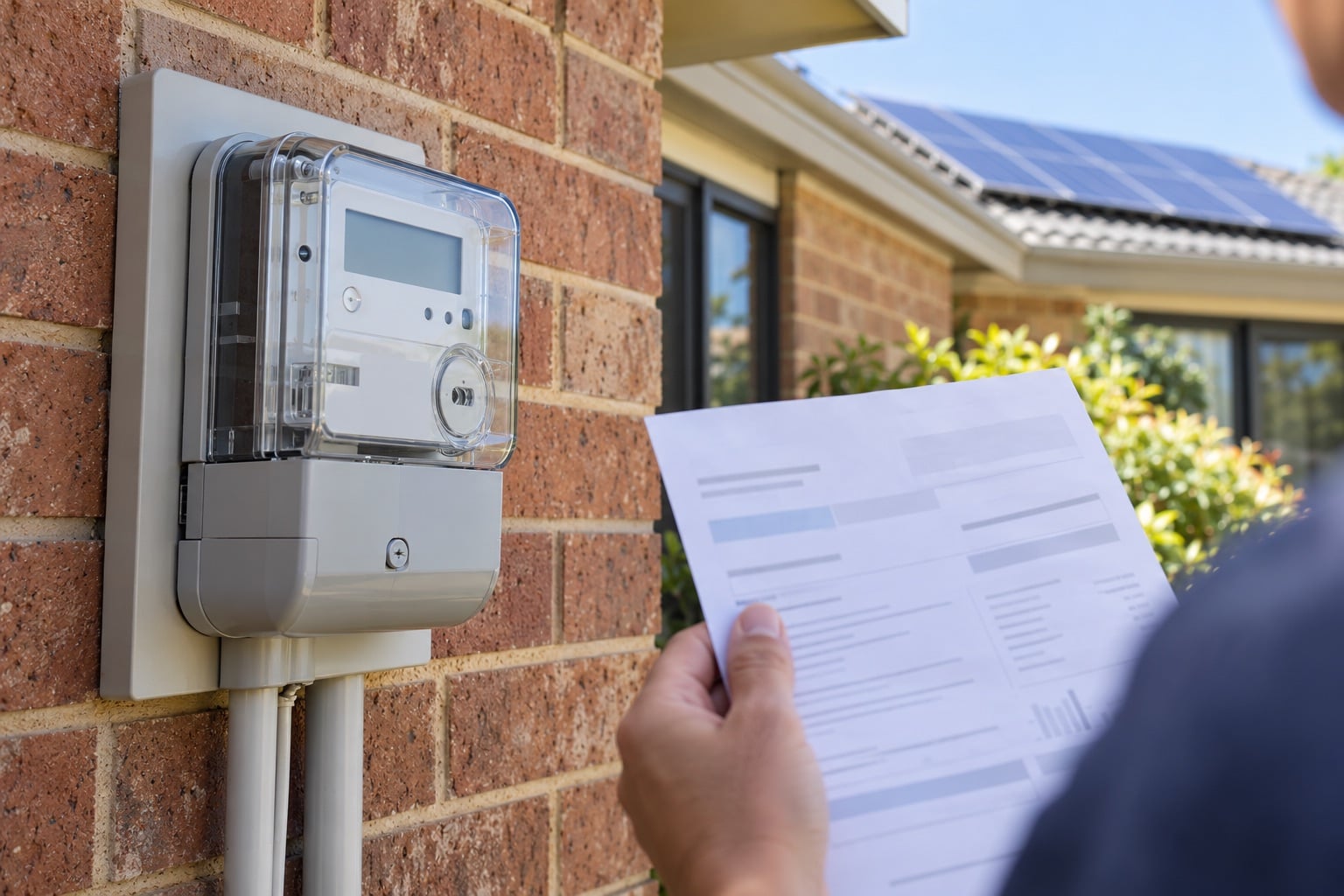
First Solar Bill Has No Export Credit? What to Check
Check the billing dates, meter setup and plan before deciding why your first solar bill has no export credit.
 Randy Osifo-Doe
If your solar bill has no export credit, start with the dates and meter records before assuming the panels are faulty or the electricity retailer has missed a payment. A new system may be generating while some of its electricity is used at home. A bill may also include days before the system was authorised to operate or before the meter was configured for solar.
The useful question is narrower than “where are my savings?”: did the home export electricity during the billed period, and does your plan provide a credit for that export? The answer depends on your system, connection, meter data and electricity plan. Work through those pieces in order.
Check what period the bill covers
Find the start and end dates on the bill, then write down the dates of installation, approval to switch on, and smart-meter installation or configuration. Those may be different days. The Australian Government connection guide explains that a grid-connected system may need network approval and meter work after installation.
If the bill includes mostly pre-solar days, its total may tell you little about the system's usual pattern. Do not switch equipment on yourself to test it. Use the written handover and connection instructions. Our installed but not switched on guide helps you identify which step is still outstanding.
Separate generation from export
Your inverter's generation figure is the electricity made by the panels. It is not automatically the amount sent to the grid. Solar electricity used by appliances at home reduces what you buy from the grid; only excess electricity is available for export. The Government's solar benefits guide explains that distinction, including the effect of an agreed export limit.
The Government's monitoring guide says many basic monitoring systems show generation, while household use and grid flow may require additional monitoring equipment or a smart-meter connection. Check what your app actually measures. A high generation number, by itself, cannot prove that a billed export credit is missing. Our monitoring app guide helps you read its separate figures.
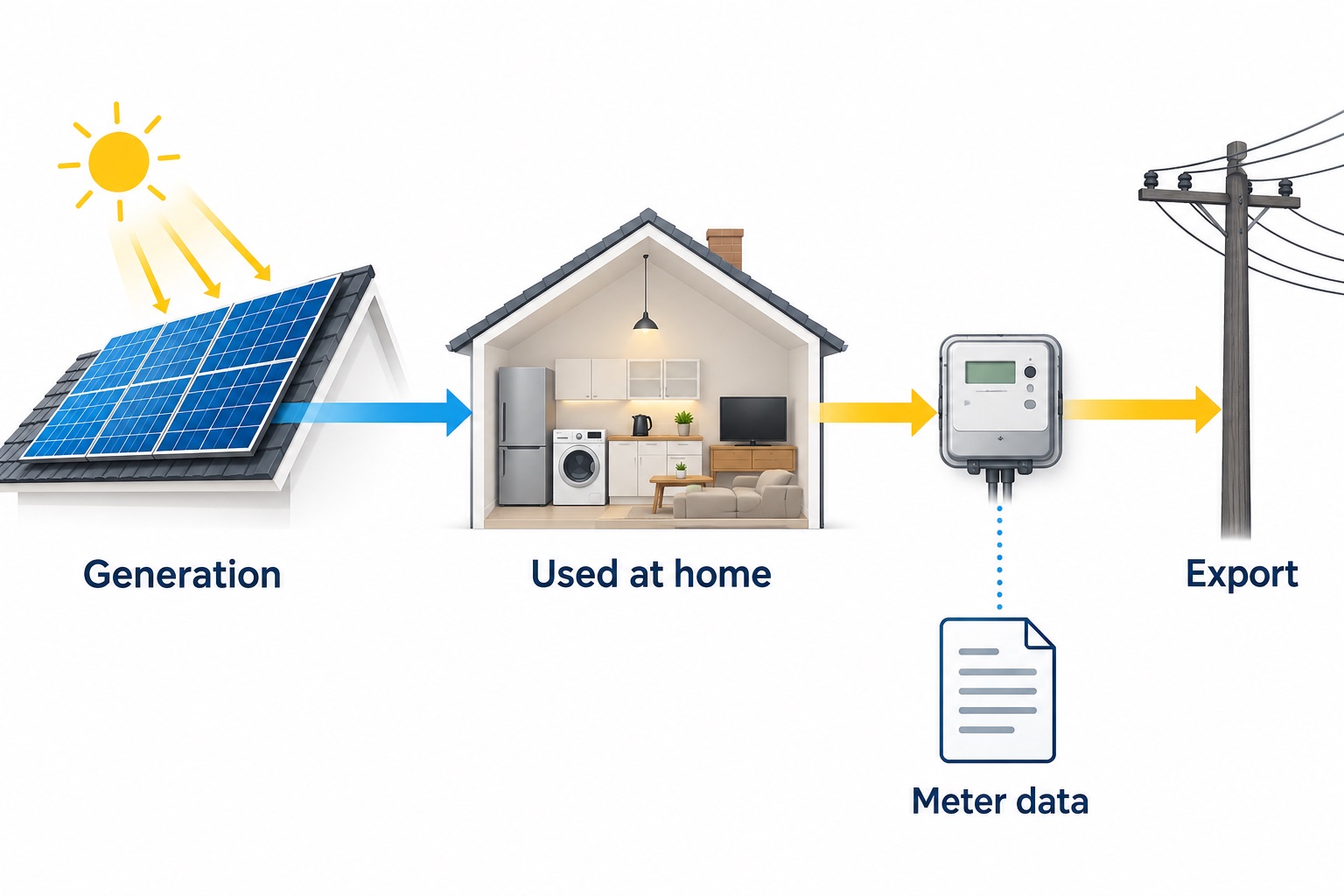
This is a simplified flow, not a wiring diagram. The meter records grid flow; the bill reflects meter data and your electricity plan.
Look for the export line and plan terms
Read the bill for exported kWh and any feed-in credit line. Then check the electricity plan or offer you accepted. The Government's pricing guide says a plan that includes a feed-in tariff credits exported electricity on the bill. Plans and rates vary, and installing solar may change the plan offered to you. Do not assume a credit rate from an installation quote or a neighbour's bill.
Use this short record before making a call:
| Record | What to note |
|---|---|
| Bill | Billing dates, exported kWh line, credit line and plan name |
| Handover | Approved switch-on date and meter installation or configuration confirmation |
| Monitoring | Whether the app shows generation only or measured grid export, with dates |
| Plan | The written export-credit terms that apply to your account |
This is where I think homeowners should slow down. A blank credit line could mean no export was recorded, a plan issue, a metering step still in progress or a bill that predates operation. Those are different conversations, so avoid guessing which one applies from the bill total alone.
Ask the right business for the next record
If you cannot find exported kWh or the expected credit, contact the electricity retailer named on the bill. Ask which meter data and plan terms it used for the billed dates, whether the meter was configured for solar, and whether it will review the bill. The Australian Government's energy customer guidance says to contact the retailer promptly when a bill appears incorrect and explains the bill-review and ombudsman path. The precise process can vary by jurisdiction.
If the issue is that the system was not authorised, set up or generating as expected, contact the solar seller or installer with the handover documents. The solar retailer versus electricity retailer guide explains the split. Keep the bill, written plan, meter confirmation, dated app screenshots and responses together; do not open the meter box or electrical equipment to investigate.
Your next step is to put one clear question to the electricity retailer: “For these billing dates, what export kWh did the meter report, and what plan term was applied?” That answer will tell you whether to follow up on billing, metering or the solar system itself.
Sources checked
Last reviewed October 2026
This guide is reviewed against current Australian solar policy and market guidance where available. Confirm retailer prices, rebates, and product eligibility before making a purchase decision.
Randy Osifo-Doe is the Brisbane-based founder and lead writer of Aussie Solar Guide. His background is in finance, banking and household budgeting, and he writes from lived experience as a solar homeowner. He is not presented as an engineer, electrician, solar installer or renewable-energy professional.