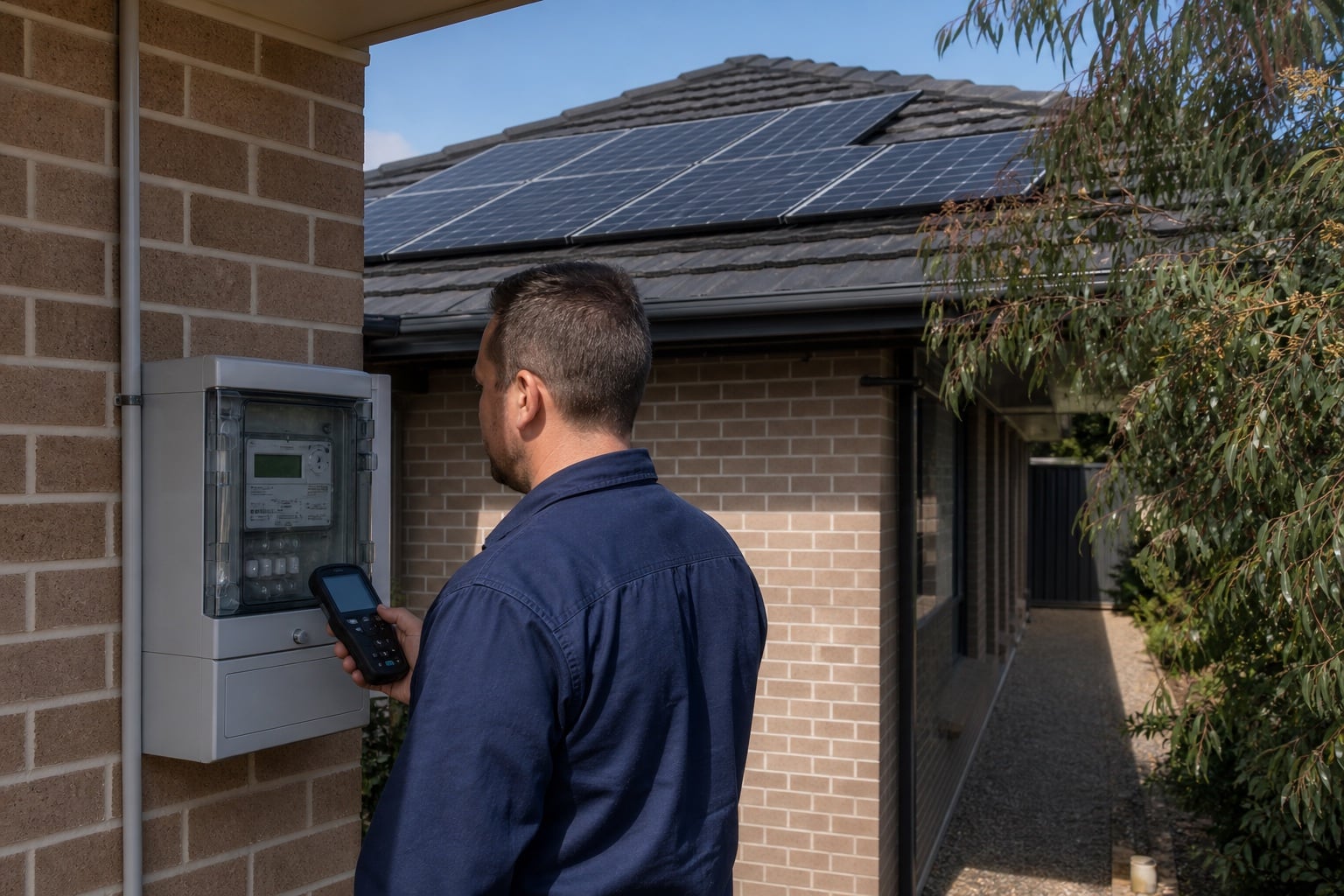
Solar Installed but Not Switched On? What Happens Next
Understand the connection, metering and confirmation steps that may sit between installation day and safely switching on your solar system.
 Randy Osifo-Doe
If you have solar installed but not switched on, it does not automatically mean something has gone wrong. The panels and inverter can be physically finished while network, electrical or metering steps are still being completed.
The order varies across Australia, so the useful question is not simply, “How long should this take?” Ask which exact step is pending, who owns it and what confirmation you are waiting for before the system can be turned on.
Why installation can finish before switch-on
A grid-connected solar system usually needs more than the equipment on your roof. The Australian Government's connection guide explains that the process can include a network connection agreement, system installation, electrical paperwork or inspection, and smart-meter installation or configuration.
Those steps do not happen in the same order everywhere. Victoria includes an independent inspection before meter configuration, while other states and territories use different paperwork and metering paths. Your solar retailer or installer should explain the process for your address and keep you informed about delays.
This is where I think homeowners need a named step, not a vague promise that someone will call. A short written update makes it clear whether you are waiting on the installer, electricity retailer, distributor, meter provider or an inspection.
Check these four steps
Use this table to get a practical status update without touching the switchboard, meter or inverter.
| Step | What to ask | Useful evidence |
|---|---|---|
| Network connection | Has the connection application been approved? | Approval email or reference number, including any inverter or export limit |
| Electrical paperwork | Has the required certificate or work request been lodged? | Lodgement confirmation and whether an inspection is still required |
| Smart meter | Does the meter need installation or configuration, and has that request been sent? | Request number, appointment or completion notice |
| Switch-on | Who will confirm the system is ready, and what written instructions apply? | Confirmation from the solar retailer, installer or metering process |
If the quote changed because of a network condition, compare it with the original using the solar quote change checklist. If extra electrical work is holding things up, the switchboard work guide will help you separate agreed scope from a new variation.
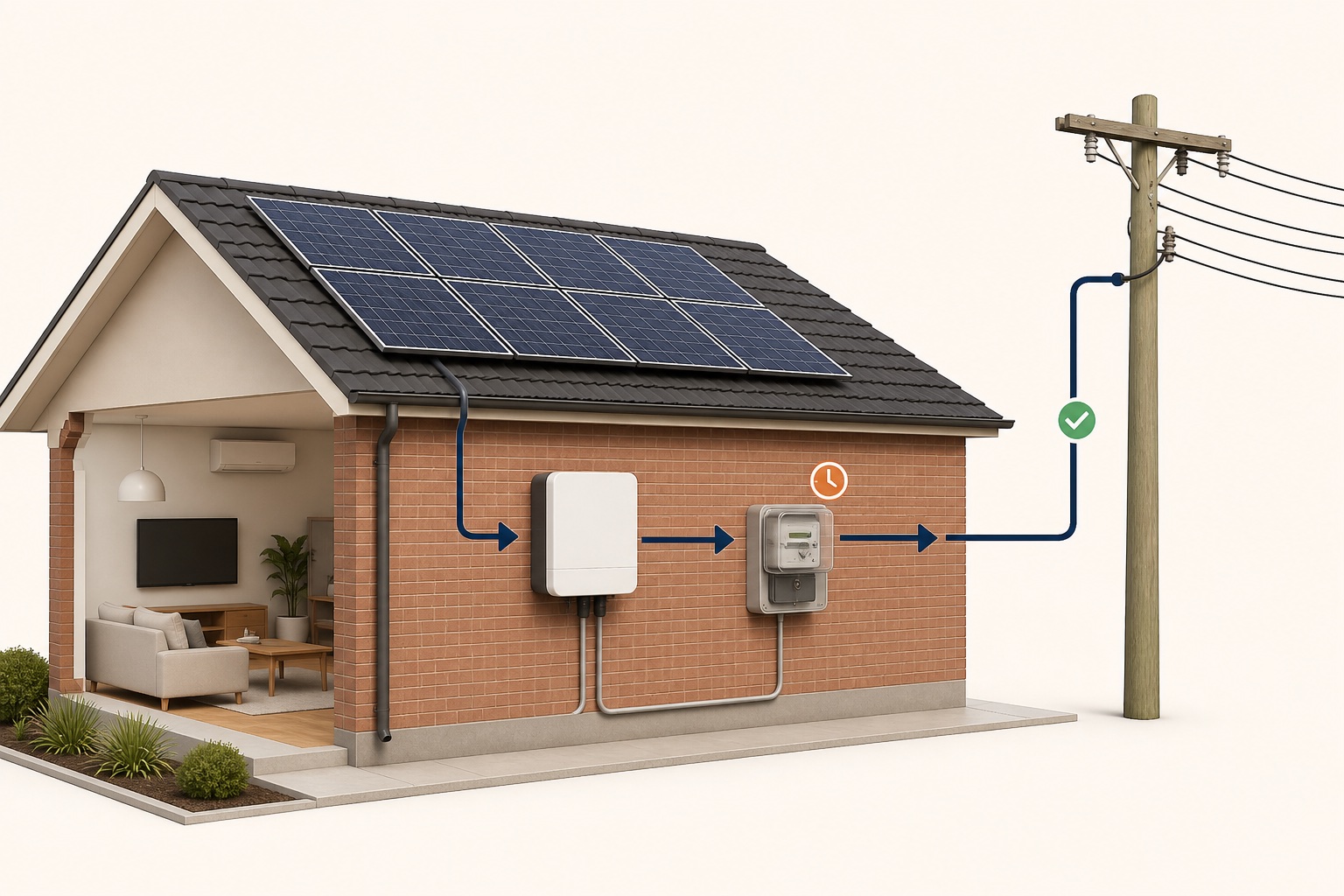
The order and responsible party vary by location, but network approval, electrical paperwork, metering and switch-on confirmation are the main checkpoints.
Who usually handles each part
The company that sold or installed the system will usually coordinate much of the process, but it may not control every step. The distribution network service provider owns the local poles and wires and approves the connection conditions. Your electricity retailer may arrange the smart-meter installation or configuration. Some jurisdictions also require an inspection or specific electrical paperwork before metering can move forward.
You can find your distributor under “Faults and Emergencies” on an electricity bill. That is useful if you need to identify the network, but start with the solar retailer or installer that agreed to manage the connection. Ask them to confirm what they have lodged and what happens next.
What to do while you wait
Do not guess which switches to operate or copy a sequence from another home. The government's installation-day guidance says you may need to wait for an audit, inspection or smart-meter work before switch-on. Follow the written instructions for your system and wait for confirmation that it is ready.
Keep the contract, connection approval, electrical certificate, commissioning sheet, meter request and handover documents together. If a promised date passes, ask in writing for:
- the exact pending step
- the organisation currently responsible
- the date the request was lodged
- the reference number
- the next action and who must take it.
That record is more useful than repeatedly asking whether the job is “nearly done”. It also helps if a design or paperwork detail needs to be corrected.
After you receive the green light
Follow the installer's documented switch-on instructions rather than improvising at the equipment. Confirm that the monitoring account belongs to you, then check that it records generation on a clear day. The solar installation day checklist covers the documents and access you should already have, while the monitoring app guide explains what to check once the system is operating.
The calm next step is simple: get the pending connection stage and reference number in writing. Once the responsible party is clear, you have something specific to follow up instead of trying to diagnose a finished-looking system from the outside.
Sources checked
Last reviewed August 2026
This guide is reviewed against current Australian solar policy and market guidance where available. Confirm retailer prices, rebates, and product eligibility before making a purchase decision.
Randy Osifo-Doe is the Brisbane-based founder and lead writer of Aussie Solar Guide. His background is in finance, banking and household budgeting, and he writes from lived experience as a solar homeowner. He is not presented as an engineer, electrician, solar installer or renewable-energy professional.